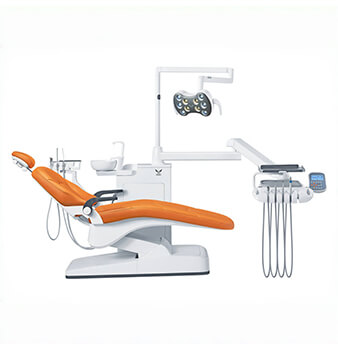
In 2026, U.S. dental equipment distributors are paying closer attention to what happens after a sample is approved. A competitive price and acceptable specifications are important, but repeat orders can still create problems when product changes, service parts, or quality issues are not controlled consistently.
FDA QMSR, effective since February 2, 2026, has put greater focus on manufacturer quality systems and inspection records. For buyers sourcing from an overseas dental unit manufacturer, that makes supplier qualification more relevant to long-term cost and supply stability.
The key question is no longer only whether a supplier has ISO 13485 certification. Buyers also need to know how changes, complaints, corrective action, and repeat production are handled. That starts with what changed under FDA QMSR 2026.

QMSR incorporates ISO 13485:2016 into the FDA quality-system framework while keeping additional FDA requirements where applicable. That matters to procurement because a quality management system affects specifications, supplier controls, corrective action, product changes, and the records behind them.
A distributor does not need to turn every RFQ into an FDA audit. The useful question is whether the manufacturer’s quality controls are strong enough to support repeat business without creating new uncertainty with every order.
What does ISO 13485 certification actually tell a buyer? It can be useful supplier-qualification evidence, but it is not the same as FDA compliance.
FDA does not require or issue ISO 13485 certificates of conformance, and holding one does not exempt a manufacturer from FDA inspection. FDA inspections assess compliance with applicable FDA regulations.
The commercial review therefore goes further. How are revisions controlled? What happens when a component fails specification? How are recurring complaints investigated? Can corrective action reach later production?
A dental equipment supplier that can give clear answers offers a better view of repeat-order risk than a certificate alone.
FDA investigators may review management-review records, quality-audit records, and supplier-audit reports that previously had inspection exemptions under the former QS Regulation.
Those are manufacturer quality-system records. FDA access does not give a distributor automatic access to every confidential internal audit file.
For procurement teams, the point is more practical. Supplier quality, nonconformities, corrective action, and production changes need a controlled process behind them. Weak control usually appears later as service calls, parts mismatches, delayed installations, or the same defect returning in another batch.
The regulatory background only helps if it improves the purchasing decision. A large document package may look impressive and still say little about the exact dental unit being ordered.
Product-specific evidence matters more. It connects the quality system with the configuration, production batch, service parts, and future orders. A supplier audit checklist can organize the review, but a generic checklist is less useful than records tied to the actual product.
During supplier qualification, focus on controls that can change the delivered product or increase after-sales cost:
A small production saving can become an expensive field problem. If a substituted component requires a different replacement part across an installed base of dozens of dental units, the distributor may absorb technician time, extra freight, spare-parts confusion, and customer complaints.
Change communication becomes even more important with an OEM dental unit or repeat order. A distributor may already have packaging, installation instructions, technician training, and spare stock built around the first batch. One undocumented revision can affect all of them.
If a control board, valve, light, upholstery option, or another agreed item changes, the buyer needs to know whether the revision affects installation, service compatibility, appearance, performance, or documentation.
A reliable dental unit supplier can identify relevant revisions and communicate material changes before they become a shipment problem. Not every small revision calls for full requalification; changes affecting the approved configuration, performance, service compatibility, or regulatory basis deserve a documented review.
Quality-system language becomes more useful when it is tied to a product that can be clearly specified. Dental units combine structural elements, utilities, options, and service parts, so sample approval needs more than a model name.
The purchase order does not need to become a quality manual. It does need to describe the same configuration the manufacturer and distributor approved.
The GD-S450 Floor-Fixed Dental Unit uses a floor-mounted structure, a down-hanging instrument tray, and a ceramic spittoon that can rotate 90 degrees inward.
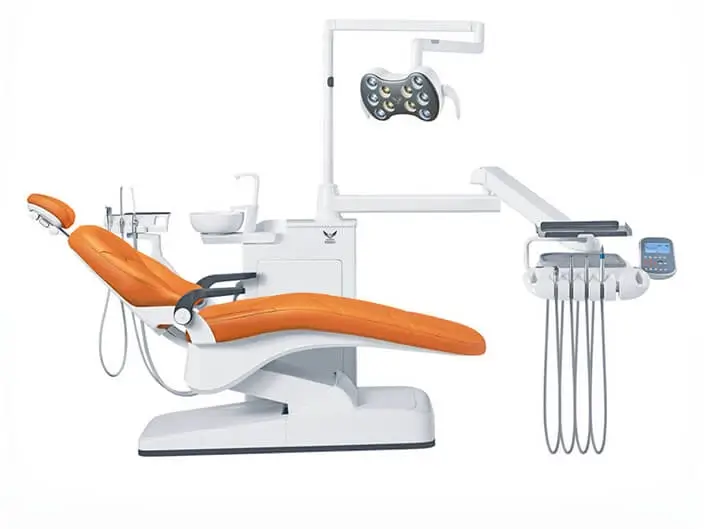
Those features are not evidence of QMSR compliance. They are useful here because they are identifiable parts of a real product configuration.
The buying discussion can move beyond “Is this model available?” Which options belong to the approved version? What may vary by market? How will an alternative component be communicated? Which replacement parts match the supplied version?
Once those details are recorded, the sample becomes a production reference for OEM requirements, technical support, spare parts, and later purchases. For a Gladent dental unit order, that gives both sides a clearer basis for repeat business.
Once the approved configuration is clear, the next question is financial: what happens when that control breaks down?
Supplier quality may look like an internal factory issue until the problem reaches the destination market. The factory invoice is only one part of a bulk dental unit order. Incoming inspection, technician hours, delayed installation, warranty administration, urgent freight, replacement parts, and clinic downtime all affect the real margin.
That is why repeatability and service planning belong in the purchasing discussion before volume increases.
A well-prepared sample proves that one unit can meet expectations. It does not prove that later production will remain identical.
If specifications drift, installation instructions, technician training, and local spare stock may all become partly outdated. A distributor can end up supporting two versions of what was purchased as one model.
For bulk dental unit production, the approved sample, written specification, production units, functional checks, test records, and shipment documents need to stay aligned. The same principle makes repeat-order inspection and troubleshooting much easier.
More paperwork is not automatically better. Current, product-specific information is usually more useful than a folder of unrelated certificates.
A controlled specification, clear revision trail, practical change notification, complaint route, and identifiable service parts give procurement teams a better view of daily supply reliability.
Once useful quality evidence has been separated from generic paperwork, comparing suppliers becomes much easier.
By the RFQ stage, asking only “Does the factory have ISO 13485?” is too narrow. A buyer also needs to know what happens when a product changes, a field problem appears, or another order is placed six months later.
Those questions connect FDA QMSR 2026 with the part that matters commercially: whether the dental unit manufacturer can support a stable installed base, not just deliver the first shipment.
Look at what happens when something changes.
If a specification is revised, is the new version clear? If a field problem repeats, can technical feedback reach production? If a replacement component is needed, can it be matched to the correct unit? If a later batch changes in a meaningful way, does the distributor know before shipment?
These routine procurement questions reveal more than broad claims about “high quality.”
A useful RFQ covers approved configuration, change notification, warranty communication, technical support, OEM requirements, spare-parts identification, unit price, and lead time.
For distributors supporting an installed base, dental unit spare parts planning works best when model, voltage, configuration, service history, and replenishment time stay connected.
A supplier re-review can also make sense after a significant product change, recurring field issue, or parts-compatibility problem. The depth of the review can match the actual risk rather than restarting the entire qualification process for every minor revision.
FDA QMSR 2026 has increased the visibility of supplier audits, management reviews, and other quality records during FDA inspections. For dental equipment distributors, the larger purchasing lesson is straightforward: ISO 13485 certification and sample approval are useful starting points, but they do not replace controlled product information, change communication, CAPA processes, after-sales support, and repeat-order consistency.
A stronger sourcing decision connects the approved dental unit with the way it will be produced, serviced, and reordered.
U.S. distributors and overseas procurement teams evaluating Gladent dental unit can provide the target market, model or application, expected quantity, required configuration, target delivery schedule, and OEM requirements to request product specifications and discuss a bulk quotation.
A: No. FDA does not require or issue ISO 13485 certificates of conformance. QMSR incorporates ISO 13485:2016, but applicable FDA requirements still apply, and an ISO certificate does not exempt a manufacturer from FDA inspection.
A: Yes. FDA may review management-review records, quality-audit records, and supplier-audit reports. The former QS Regulation inspection exemptions for these records were not maintained in QMSR.
A: Product specifications, revision control, change communication, complaint handling, CAPA processes, traceability where applicable, warranty support, and service-part identification give a more practical view of supplier quality.
A: A new review can be appropriate after a significant component or configuration change, recurring field problems, parts-compatibility issues, or another change that affects the approved purchasing basis. Review depth can follow the level of risk.
A: QMSR applies to covered finished-device manufacturers under 21 CFR Part 820. Importers and other firms may have separate FDA obligations depending on their role. For procurement teams, QMSR is relevant when evaluating manufacturers supplying devices for the U.S. market.
 No. 1, No. 2, Fenggang Industrial Zone, Lianhe, Luocun, Shishan Town, Nanhai District, Foshan City, China
 Call us now:+86-757-81267151