A dental unit may stay out of service much longer than the repair itself requires. The delay often comes from a missing component, an incomplete parts request, or uncertainty about compatibility. Replacing the item may take less than an hour. Finding it, confirming it, and shipping it can take days.
A dental unit spare parts plan gives distributors, clinic groups, hospitals, and dental schools a practical way to manage that risk. The plan connects installed models, service impact, replenishment time, local stock, and technical capability without filling a warehouse with parts that may never be used.
When one treatment room stops operating, appointments may be moved or canceled. A technician may visit once to diagnose the problem and return after the correct part arrives. International courier charges, customs processing, and local delivery can end up costing more than the component.
The impact is larger for a distributor supporting several clinics. Slow service affects customer confidence, future equipment orders, and the dealer’s reputation in the local market.
Routine maintenance covers cleaning, scheduled checks, lubrication where required, and correct daily operation. Spare parts planning deals with a different set of questions:
The goal is not to stock everything. It is to keep the right support available for the installed equipment base.
A useful parts plan begins with accurate equipment records. Each installed unit should be linked to its location, voltage, main configuration, installation date, service history, and available serial or unit reference.
Gladent Dental Unit includes implant, mobile trolley, hydraulic, integral, pediatric, disinfection, and floor-fixed product categories. Different structures and clinical layouts create different service needs, so one universal parts list would not suit the entire range.
| Equipment Record | Information to Keep |
| Unit identity | Model, voltage, and available unit reference |
| Installation site | Clinic, city, and treatment room |
| Configuration | Delivery system, suction, water setup, light, and options |
| Service history | Fault, part used, repair date, and result |
Usage matters. A busy treatment room may require a different stock level from a demonstration unit or a chair used only a few days each week.
Useful planning factors include:
These details help separate genuine service needs from inventory that may remain untouched for years.
Typical service categories may include seals, tubing-related items, bottle components, suction accessories, switches, and small connection items. The exact list should follow the model, configuration, and technical guidance for the equipment.
Small components are easier to store, but correct identification still matters. A seal that is almost the right size is still the wrong part.
Some dental chair parts may be suitable for replacement by trained local technicians. Depending on the model, these may relate to suction, water delivery, lights, foot controls, or detachable accessories.
The service plan should separate:
This keeps the local kit useful instead of turning it into a box of unrelated components.
Different Gladent models show why parts planning should follow the actual product configuration.
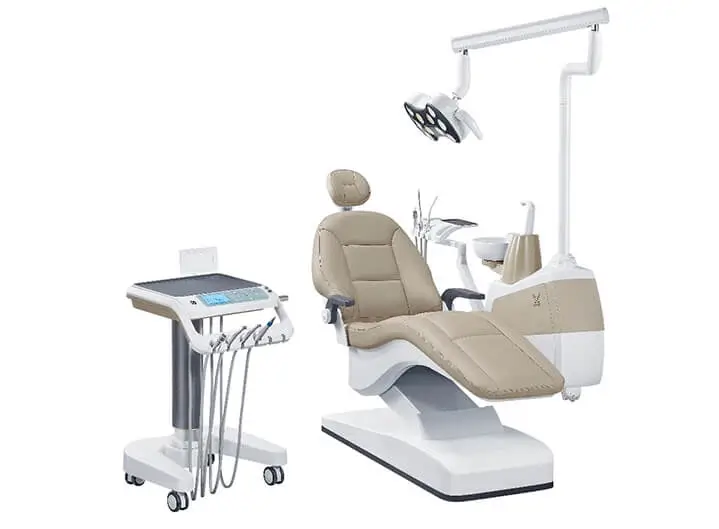
The GD-S350 Mobile Trailer Type uses a movable trolley, strong and weak suction heads, a tri-color oral light, a cast-aluminum headrest, and a detachable ceramic spittoon. Its mobile arrangement creates different service needs from a fixed treatment unit.
The GD-S350 Implant Dental Unit includes a dedicated instrument area, a detachable stainless steel tray, and a ceramic spittoon that rotates inward. Its service records should keep tray and instrument-area items separate from standard chair accessories.
The GD-S450 Floor-Fixed Dental Unit uses a floor-mounted structure, a hanging instrument tray, and a rotatable ceramic spittoon. Fixed installation changes access conditions and may call for a different service approach from a mobile trolley system.
These configurations do not mean that every related component belongs in local stock. They show why compatibility should be confirmed for the exact model.
Stock decisions become clearer when two factors are considered together: the impact of downtime and the time required to obtain a replacement.
| Service Impact | Replenishment Time | Suggested Stock Approach |
| High | Long | Keep local or regional safety stock |
| High | Short | Maintain limited backup stock |
| Low | Long | Review actual demand before stocking |
| Low | Short | Order when required |
A practical reorder point can be based on expected use during replenishment time plus a safety buffer. The buffer should reflect installed quantity, previous demand, shipping conditions, part cost, and the operational importance of the component.
Reorder points should be reviewed whenever the installed base, service demand, or supplier lead time changes.
Equal quantities of every item rarely make sense.
Shared service items may justify more stock because they support several units. Expensive parts with narrow compatibility may be held at one regional location. Very low-demand items may be ordered only after technical confirmation.
The purpose is availability, not a crowded warehouse.
A complete replacement-parts request should include:
A photo of the wider installation area is useful alongside a close-up. The close-up shows the part; the wider image shows where it belongs.
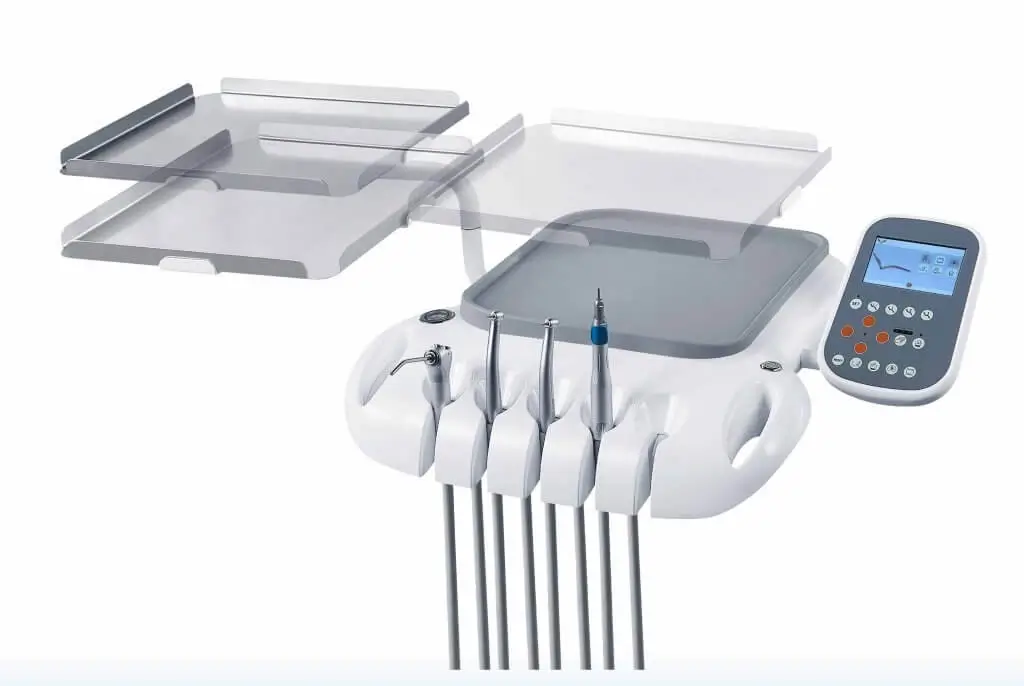
Two valves, boards, bottles, connectors, or switches may look nearly identical while using different specifications.
Written compatibility confirmation is particularly important for:
The rush to save one day can create another week of delay.
Small, frequently used items can be stored in a labeled mobile kit for trained service personnel. Parts should be organized by model family or system rather than mixed in an unmarked box.
Service history should shape the kit. Items used regularly belong closer to the field. Rarely requested components can remain at a central location.
A regional warehouse is often more suitable for costly or low-demand dental chair parts.
A basic release record can include:
This record reduces duplicate purchases and makes replenishment easier to prepare.
Before a distribution program or multi-clinic installation expands, procurement teams should collect:
These records are easier to collect while the original equipment order is still accessible.
The process should identify who confirms compatibility, which information must accompany the request, where photos are submitted, who approves urgent freight, and how unresolved technical questions are escalated.
A loose process may work with two installed units. It gets messy at fifty.
Each service event should record the unit model, reported fault, replacement part, technician, service date, and result.
These records show whether an item has recurring demand or appeared in one unusual repair. They also reveal whether an emergency order should become a planned inventory item.
Stock should be reviewed as the installed base changes. Useful signals include repeated emergency orders, frequently used items, unused inventory, changing replenishment time, and models leaving service.
Obsolete or incorrectly identified parts should not remain hidden on a shelf forever.
Spare-parts planning becomes most valuable after dental equipment enters daily operation. A distributor that knows which models are installed, which components may interrupt treatment, and how long replenishment normally takes can respond faster without holding excessive inventory.
For Gladent Dental Unit projects, the parts plan should match the exact model, voltage, configuration, destination market, and local service capacity. Buyers preparing a new installation or supporting an existing installed base can submit unit details, part labels, component photos, and required quantities to request compatibility confirmation, model-specific parts guidance, and a commercial quotation.
Request Dental Unit Parts Information
View Gladent Dental Unit Models
Q1: Which dental unit parts should be kept in local stock?
A: Local stock should focus on frequently used items and parts whose absence could keep a treatment room out of service. The final list should reflect installed models, downtime impact, service history, compatibility, and replenishment time.
Q2: How should a distributor calculate spare-parts inventory for dental units?
A: A practical reorder point combines expected use during supplier lead time with a safety buffer. Installed quantity, shipping time, previous demand, part cost, and service impact should also be reviewed.
Q3: Can dental chair parts be shared across different models?
A: Some service items may be compatible with more than one model, but interchangeability should not be assumed from appearance alone. Electrical, hydraulic, control, water, and suction components require model-specific confirmation.
Q4: Should spare parts be ordered with the first dental unit shipment?
A: A limited initial service kit may be practical when several units are being installed or international replenishment takes time. The contents should be confirmed for the exact models and configurations.
Q5: What information is needed when requesting replacement parts?
A: A complete request should include the dental unit model, voltage, destination country, available serial or unit reference, original part label, installation position, connector details, required quantity, and clear photos.
 No. 1, No. 2, Fenggang Industrial Zone, Lianhe, Luocun, Shishan Town, Nanhai District, Foshan City, China
 Call us now:+86-757-81267151