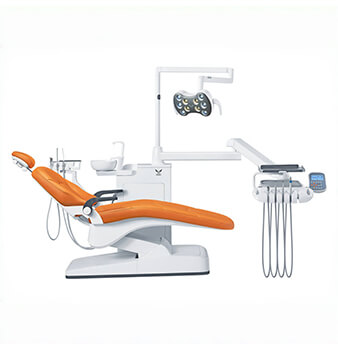
For dental distributors, clinic groups, and practice owners, choosing between a new and refurbished dental unit is rarely a simple price decision. The quotation is only the first number. Installation, parts availability, equipment history, service responsibility, and downtime all affect the real cost.
This comparison carries more weight in 2026 as buyers place tighter controls on capital spending. A lower dental unit price may protect the opening budget, but it can also bring less predictable repair and support costs. A new dental chair unit usually costs more upfront, yet it may offer clearer specifications, warranty terms, and parts identification.
Neither option is automatically right for every project. The better choice depends on use intensity, available service support, and how much uncertainty the buyer is prepared to carry.
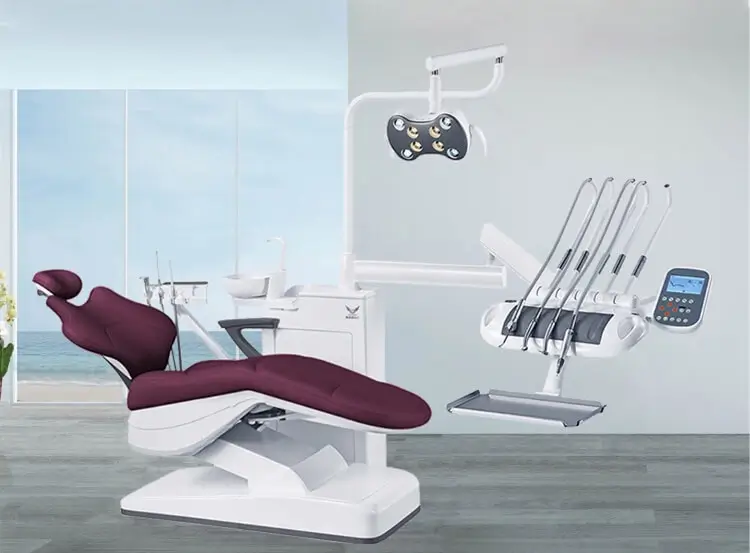
A used dental unit is generally sold in its current condition. It may still operate well, but the buyer receives the equipment with its existing wear, repair history, and configuration.
A refurbished unit has gone through some level of cleaning, inspection, repair, cosmetic renewal, or component replacement. The term “refurbished” does not represent one standardized technical process.
One seller may replace tubing, valves, switches, upholstery, and worn electrical parts. Another may repair the immediate problem, clean the housing, and leave most internal components unchanged.
A B2B buyer needs more than a clean exterior. The seller needs to identify:
A shiny cabinet photographs well. It still says very little about the condition of the water lines, suction system, valves, or control board.
For equipment already showing frequent failures or rising repair costs, the related guide Upgrading Your Practice: When to Replace Your Dental Chair provides a separate framework for deciding whether replacement is overdue.
A refurbished unit often carries a lower initial quotation than a comparable new model. That can make sense for a temporary operatory, a low-volume clinic, or a buyer working within a strict capital ceiling.
The comparison becomes unreliable when the offers cover different equipment or service terms.
Before comparing dental unit price, place both quotations into the same format:
| Cost item | New unit | Refurbished unit |
| Delivery and assistant systems | Confirmed production configuration | Confirm installed parts and condition |
| Operating light and suction | Standard or listed option | Check age, model, and replacement history |
| Voltage and plug | Produced for the destination market | May require adaptation |
| Installation | Factory, dealer, or buyer scope | Often priced separately |
| Warranty | Defined in the sales agreement | Depends on refurbisher or reseller |
| Spare parts | Linked to current model records | Depends on age and modifications |
A low dental chair price may exclude removal of the old unit, technician travel, utility changes, replacement hoses, installation materials, or staff training.
The useful comparison is the cost at the point when the equipment is installed, tested, and ready for clinical work—not the price at the warehouse door.
A current model can make parts identification more straightforward when the manufacturer maintains model-level component records. A service team can work from a known specification instead of opening the unit first and trying to identify every modified component.
Refurbished equipment varies more widely. An older unit may still carry its original model plate while using tubing, valves, boards, lights, or controls installed by several service companies over the years.
That does not make the unit unusable. It creates uncertainty.
Before purchase, confirm whether replacement parts can be identified through:
For distributors, repeated diagnostic visits reduce service margin quickly. A small valve is inexpensive. Sending a technician back three times is not.
Warranty responsibility needs to be assigned in writing to the manufacturer, authorized dealer, refurbisher, reseller, or contracted service provider.
The agreement needs to state whether coverage includes:
A 12-month warranty with parts and local labor may provide more value than a longer parts-only warranty that leaves every repair visit to the buyer.
Verbal promises often become vague after delivery. The quotation and supply agreement need to carry the actual service terms.
When a treatment unit stops working, not every scheduled procedure is permanently lost. Some patients may move to another operatory. Others can be rescheduled.
Downtime cost therefore needs to focus on production that cannot be transferred or recovered.
A practical estimate includes:
Unrecoverable daily production × expected downtime
A single-chair practice may face a larger impact than a clinic with six similar rooms. A DSO may have spare capacity at another location, but moving patients and staff still creates extra work.
Repair time is not limited to the hours required to replace a component. It also includes:
For a distributor, standardized current models can simplify technician training and spare-parts planning. A mixed group of refurbished units may require a wider parts inventory and more troubleshooting experience.
The lowest quotation can lose its advantage after one long service interruption. Usually, the failure happens during a fully booked week. Equipment has a sense of timing.
ROI needs to be measured over the same ownership period for both options.
Start with the purchase and installation cost. Then add planned maintenance, expected repairs, unrecoverable downtime, and service travel. Deduct the estimated resale value at the end of the planned period.
The comparison can be written as:
Ownership cost = purchase and installation
Next, compare usable chair days and expected treatment capacity.
A refurbished unit may deliver a strong return when:
A new unit may provide a more predictable return when:
This is a procurement calculation, not a contest over which unit looks newer.
The seller needs to identify the equipment and explain the work completed.
A practical file includes:
Missing records need to be treated as commercial risk. They may not stop the purchase, but they belong in the price discussion.
Once the ownership-cost comparison is complete, the next question is whether a dental unit supplier can maintain one controlled configuration across quotation, production, inspection, and after-sales service.
Foshan Gladent Medical Instrument Co., Ltd., founded in 2013 in Foshan, manufactures dental units under the Gladent brand. Its product range includes integral, hydraulic, floor-fixed, implant, disinfection, mobile, and pediatric dental units for clinic and distribution projects.
The GD-S300 Floor Fixed Model uses a floor-mounted structure and provides three chair memory positions. Its listed configuration includes a Taiwanese motor, imported water and air pipes, a magnet-fixed cabinet door, an eight-hole tri-color oral light, and an overhead instrument tray with a stainless-steel plate.
For a multi-unit buyer, the commercial value is not simply the number of features. The quotation, inspection checklist, spare-parts inquiry, and warranty can all refer to the same identifiable production model.
That consistency matters when several rooms are installed together or when a distributor expects repeat orders.
The GD-S450 Floor-Fixed Dental Unit also uses a floor-mounted structure. Its product configuration includes microfiber upholstery, a down-hanging instrument tray, and a ceramic spittoon that rotates inward by 90 degrees.
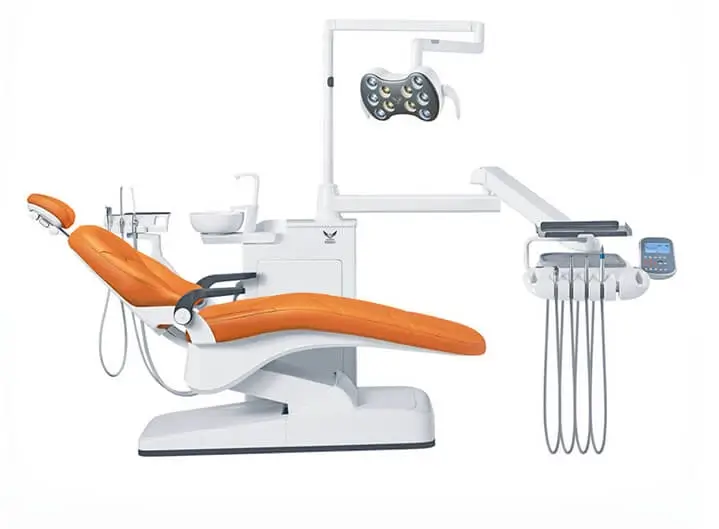
It may fit a permanent operatory where stable installation and an organized instrument area are priorities. The buyer still needs to confirm voltage, included accessories, room utilities, packing, installation, and service terms.
For distributors, the value of a current Gladent model lies in repeatable specifications and a clearer route for quotation approval, inspection, parts inquiries, and after-sales communication.
| Buyer profile | New equipment is often stronger when | Refurbished equipment may work when |
| Dental distributor | Repeat orders and standardized parts are required | A proven local refurbisher supports the units |
| Clinic group or DSO | Multiple rooms need consistent controls | Matching models with complete records are available |
| New private clinic | Predictable warranty and long service life matter | Capital is limited and service history is clear |
| Temporary facility | Reliable daily use remains important | The use period is short and support is available |
| Replacement operatory | Configuration must match the project plan | A compatible unit has verified history and parts |
Confirm the model, voltage, plug, delivery system, accessories, warranty, manuals, packing, production lead time, and spare-parts terms.
Add the serial number, production year, refurbishment scope, replaced parts, test records, and named warranty provider.
For container orders or clinic-chain projects, How Buyers Can Ensure Consistent Quality in Bulk Dental Unit Orders expands on approved samples, functional testing, configuration control, packing, and traceable inspection records.
Attach the final configuration to the purchase order. Otherwise, sales, production, installation, and inspection teams may work from slightly different files. That is a very avoidable problem.
A refurbished dental unit can reduce initial spending when its history, test results, parts supply, and service responsibility are clear. A new unit may provide more predictable configuration control, warranty coverage, parts identification, and repeat-order consistency.
The final decision needs to reflect total ownership cost rather than the advertised dental chair price alone. Buyers can send the destination country, required quantity, voltage, room requirements, and preferred configuration to request a model-specific specification and wholesale dental unit price quotation from Gladent dental unit.
A: No. A used unit may be sold in its current condition, while a refurbished unit has received some level of inspection, repair, cleaning, or component replacement. A written refurbishment record helps confirm what work was completed.
A: Compare identical configurations, accessories, voltage, freight, installation, warranty, parts support, and technician coverage. The lowest initial quote may carry a higher ownership cost.
A: Look for the manufacturer, model, serial number, production year, refurbishment date, replaced-parts list, functional test results, service history, manuals, and written warranty.
A: New equipment is often a better fit when standardized models, repeat orders, current parts support, and clearly assigned warranty responsibility carry more value than the lowest initial cost.
A: Freight, removal, installation, utility changes, technician travel, replacement parts, warranty exclusions, training, and unrecoverable production during downtime can all raise the final cost.
 No. 1, No. 2, Fenggang Industrial Zone, Lianhe, Luocun, Shishan Town, Nanhai District, Foshan City, China
 Call us now:+86-757-81267151