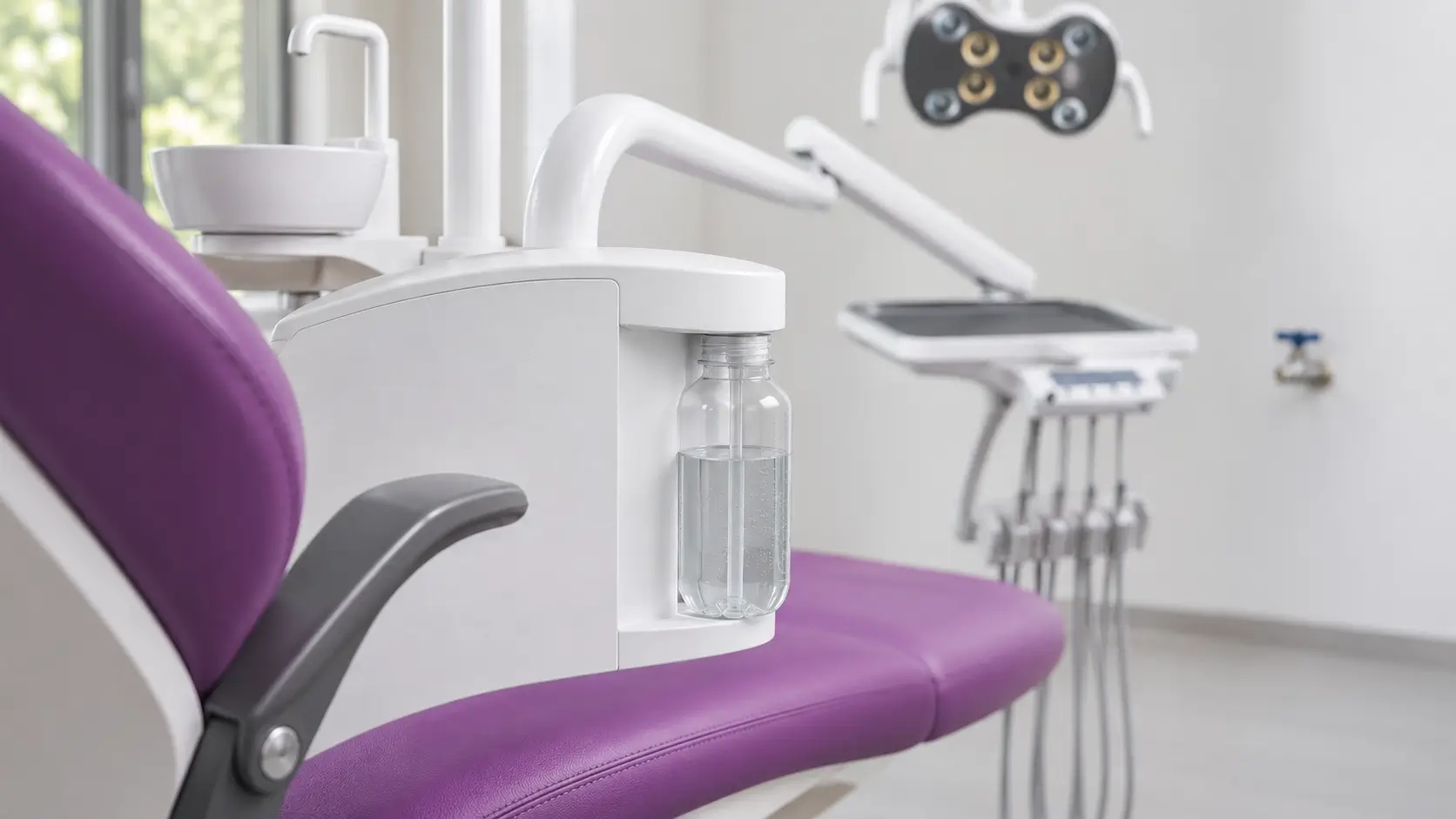
Choosing a dental unit water system is not simply a choice between a bottle and a pipe. It determines how the team controls source water, handles daily changeovers, responds to interruptions, and documents responsibilities after installation. A configuration that works well in a one-chair clinic may become inconvenient across several operatories, while a direct connection that appears simple on a floor plan may require additional site controls.
This guide compares a self-contained dental unit water bottle with a direct water connection from a buyer’s perspective. It does not replace the manufacturer’s instructions for use or a clinic’s waterline protocol. The FDA’s dental unit waterline overview makes an important point: both municipal-source and closed-bottle systems still require appropriate waterline management. Source selection and waterline treatment are related decisions, but they are not the same decision.
First define what the clinic needs to control. Is the priority independent source water, fewer refill tasks, easier isolation during plumbing work, or consistent routines across multiple rooms? Also identify who will fill, label, inspect, and replace bottles; who can shut off a connected supply; and who records any treatment product used. These workflow questions are more useful than comparing reservoir capacity alone.
A self-contained bottle stores water at the unit and supplies it through the delivery system. A direct connection receives water from the building supply, subject to the unit design and local installation requirements. Some dental units may offer different configurations or optional components, but buyers should never assume that a model can switch between them. The exact arrangement must appear in the quotation, utility drawing, and approved configuration list.
A bottle system gives the clinic direct control over the water placed into the reservoir. That can simplify source-water standardization when staff follow a written procedure. It can also isolate the unit from a temporary building-water interruption, provided the rest of the equipment and procedure do not depend on that supply. The trade-off is recurring work: bottles must be filled or changed without contaminating the cap, pickup tube, or contact surfaces.
Evaluate the complete changeover, not only the refill. Staff need a safe depressurization step, a clean place to handle the bottle, a method for identifying prepared water, and enough time between patients or at the start of the day. Ask whether the bottle is visible and accessible from the normal assistant position. A reservoir hidden behind cabinetry can turn a small task into repeated bending, reaching, or removal of stored items.
Capacity should be evaluated against the clinic’s actual procedure mix. A larger bottle may reduce refill frequency but can add weight and occupy more space. A smaller bottle may be easier to handle but create more interruptions. Request the usable capacity, recommended fill level, normal operating pressure, replacement interval, approved cleaning method, and availability of spare bottles and seals. These are model-specific facts, not universal dental unit specifications.
A direct connection removes routine bottle refilling and can support consistent operation across a busy schedule. It also transfers more responsibility to the building-side supply and the installed controls. Before choosing it, confirm the required inlet pressure and water quality, the location of the manual shutoff, filtration or treatment interfaces, backflow-control requirements, and the method for isolating one operatory without stopping the entire clinic.
Service access matters. A shutoff that cannot be reached without moving the chair or opening fixed cabinetry is not a practical shutoff. The contractor and supplier should agree on the connection point, valve orientation, line routing, and access panel before the floor or cabinet work is closed. Local plumbing rules may also affect the final design, so the equipment drawing should be reviewed by a qualified local contractor rather than copied from another clinic.
Write down every water-related action for each option. For a bottle system, include preparation, filling, installation, pressure release, and storage. For a direct connection, include opening and closing the supply where required, checking for leaks, and confirming treatment or monitoring steps. The better option is the one the team can perform correctly every day, not the one with the shortest sales description.
Specify who controls source water and who controls the dental unit waterlines. A bottle can help control what enters the unit, but it does not eliminate biofilm risk or the need for manufacturer-compatible treatment and monitoring. A direct connection does not automatically guarantee suitable output water. Keep source selection, routine treatment, shock procedures, and testing in one written plan with named owners.
Ask what happens if a bottle, cap, seal, regulator, valve, filter, or building supply fails. Can the affected chair be isolated? Are common wear parts stocked locally? Can trained staff recognize a leak or pressure problem without dismantling the unit? A useful specification describes the recovery path as clearly as the normal operating path.
Observe the task from the operator and assistant sides. Check hand clearance, reach distance, visibility, and the space needed to remove a bottle or reach a valve. Include cabinetry and nearby equipment in the mock-up. A water-source component can be technically accessible but still interfere with assistant movement or routine surface cleaning.
Use the Gladent product center and the Integral Dental Unit catalog to shortlist dental units, then request the current water-source configuration for each exact model. For example, a buyer considering the GD-300 integral dental unit should ask Gladent to confirm the supplied arrangement, optional parts, connection points, maintenance instructions, and utility drawing for the ordered version. Do not infer those details from a product photograph or a different model.
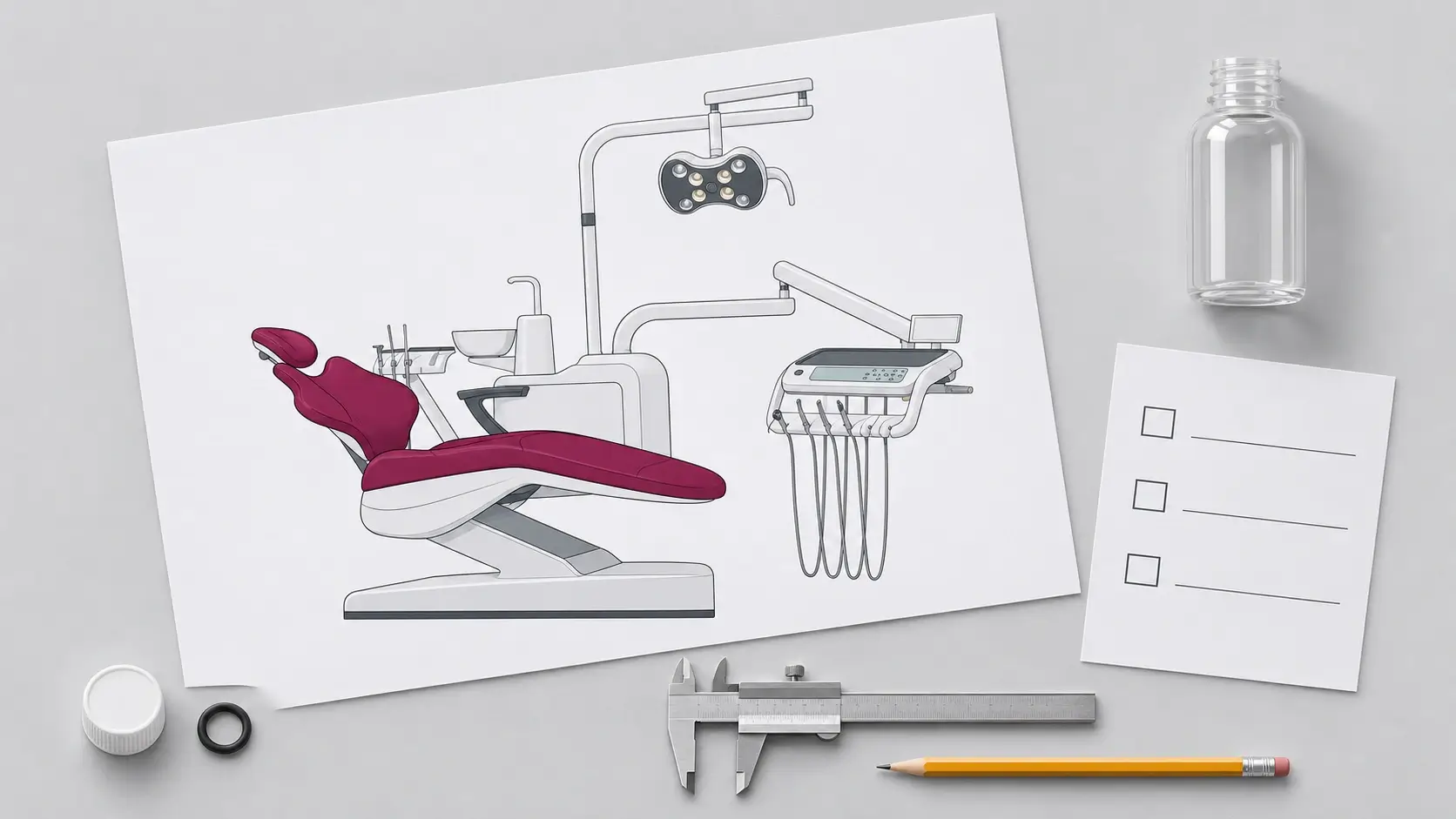
Add the following questions to the request for quotation:
Do not select a water source only to simplify installation, and do not treat a bottle as a complete infection-control solution. The broader dental unit procurement guide can help align utilities, serviceability, and RFQ documents, while the site’s waterline cleaning guide addresses routine care. Keeping those topics separate makes supplier answers easier to verify and reduces conflicting instructions for staff.
A self-contained dental unit water bottle favors local source control but adds a recurring handling task. A direct water connection reduces refilling but depends more heavily on building utilities, isolation controls, and contractor coordination. Choose by mapping daily work, water-quality responsibility, failure recovery, and service access. Then make the chosen configuration part of the signed quotation and model-specific drawing before production or site work begins.
No. It gives the clinic control over the water placed in the reservoir, but output quality still depends on compatible treatment, monitoring, handling, and the dental unit manufacturer’s instructions.
It eliminates bottle refilling, but staff may still need start-up, shutdown, treatment, flushing, inspection, and documentation steps. The exact routine depends on the unit and clinic protocol.
Some configurations may allow source selection, while others may not. Ask the manufacturer to identify the supplied components, operating sequence, and approved changeover method for the exact ordered model.
Confirm the water-source configuration, included controls, utility requirements, compatible treatment method, service access, spare parts, commissioning checks, and the revision number of the approved drawing.
 No. 1, No. 2, Fenggang Industrial Zone, Lianhe, Luocun, Shishan Town, Nanhai District, Foshan City, China
 Call us now:+86-757-81267151