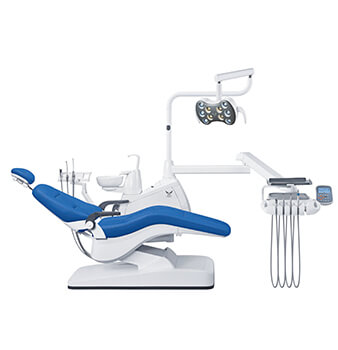
For clinics dealing with a dental staffing shortage in 2026, the wrong equipment choice can add work that a busy team does not need. A control outside the assistant’s reach or an awkward side-box position may look minor during quotation review, yet the problem returns throughout the schedule.
A dental unit cannot replace qualified personnel, but it can support a clear dentist-assistant workflow and manageable routine maintenance. For distributors, clinic groups, and project buyers, the goal is a dental chair configuration that fits the room, procedures, utilities, and service plan.
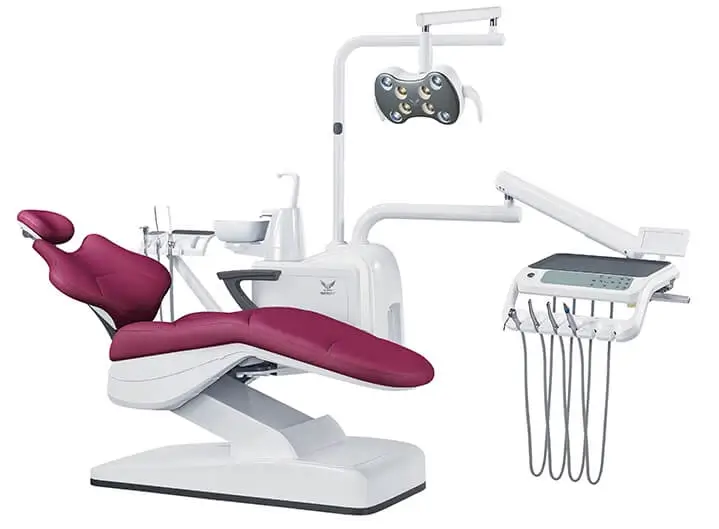
When a small clinical team covers several operatories, minor equipment issues become repeated operating problems. Workflow is therefore a procurement concern, not merely an ergonomic preference. Buyers need to review the dentist, assistant, patient, instruments, suction, light, and utilities as one working system. This section identifies where friction usually begins and why a higher specification does not automatically produce a better result.
A dental chair may fit the room drawing and still be awkward in use. The assistant panel may sit outside the working zone, a rotating component may meet a cabinet, or utility locations may force an impractical delivery direction.
These conditions can lead to extra reaching or repositioning. A useful room plan shows utilities, cabinets, stools, patient access, and working zones, not only room dimensions.
Memory positions, foot controls, assistant panels, extra instruments, and premium finishes can all add value. None is a universal requirement.
Nine memory positions may suit a clinic that returns to several treatment setups. Another clinic may rely on only two or three. Each feature needs a clear clinical, cleaning, safety, or service purpose. Without one, it becomes another item to purchase, train, inspect, and maintain.
A vague request for a “complete dental unit” often produces quotations that cannot be compared fairly. One supplier may include an instrument that another lists as optional, while installation and warranty responsibilities may also differ. A stronger process starts with the room, procedures, staff roles, utilities, and required controls. Once those points are written down, each dental unit manufacturer can quote against the same scope.
Mark the dentist and assistant positions, instrument path, suction use, patient entry, cabinet clearance, and cleaning space. Room size alone does not settle the layout. Similar operatories may need different delivery directions because their utility points are placed differently.
Chair reset, memory positions, assistant-side controls, foot functions, and headrest adjustment support a consistent routine only when staff use them regularly. Procurement teams need to know who uses each control and when.
For new projects, choosing dental units for a new dental clinic helps buyers match equipment type with room conditions and clinical needs.
Straightforward controls still require model-specific instruction. A distributor or clinic group needs a current manual, control-panel images, and operating videos, especially when no factory technician will attend handover.
Daily maintenance deserves the same attention. Confirm access to filters, detachable parts, unit-box covers, and cleaning surfaces. Then assign each task to a person or schedule.
When reviewing dental chairs for sale, every quotation needs to cover the same configuration and project responsibilities. Base price can hide differences in accessories, technical documents, packing, installation, training, and after-sales support. Buyers need to know what will arrive, what must be prepared locally, and where extra costs may appear. This also prevents a low base price from hiding missing project items.
A practical request for quotation includes:
Freight, customs, room preparation, installation, initial spare parts, and later service may sit outside the dental chair price, but they still belong in the purchasing decision.
Custom colors, plugs, private labeling, and optional instruments may affect production planning. The quotation needs to separate standard items from options.
Before production, the supplier needs to confirm the configuration, utility requirements, and inspection points. Model-specific photos and an operating video are useful when options vary.
The final quotation and purchase order need to match. Changes to voltage, delivery layout, upholstery, instruments, suction, branding, or accessories require written approval. Late revisions may affect inspection, packing, or shipment.
For a bulk order, the inspection checklist can cover chair movement, approved memory positions, assistant controls, foot functions, suction, light operation, accessories, labels, and packing.
Founded in Foshan in 2013, Foshan Gladent Medical Instrument Co., Ltd. manufactures dental units and related equipment. The models below illustrate two procurement priorities, not an official product hierarchy. Final selection depends on the room, procedures, staff workflow, local service conditions, and the exact confirmed configuration for each application in real procurement.
The GD-300 Integral Dental Unit (Colorful) includes nine memory positions, a nine-function assistant control panel, a multifunction foot pedal, a multi-joint headrest, an external suction filter, and one-touch control of water, air, and power. Its interlock function locks chair movement while the instrument tray is operating.
Memory positions are relevant when the team returns to defined treatment positions. Assistant-side controls keep selected functions nearby, while the foot pedal operates certain functions without returning to the panel.
The external filter is accessible, but it still needs scheduled cleaning. The GD-300 is most relevant when repeated positioning and assistant controls are priorities.
The GD-350 Integral Dental Unit (Colorful) uses a flexible rotating side box designed to increase the assistant’s activity space. It also includes an organized instrument tray, a rotating ceramic spittoon, one-key control of water, air, and electricity, and a precision-cast aluminum backrest.
The rotating side box matters only when it improves access. Check its movement against cabinets, stools, patient entry, utilities, and cleaning clearance.
The GD-350 is not an automatic upgrade from the GD-300. The models address different layout and control priorities. When neither fits the project, another configuration is the better choice. Component compatibility cannot be assumed from product names or appearance.
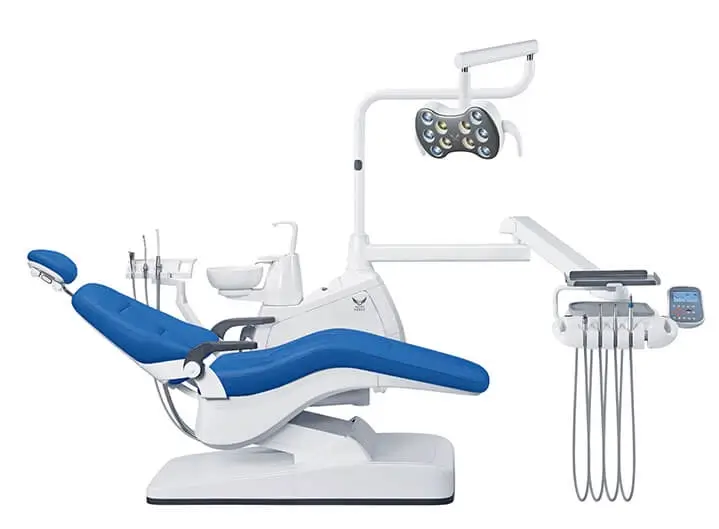
Product selection is only one stage of the purchase. A suitable dental unit can still create delays when the room is unfinished, the installer is unavailable, or the final configuration is unclear. Before release, the specification needs to connect with implementation time, training, warranty handling, and spare-parts planning. A clear handover plan keeps these stages, teams, and responsibilities connected across the project.
The implementation period includes configuration approval, production, inspection, shipping, customs clearance, room preparation, installation, testing, and handover. Factory production time is only one part of that schedule.
Confirm who checks utilities, installs and tests the equipment, supplies manuals or videos, and trains the clinic or distributor team. Custom colors, upholstery, voltage, plugs, delivery direction, instruments, branding, and accessories need approval before production because late changes can move inspection or shipping dates.
Warranty length has limited value when the service process is vague. Buyers need to confirm the technical contact, troubleshooting evidence, remote support method, and responsibility for replacement parts.
For an initial bulk order, identify which service or consumable parts are practical to ship with the equipment. The supplier also needs production records that connect the delivered model and configuration to the correct parts. Similar model names do not prove that boards, valves, lights, tubing, or accessories are interchangeable.
After installation, a clear dental unit spare-parts plan helps distributors and clinic groups organize model records, part identification, and replenishment.
A dental staffing shortage makes practical operatory planning more important, but equipment is not a substitute for qualified personnel. A sound purchasing process starts with working zones, controls, utilities, cleaning access, training, and local service capacity.
When comparing dental chairs for sale, B2B buyers need to focus on the complete configuration and the operational reason behind each feature. Gladent dental unit offers models with different positioning, control, assistant-access, and maintenance arrangements. Distributors, clinic groups, and project buyers can request a model comparison and bulk quotation by providing the destination country, quantity, voltage, room plan, workflow requirements, required accessories, and expected delivery period.
A: Accessible controls, repeatable positioning, cleaning points, and serviceability matter most. The configuration must fit the procedures and room.
A: No. Memory positions help when a clinic uses repeatable treatment positions and trains staff consistently. More presets may add little value.
A: Compare the model, voltage, layout, controls, accessories, utilities, packing, warranty, lead time, installation, and after-sales scope.
A: Request model-specific photos, videos, utility information, and a final configuration sheet. Add approved functions and packing to the inspection checklist.
A: Confirm the warranty scope, technical contact, troubleshooting process, training materials, parts identification, and expected replenishment time.
 No. 1, No. 2, Fenggang Industrial Zone, Lianhe, Luocun, Shishan Town, Nanhai District, Foshan City, China
 Call us now:+86-757-81267151