Choosing a dental unit for one operatory is usually a room-level decision. Choosing equipment for five, ten, or fifty locations becomes a procurement, installation, and service decision.
For clinic groups planning expansion in 2026, the initial dental chair price is only one part of the purchase. The selected equipment will affect staff training, room preparation, inspection records, warranty handling, spare-parts requests, and future repeat orders.
A minor configuration difference may be easy to manage in one clinic. Across several locations, the same difference can create extra control layouts, accessory lists, technical documents, and service procedures.
The practical choice is rarely complete uniformity or unrestricted local purchasing. Most multi-location projects need a controlled model list that covers general operatories, approved alternatives, and genuine specialty requirements.
A standardization policy gives procurement teams, distributors, contractors, clinic managers, and service technicians a shared reference. It does not remove clinical choice. It defines where consistency is useful and where a different configuration has a clear operational reason.
Different dental unit models may use different chair controls, delivery-system layouts, utility connections, accessories, manuals, and maintenance procedures.
These differences become more noticeable when staff work across locations or when one technical team supports several clinics. A dentist or assistant moving between branches may need to adjust to unfamiliar controls, tray positions, and chair-return functions during a busy schedule.
A clear standard identifies:
That shared reference reduces unnecessary back-and-forth during quotation, installation, inspection, and later service requests.
A general operatory does not have the same requirements as an implant room, pediatric room, or mobile treatment space. Room dimensions, utility positions, procedure types, and local electrical conditions may also vary.
A controlled equipment plan can therefore include:
The goal is not to force every treatment room into the same setup. It is to prevent avoidable variation from spreading through the purchasing and service process.
Multi-location buyers generally choose between one core model, a short approved-model list, or local model selection. Each approach can work, but the effect on purchasing, training, installation, and technical support will be different.
Using one model across similar general operatories provides the highest level of consistency.
Staff work with familiar chair movements and controls. Procurement teams compare repeat orders against one specification, while installers and technicians manage fewer technical variations.
This strategy works best when room plans, treatment types, and service conditions are broadly similar. Its main limitation is flexibility. One dental chair unit may not suit every specialist workflow or installation condition.
For many clinic groups and distributors, a short approved-model list is more practical.
The core model supports routine general dentistry. A separate configuration can be approved for rooms that need a different chair structure, instrument area, lighting arrangement, or delivery setup.
This arrangement also makes quotation management cleaner. A dental unit supplier can prepare defined packages instead of rebuilding every offer from scratch. Options remain available, but the number of versions stays manageable.
Local purchasing may help an acquired clinic retain familiar equipment or support a specialist workflow.
The complication appears later. Several models can mean different upholstery references, utility plans, manuals, warranty contacts, and parts-identification procedures.
Mixed purchasing is not automatically a poor choice. It simply requires stronger records and greater service capacity. Temporary exceptions should not become the default buying policy without formal approval.
The best procurement model depends on more than unit price. Buyers should compare how each option affects repeat orders, staff movement, room preparation, maintenance, and after-sales communication.
When reviewing dental chairs for sale, compare complete configurations rather than base prices.
Each quotation should cover the same commercial scope:
A lower dental chair price may exclude technician travel, installation materials, or accessories included in another offer.
Repeat-order stability matters as well. A group opening clinics in phases needs to know whether the approved configuration can be reproduced and how later production changes will be recorded.
For larger projects, the guide on consistent quality in bulk dental unit orders provides a related framework for managing approved specifications, production changes, testing, and inspection records.
A limited model list can reduce the number of control layouts introduced during staff orientation.
The actual benefit depends on clinic size, staff turnover, and how often dentists or assistants move between locations. There is no universal savings figure.
Still, familiar chair movements, tray controls, and assistant functions make cross-location coverage easier. Small layout differences can slow the start of a busy day, especially when staff have little time to adjust.
Even a standardized dental chair unit requires a site-level review.
Before production, confirm:
Two rooms with similar floor areas may have very different utility positions. Standardization simplifies planning only when each location supplies accurate site information.
Service planning also requires model-specific records. Similar product names do not prove that control boards, valves, lights, tubing, or upholstery parts are interchangeable. Compatibility must be confirmed for the exact quoted configuration.
A useful standard must be detailed enough for quotation and inspection, but simple enough for purchasing teams and local staff to follow. It should define the core configuration, permitted alternatives, and the approval route for changes.
The core specification should record:
The document also needs a revision number. Without version control, sales may quote one setup while production and inspection teams work from another.
Every alternative configuration needs a clear operational, clinical, or site-related reason.
It may support a different instrument-delivery workflow, better access around the chair, a room-specific utility condition, or a specialist procedure not covered by the core model.
Personal preferences can be considered, but they should be converted into measurable requirements. Otherwise, the approved list may keep growing without a clear purchasing reason.
Changes to the scaler, curing light, suction setup, upholstery, tray layout, voltage, branding, or accessories should appear in the final quotation and purchase order.
The procurement policy should also name the person or department authorized to approve:
A change confirmed only in a sales message may never reach the production or inspection file.
Foshan Gladent Medical Instrument Co., Ltd. was founded in Foshan in 2013 and manufactures dental units and related dental equipment. Its product range includes integral, hydraulic, implant-type, disinfection, floor-fixed, mobile-trailer, and pediatric dental units.
This product range allows distributors and clinic groups to establish a general-operatory standard while reviewing separate configurations for specialist applications.
The two-model structure below is a procurement example.
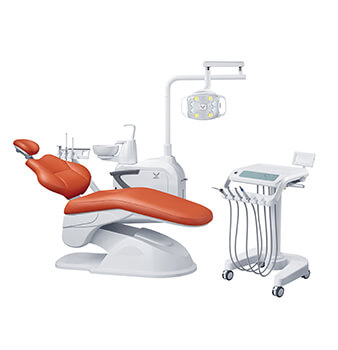
The GD-200 Integral Dental Unit can be assessed as a defined configuration for general operatories.
It includes a six-hole LED oral light, an extra-large instrument tray, a cabinet that rotates by 90 degrees, and one-touch control of water, air, and power. The chair controls include up, down, forward, backward, and reset functions.
For a multi-location buyer, one identifiable GD-200 configuration can support quotations, room plans, inspection records, repeat orders, and later service inquiries without adding options that the project does not require.
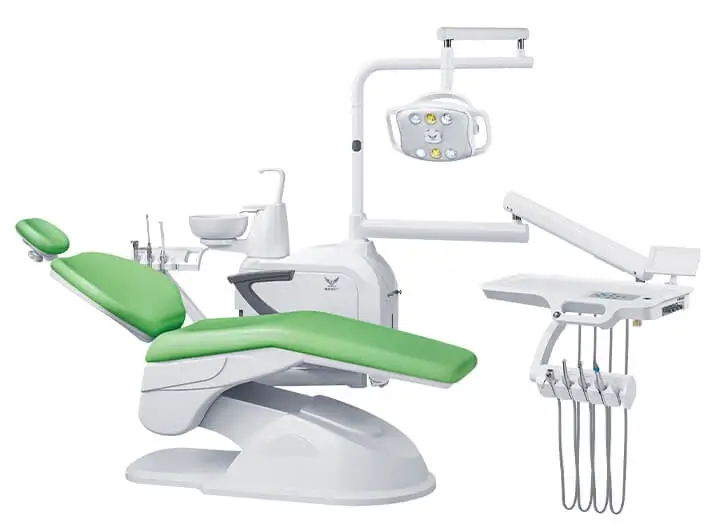
The GD-S200 Plus Integral Dental Unit should be quoted and approved as a separate configuration for rooms with different structural or instrument-delivery requirements.
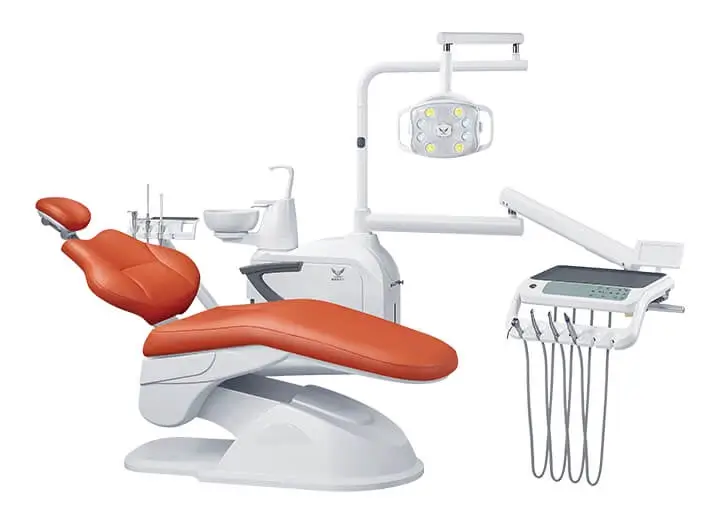
It includes a metal backrest, cast-aluminum headrest, multifunctional instrument tray, eight-hole tri-color oral light, detachable saliva-ejector assembly with a collection cup, rotating unit box, and one-touch control of water, air, and electricity.
It should not be treated as interchangeable with the GD-200. Component and accessory compatibility requires written confirmation for the exact quoted versions.
The final decision should reflect the similarity of the operatories, the number of locations, treatment mix, installation conditions, and the buyer’s service capacity. The same information should then be used to prepare the bulk dental unit order.
| Procurement model | Best suited to | Main risk |
| One core model | Similar general operatories | Limited specialist flexibility |
| Core model plus approved alternatives | Growing clinic groups and distributors | Requires configuration control |
| Mixed models by location | Highly varied clinical workflows | More training and service complexity |
For many multi-location projects, the middle option offers a practical balance. It creates a repeatable base without forcing every treatment room into the same configuration.
A useful inquiry should include:
When comparing dental chairs for sale, separate fixed requirements from optional upgrades so each supplier quotes the same scope.
Multi-location buyers rarely need one identical dental unit in every treatment room. Unrestricted model selection, however, can create unnecessary purchasing, training, installation, and service complexity.
A core configuration, a short list of approved alternatives, and controlled specialist exceptions provide a workable middle ground. This structure gives clinic groups and distributors a clearer basis for comparing equipment, approving repeat orders, and communicating with installation and after-sales teams.
Clinic groups, distributors, and project buyers can contact Gladent dental unit for a model comparison and wholesale quotation by providing the destination country, location count, required quantity, voltage, room mix, preferred configuration, and expected delivery schedule.
A: Not always. Similar general operatories may share one core model, while implant, pediatric, mobile, or unusually sized rooms may require approved specialist configurations.
A: It can reduce the number of control layouts, manuals, configuration records, and service procedures that staff and technicians manage. The actual benefit depends on clinic scale, staff movement, and local technical support.
A: The purchasing policy should name the department or manager authorized to approve model changes, specialist-room exceptions, optional accessories, and branding revisions before the final quotation and purchase order are confirmed.
A: Buyers should compare the complete configuration, voltage, delivery system, accessories, installation scope, packing, warranty, documentation, production lead time, and service terms, not only the base price.
A: Include the destination country, number of locations, quantity, voltage, room types, required accessories, preferred configuration, delivery schedule, and after-sales requirements.
 No. 1, No. 2, Fenggang Industrial Zone, Lianhe, Luocun, Shishan Town, Nanhai District, Foshan City, China
 Call us now:+86-757-81267151