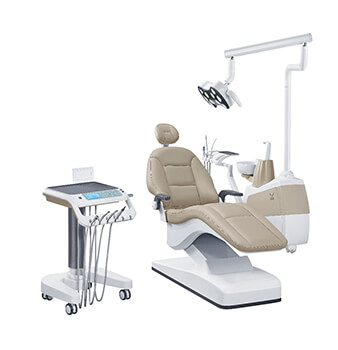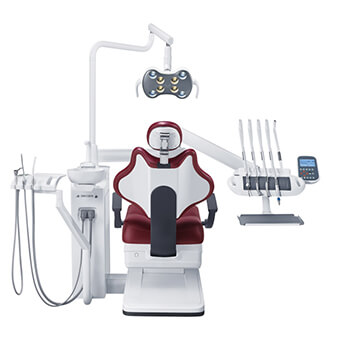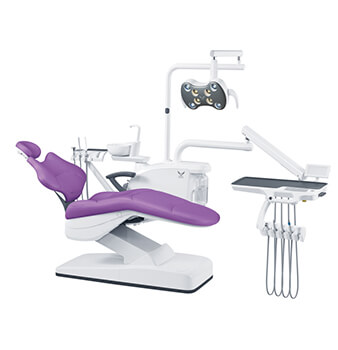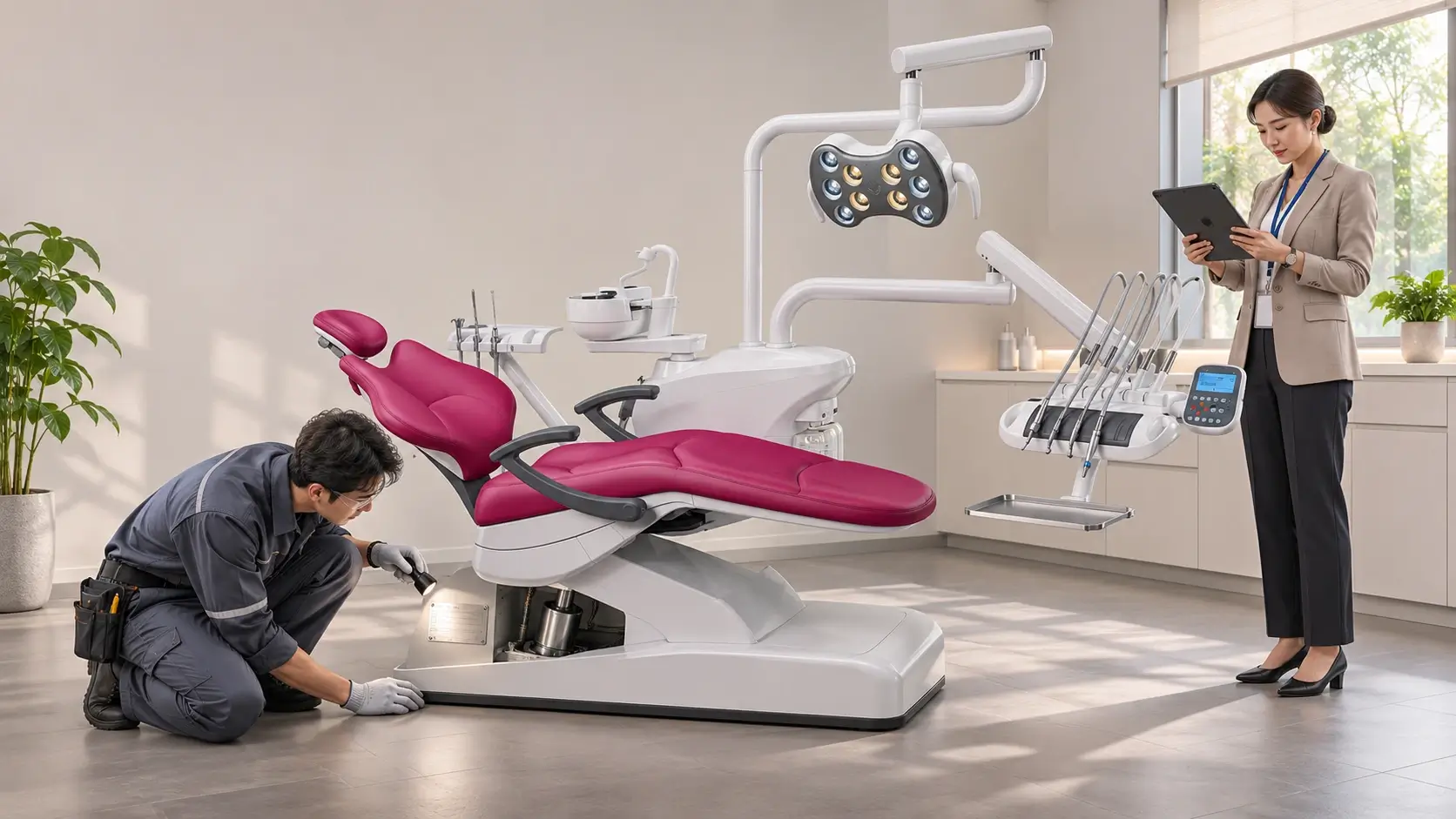
A dental chair weight limit is a model-specific operating boundary, not a generic number for every dental unit. Before purchase, a clinic should obtain the manufacturer’s defined maximum patient load or safe working load, confirm whether it applies while the chair is lifting and reclining, and check whether accessories are included. Seat width, armrest clearance, transfer method, base stability, and equipment condition also affect safe use. Buyers should not infer capacity from appearance or hydraulic drive. Procurement should produce traceable documents tied to the exact model and revision.
Several different weights can appear in a dental chair quotation, catalog, packing list, or installation drawing. They answer different questions. Mixing them up can lead to a weak specification, an unsuitable floor plan, or unsafe clinical use.
| Term | What it describes | Why the buyer needs it |
| Maximum patient load | The patient load the manufacturer permits under stated operating conditions | Determines whether the exact chair may be used for the intended patient population |
| Chair deadweight | The weight of the assembled chair or dental unit itself | Affects transport, floor planning, handling, anchoring, and installation |
| Shipping weight | The packed equipment plus crate, pallet, and protective materials | Affects freight, unloading equipment, doorway access, and warehouse handling |
The question “how much does a dental chair weigh” usually concerns equipment handling or installation. It does not establish the dental chair weight capacity for a patient. A procurement document should name the required value instead of using the word weight by itself.
Manufacturers may use terms such as maximum patient load, rated load, or safe working load. The buyer should ask how the term is defined for the selected model. The stated value may apply to the patient alone, or it may include items placed on the chair. It may also depend on the chair being installed, maintained, and operated as specified. A number without its definition and conditions is not enough for an RFQ or acceptance test.
A chair can experience different forces when it is stationary, lifting, lowering, reclining, stopping, or supporting a patient during transfer. Buyers should confirm whether the published dental chair maximum weight applies throughout the full operating cycle. They should also ask whether the rating changes with optional accessories or a particular installation method. Do not create a clinic policy from a static test value unless the manufacturer states that the same value governs normal powered or hydraulic movement.
A patient can fall within the stated load rating and still be poorly supported. Check usable seat width, backrest shape, armrest position, headrest adjustment, leg support, and the patient’s center of mass. The patient must be able to sit, transfer, and remain positioned without pressing against moving components or obstructing the delivery system.
Transfer access deserves its own review. The Gladent guide to fixed dental units for patients with limited mobility explains how patient approach, armrest configuration, chairside components, and staff assistance change the selection process. A capacity statement does not replace that transfer assessment.
The safest way to compare chair ratings is to request the same evidence from every supplier. Keep the answers with the quotation and purchase record so the clinic can verify the delivered configuration.
The data plate, operator manual, installation instructions, and technical sheet should agree. If they use different figures, ask the manufacturer to resolve the conflict in writing before ordering.
Once the evidence is available, compare it with the clinic’s intended patient population, transfer policy, procedure mix, and maintenance capability. The objective is to verify a suitable model and configuration, not to select the largest available number without context.
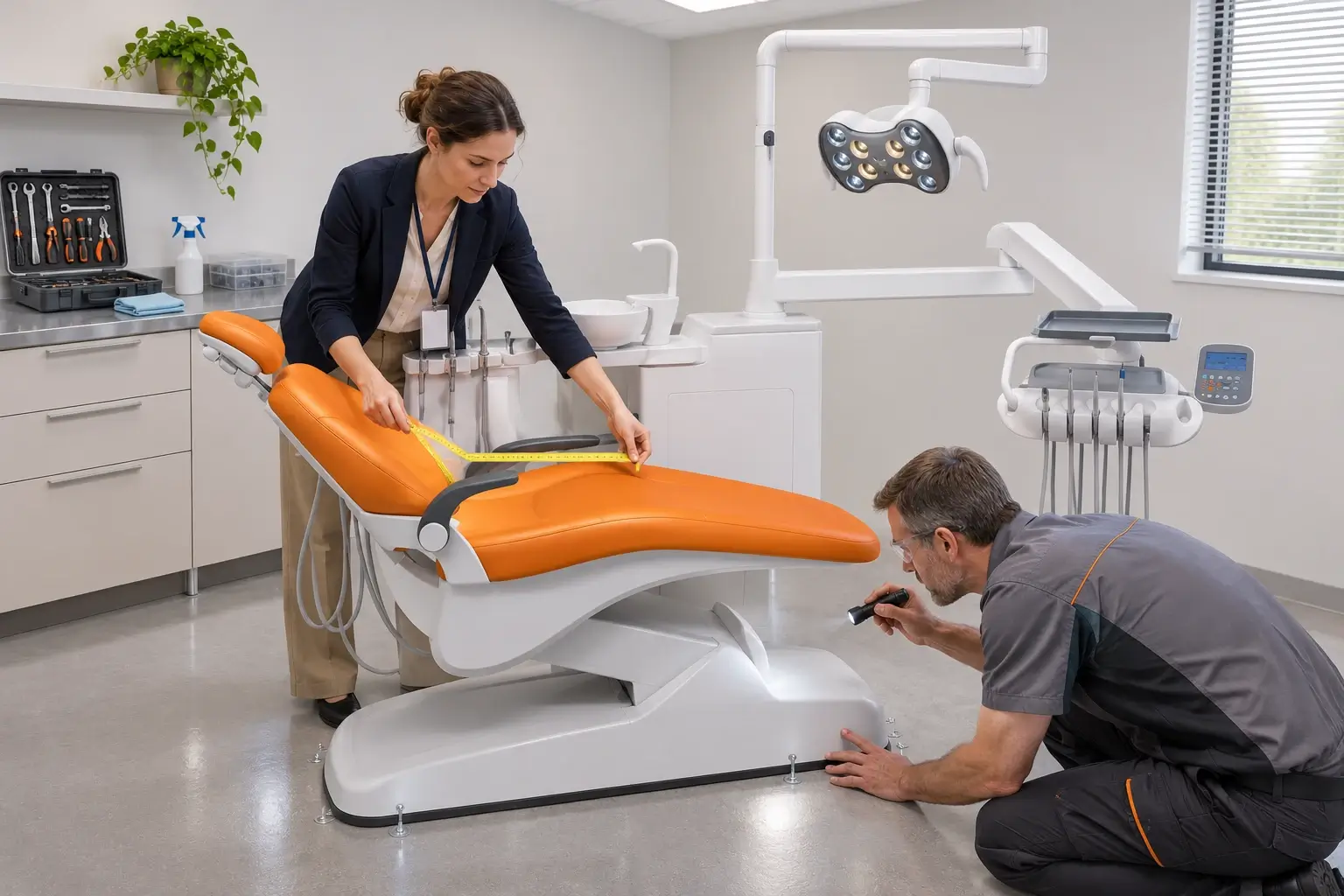
The GD-S600 hydraulic dental unit is presented with a hydraulic drive and smooth lifting and reclining movement. Those confirmed features describe the drive and motion, but they do not by themselves establish a patient load rating. A buyer evaluating this model should request the current model-specific load documentation and check it against the delivered configuration.
Gladent buyers can also review the hydraulic dental unit category when discussing drive type and clinical configuration. The RFQ should keep motion quality, patient capacity, seat fit, and installation requirements as separate fields. This prevents a general product feature from being mistaken for a verified load claim.
A higher dental chair weight capacity does not automatically make a unit a bariatric dental chair. That description may imply a wider supported seating surface, suitable transfer access, appropriate arm and leg support, stable movement, and documentation for the intended patient group. Use the term only when the manufacturer verifies the complete configuration. Otherwise, describe the confirmed rating and dimensions without assigning an unsupported clinical category.
Procurement evidence must remain usable after installation. Record the rating in the equipment file, keep the relevant manual available, and train staff to check the correct model rather than rely on memory. The clinic should define how staff respond when the patient’s needs approach or exceed the documented limit and how an alternative treatment arrangement will be made.
Operators should also follow the manufacturer’s positioning and movement instructions. The review of common dental chair positioning errors is useful for staff training, but the selected model’s manual remains the controlling source. Stop using the chair and request qualified inspection if it has been overloaded, struck, modified, or shows unusual movement, noise, leakage, or instability.
A concise RFQ makes the supplier responsible for identifying the applicable document rather than supplying an isolated marketing number. Ask the supplier to answer these questions for each offered configuration:
Dental chair weight limit selection should end with model-specific evidence, not an assumed industry average. Buyers need the defined patient load, operating conditions, included accessories, fit dimensions, transfer review, installation requirements, and inspection instructions. A larger number is useful only when the full chair configuration safely supports the intended patients and workflow. Preserve the verified documents with the equipment record and use them in staff training and acceptance checks.
No. The weight limit normally concerns the permitted patient load under defined conditions. Chair deadweight and shipping weight concern handling, installation, freight, and floor planning.
No. Drive type describes how the chair moves. Patient capacity must be verified in the documentation for the exact model and configuration.
A general figure may help with early planning, but it should not control purchasing or patient use. Obtain the manufacturer’s current model-specific rating and conditions.
Follow the manufacturer documentation and the clinic’s approved patient-assessment procedure. If fit, transfer, or operating conditions remain uncertain, arrange an appropriate alternative rather than test the chair’s boundary.
For a model-specific fit check, send Gladent the intended patient load range, required seat and transfer dimensions, accessories, installation conditions, destination market, and quantity. The clinic can contact the Gladent technical team to request the applicable specification and configuration details.
 No. 1, No. 2, Fenggang Industrial Zone, Lianhe, Luocun, Shishan Town, Nanhai District, Foshan City, China
 Call us now:+86-757-81267151