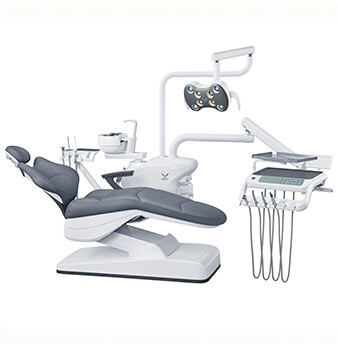
Before a Dental Unit or dental chair unit is shipped, buyers should verify four things: how water and air move through the system, how staff will clean and replace service parts, whether the room is ready for installation, and which documents will be handed over. These checks are different from comparing a catalogue feature list. They determine whether the unit can be installed, cleaned, serviced, and handed over without avoidable delays.
This guide is designed for clinic groups, distributors, project managers, and importers who already understand the basic product options. It focuses on the acceptance work that is often left until the equipment arrives. For broader model and project planning, see Gladent’s Dental Unit Buying Guide for High-Volume Clinics; this article covers the hygiene and service evidence that should follow that initial selection.
Waterline hygiene starts with the room and the unit being planned together. Ask the manufacturer and installer to mark the water inlet, bottle or mains-water source, filters, valves, cuspidor, instrument outlets, drainage, and any isolation points on the installation drawing. The drawing should show where a technician can reach each component after the chair, cabinet, and delivery system are installed.
Do not approve a layout that places a filter, valve, or drain behind a fixed cabinet with no service clearance. A component that is technically replaceable but practically inaccessible can turn a routine maintenance task into a long shutdown. Confirm the route for compressed air, suction, drainage, and electrical supply as well. Waterline procedures are only reliable when the supporting utilities match the model-specific installation requirements.
The supplier should answer these questions in writing. If a response depends on local regulations or a separate water-treatment system, record that condition in the project file instead of treating a general brochure statement as a complete hygiene specification.
“Easy to disinfect” is not a usable maintenance instruction by itself. A Dental Unit handover package should explain the procedure, sequence, compatible agents, contact time, restrictions, and replacement intervals for the exact model and configuration. Request the current user manual, waterline diagram, cleaning schedule, parts list, and any manufacturer-issued service bulletin before shipment.
Check that the documents identify the model, revision or issue date, and language supplied for the destination market. If an accessory changes the water path, suction path, or drainage arrangement, the documentation should cover that accessory as well. A manual for a similar-looking unit is not enough when tubing, valves, bottle assemblies, or instrument modules differ.
The buyer should also separate three types of information:
This separation prevents staff from assuming that a supplier’s general recommendation replaces the clinic’s approved infection-control process. It also makes responsibility clear when a question arises after installation.
Serviceability describes how easily a trained technician can inspect, clean, adjust, or replace parts without damaging the unit or removing unrelated assemblies. Before ordering, ask for photos or drawings of access panels, filter positions, tubing connections, solenoid valves, fuses, control boards, and suction components. The information does not need to reveal proprietary engineering; it should show whether normal service tasks are realistic.
Review these points during a factory or distributor demonstration:
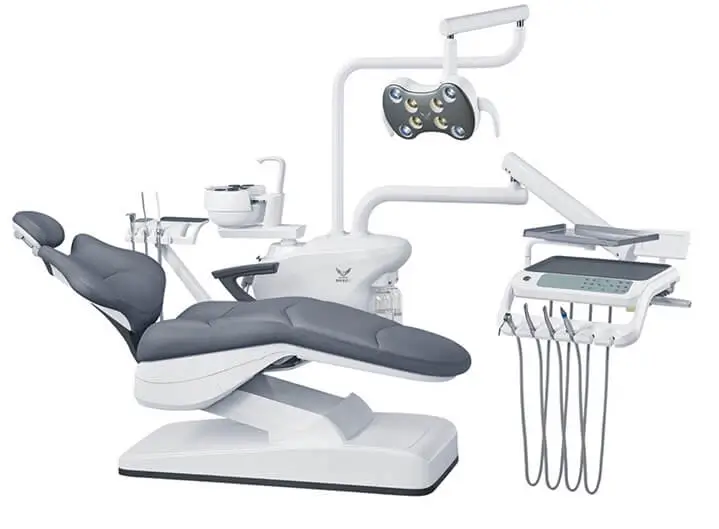
For clinics prioritising disinfection documentation, the GD-S800 Disinfection Dental Unit can be used as a product reference when requesting the manual, waterline diagram, and service-parts list. The product name alone does not establish that a cleaning method suits every market or clinical protocol; the model documents still need to be reviewed.
Ask the supplier to complete an acceptance matrix before the unit leaves the factory or warehouse. Each row should have a clear status: confirmed, pending document, test required, or not applicable.
| Acceptance area | What to verify | Evidence to collect | Status |
| Model identity | Model, configuration, serial-number format | Approved configuration sheet | Confirm / pending |
| Waterline | Source, filters, valves, flushing and cleaning steps | Waterline diagram and manual | Confirm / test |
| Utilities | Voltage, air, water, drainage, suction and isolation | Installation drawing | Fits room / revise |
| Service access | Covers, filters, tubing, valves and replacement path | Service diagram or demonstration | Confirm / clarify |
| Instruments | Handpiece connections, syringe, scaler and suction setup | Itemised configuration list | Included / exclude |
| Documentation | Manual, parts list, warranty and certificates | Handover document index | Complete / missing |
The matrix is more useful than a general “factory checked” statement because it identifies what was checked and what remains open. Do not sign the final acceptance line while a missing manual, unclear utility requirement, or unverified configuration is still being treated as an assumption.
Commissioning should confirm that the delivered unit works in the room for which it was specified. Agree the tests before the installer arrives. Depending on the model and local requirements, the record may include chair movement, light operation, instrument activation, air and water connections, suction performance, drainage, emergency stop, foot control, and cleaning-access checks.
The installer should record the model and serial number, date, test result, outstanding defects, corrective owner, and handover sign-off. Photographing connection points and service panels can help distributors manage repeat installations, provided the images do not expose confidential patient information.
If the room differs from the approved drawing, pause and document the change. Do not allow a technician to improvise a new water, drainage, or electrical route without confirming its effect on maintenance access and the manufacturer’s instructions. A short delay during commissioning is usually easier to manage than an undocumented modification that complicates future service.
Different Dental Unit architectures create different acceptance priorities. A hydraulic unit requires attention to chair movement, base clearance, control functions, and access around the hydraulic or electro-hydraulic system. A floor-fixed unit requires confirmation of anchor points, service entries, drainage, and room clearances. An integral unit requires a complete check of chair, delivery system, light, tray, and assistant controls as one package.
The GD-S600 Hydraulic Dental Unit is a suitable reference when a project needs to discuss hydraulic movement and service access. For an integral configuration, ask the supplier to provide the complete delivery layout rather than reviewing the chair and delivery system as separate products. The acceptance method should follow the architecture and the procedure mix, not simply the model family name.
Compliance and service claims should be verified at model level. Buyers should request the latest certificate or Declaration of Conformity to confirm the exact model and scope of certification, and check the requirements of the target market before using the declaration as evidence of the entire project.
The same rule applies to warranty and spare parts. Request the warranty period, exclusions, response process, recommended consumables, spare-parts list, normal lead times, and the contact responsible for first-line support. If the distributor will provide local service, define which tasks remain with the manufacturer and which tasks are covered locally.
For a compact integral configuration reference, buyers can review the GD-S300 Integral Dental Unit and request the model-specific manual, configuration sheet, service diagram, and installation requirements before approval.
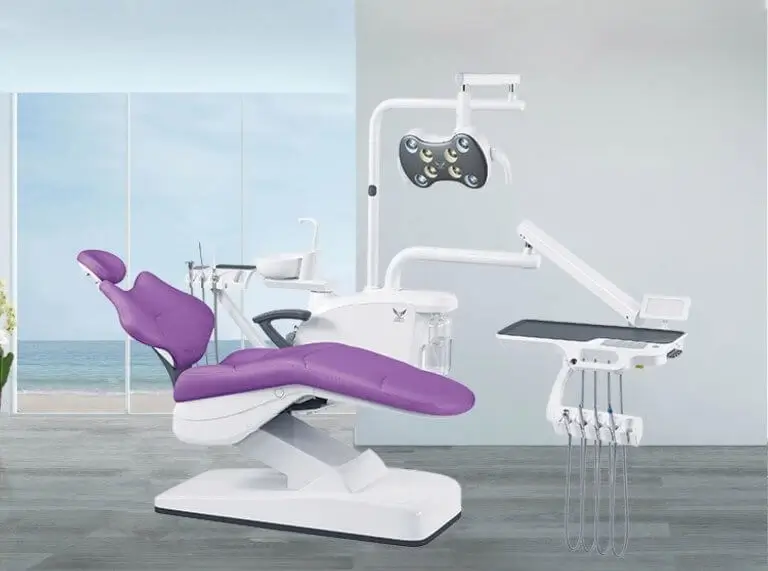
The final handover file should be usable by someone who did not attend the original purchase. Include the approved configuration, serial numbers, installation drawing, commissioning record, user manual, cleaning schedule, waterline diagram, parts list, warranty contact, and a list of open items with due dates.
Distributors should keep the same file structure for repeat orders. Clinics should make the cleaning and shutdown procedure available to the staff responsible for daily operation. When the next technician or purchaser can identify the model, parts, utilities, and approved procedures without searching through emails, the Dental Unit is easier to maintain and less likely to become an operational bottleneck.
A reliable dental chair unit is not defined only by its upholstery, light, or number of instruments. It is defined by whether the waterline can be managed, service parts can be reached, utilities match the room, commissioning results are recorded, and the manufacturer’s documents are complete.
Before shipment, close every open item in the acceptance matrix. Before handover, confirm the cleaning routine, service responsibilities, warranty contacts, and spare-parts path. For a model review or project quotation, contact Gladent with the room drawing, target procedures, destination country, required instruments, and planned quantity.
A: Request the model-specific user manual, waterline diagram, approved cleaning procedure, compatible-agent guidance, parts list, and document revision date. The documents should cover the exact configuration and any accessory that changes the water, suction, or drainage path.
A: Complete it after final configuration approval but before shipment. This allows the supplier to confirm model identity, utilities, instruments, service access, manuals, warranty information, and unresolved tests.
A: No. Factory testing checks the Dental Unit before dispatch, while commissioning verifies that the delivered unit operates correctly with the clinic’s actual electricity, air, water, drainage, suction, instruments, and room layout.
A: Record each missing item in the acceptance report, assign the responsible party and due date, and keep final handover open until essential installation, cleaning, warranty, and service documents have been received and checked.
 No. 1, No. 2, Fenggang Industrial Zone, Lianhe, Luocun, Shishan Town, Nanhai District, Foshan City, China
 Call us now:+86-757-81267151