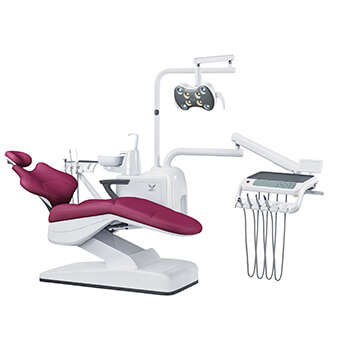
Mercury-free restorative care is no longer a niche sustainability topic. In 2026, WHO guidance brought mercury-free restorative materials such as resin-based composites and glass ionomer cements further into the mainstream, while the Minamata Convention’s COP-6 decision established a global phase-out of dental amalgam by 2034. For dental equipment buyers, though, this does not create a new hardware category or a universal “mercury-free dental unit” standard.
The practical question is much closer to daily clinic operations: does the operatory support the way restorative dentistry is actually being delivered? That brings controlled lighting, dependable suction, convenient instrument access, curing-light setup, assistant workflow, and serviceability into the purchasing discussion.
For distributors, clinic groups, and project buyers, those points belong in the RFQ before the purchase order is signed.
A dental unit sits at the center of the operatory, so a small configuration problem rarely stays small. If the light is awkward to control, the assistant has poor access, or the curing light has nowhere practical to sit, the same inconvenience comes back patient after patient. Over time, that affects chairside efficiency and the clinic’s view of the equipment itself.
The better buying sequence is straightforward: define the treatment workflow first, then compare the dental chair and delivery system against it.
Restorative lighting is not only about brightness. A light-activated composite can change before the intended curing step when it remains exposed to dental operating light. Laboratory testing has found that both light intensity and exposure time can alter composite consistency.
So asking only “How many lux?” does not tell the full story.
Check how easily the oral light can be positioned, whether the operator can change lighting conditions without interrupting working posture, and whether the setup makes sense for routine restorative procedures. For a broader look at this part of the dental chair, see Gladent’s guide to dental chair lighting.
The point is practical control. A buyer does not need another light mode simply because it looks good on a specification sheet.
The move away from dental amalgam is global; dental equipment procurement is not. Voltage, electrical requirements, handpiece connections, documentation, room layout, and accessory preferences can vary from one destination market to another.
For an importer or distributor, this is where a dental unit supplier can either add value or create headaches. These details are best settled before production. Fixing the wrong voltage, connection, or accessory package after shipment is slower, more expensive, and much harder to explain to an end customer.
Once the procedure mix is clear, the specification sheet becomes easier to read. Restorative buyers do not need every available option. They need features that keep the dentist and assistant working smoothly, fit the clinic’s existing dental equipment, and remain practical to clean and service.
For most restorative rooms, lighting, delivery layout, suction, assistant controls, and maintenance access deserve more attention than decorative upgrades.
Maximum brightness alone tells a buyer very little about how a light will work during restorative treatment. Positioning, control, and the ability to change lighting conditions matter as well.
The GD-S200 Plus, for example, combines an 8-hole tri-color oral light with a multifunctional doctor tray and a multi-joint headrest. These features are useful together because the clinician has to position the patient, light, and instruments around the same working area.
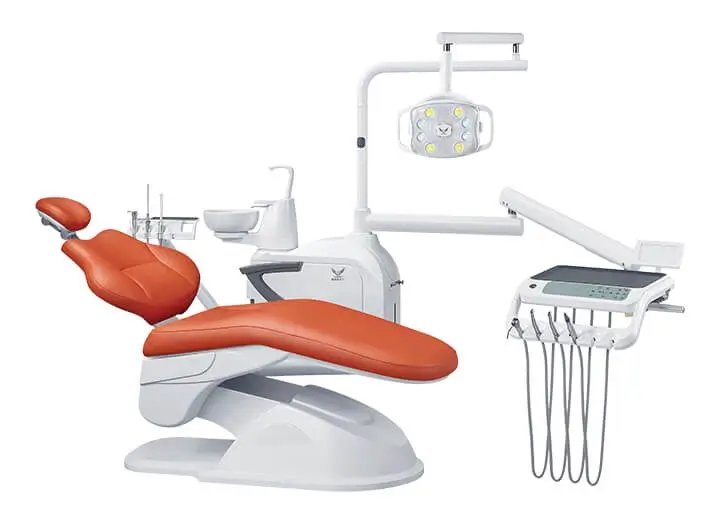
When reviewing a dental unit, ask a simple question: can the clinician get the patient, light, and instruments where they need them without repeatedly fighting the equipment?
That question is usually more useful than asking whether a dental chair simply “has an LED light.”
A built-in curing light can be convenient, but it is not automatically the right choice for every clinic. Some practices prefer a standalone device because they want a particular curing system or an easier replacement path. In that case, tray space, tubing layout, and a practical location for the device matter more than integration itself.
Suction and assistant-side controls deserve the same attention.
The GD-S200 Plus includes an external detachable saliva ejector with a collection cup and a nine-key assistant control panel. In four-handed dentistry, details like these influence how easily the assistant can handle fluids and controls without repeatedly crossing the operator’s working zone.
This is the sort of feature that may not look dramatic in a catalog but becomes noticeable during a full working day.
A useful restorative dental unit RFQ usually starts with the basics:
Optional features come after that. Integrated curing lights, monitor mounts, memory positions, additional accessories, or specialized disinfection functions may be worthwhile, but only when the clinic will use them.
A feature can be technically impressive and still be the wrong thing to pay for. In B2B purchasing, fit matters more than the longest specification list.
A surprising number of after-sales problems start before the unit even reaches the production line. Two suppliers may quote “the same” dental unit while offering different lights, suction arrangements, handpiece connections, accessories, or service items.
If the comparison is not specification-for-specification, the lower unit price may not be the lower-cost purchase.
Before production, the buyer and dental unit manufacturer should work from one approved configuration that is clear enough to use again when the next order comes around.
The approved configuration should identify the items that affect installation, daily use, and service: voltage, utilities, handpiece connections, suction setup, oral light, included accessories, optional items, packaging requirements, and destination-market documentation.
For OEM or distributor orders, branding and upholstery choices may also need to be fixed.
This is not paperwork for the sake of paperwork. A clean configuration record makes later quotations, spare-parts requests, and repeat batches much easier to compare. It also reduces the risk of discovering after delivery that one seemingly minor component has changed.
A dental chair is much easier to evaluate for maintenance access before it is installed in a treatment room.
On the GD-S200 Plus, the rotatable unit box provides access to internal components including the control system, solenoid valve, and piping. On the GD-300, the unit-box cover can be removed for access to internal devices, while its suction filter is mounted externally for easier cleaning.
These are practical service details rather than headline features, but they matter when a distributor has units operating across several customer sites.
Repeat-order consistency belongs in the same conversation. If a dealer has already trained technicians and stocked parts around one approved setup, unnecessary component changes between batches create extra work for everyone.
Gladent’s integral dental unit range gives buyers several configurations to compare without treating one model as the answer for every restorative clinic. Current models in the range include the GD-S300, GD-S200 Plus, GD-350, GD-300, and GD-200.
The sensible choice still depends on procedure mix, installation conditions, service capability, local requirements, and budget. Looking at two models side by side shows why.
The GD-S200 Plus Integral Dental Unit combines a multifunctional instrument tray, tri-color oral light, multi-joint headrest, assistant controls, detachable saliva ejector, and a rotatable unit box.
For a general restorative clinic, the useful part is how these features come together around day-to-day treatment. The tray provides working space, assistant-side controls support four-handed operation, and the unit-box design gives technicians access to internal components.
This model is worth discussing when a project places more weight on straightforward instrument access, assistant-side operation, and practical maintenance than on a long list of specialized add-ons.
The GD-300 Integral Dental Unit takes a somewhat different approach. Its listed configuration includes nine memory positions, a butterfly-shaped tri-color oral light with Osram LED beads, stainless-steel four-hole handpiece connectors, a rotatable ceramic cuspidor, assistant controls, a removable unit-box cover, and an external suction filter.
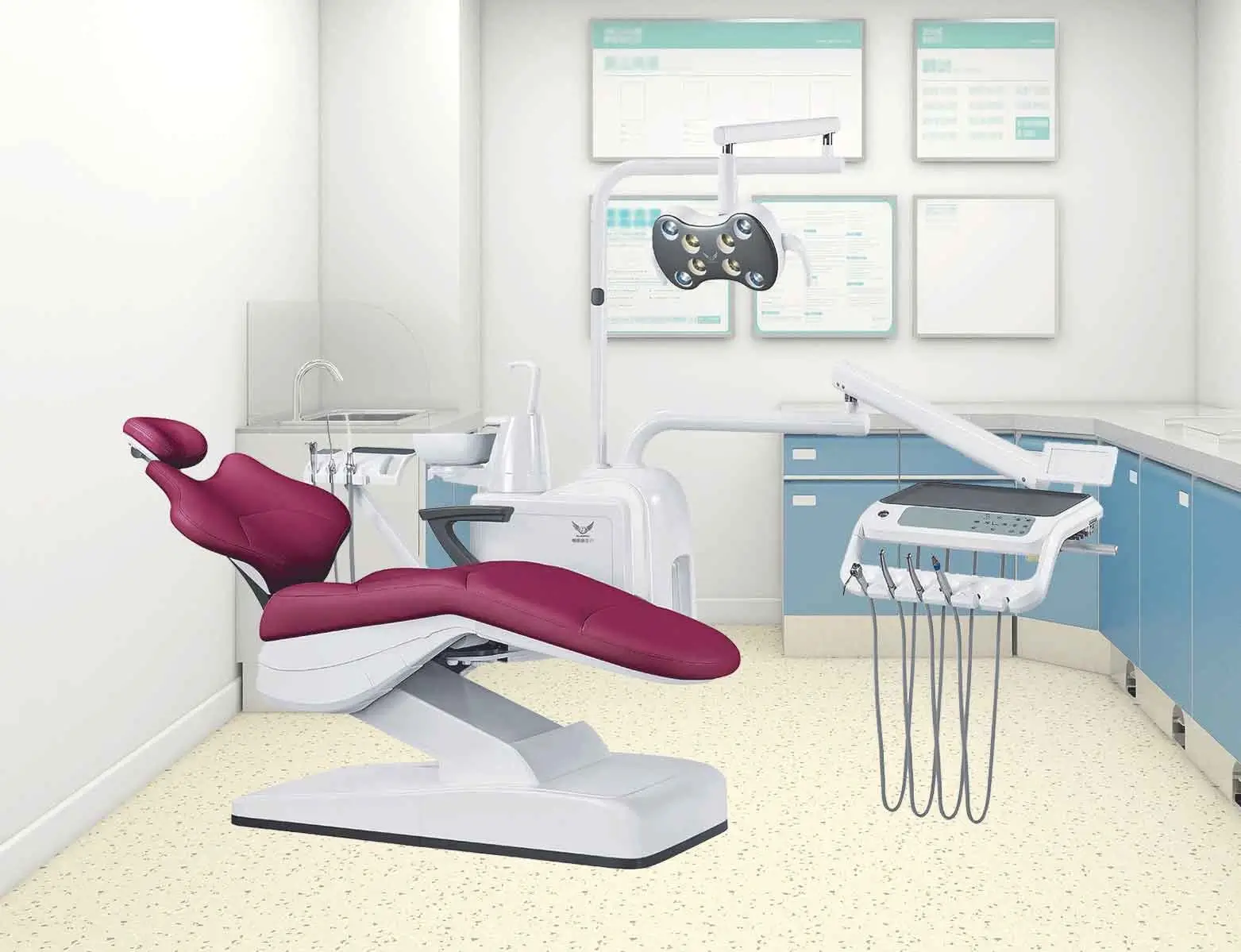
That can make sense for clinics that place more value on repeatable chair positioning and accessible suction-filter maintenance.
It does not make the GD-300 the better choice for every order. If those features are not important to the clinic’s workflow, they should not drive the purchasing decision. A good dental unit supplier should be able to discuss that difference without automatically pushing the model with more features.
Mercury-free restorative dentistry is changing the context around dental equipment purchasing, but it is not creating a new universal dental chair standard. The buyer still has to do the practical work: match the dental unit to the clinic’s lighting needs, suction setup, instrument layout, curing-light preference, maintenance routine, and local installation requirements.
That also makes supplier comparison much more meaningful. Instead of asking which dental unit has the most features, ask which configuration fits the treatment workflow, can be serviced without unnecessary difficulty, and can be supplied consistently when the next order is placed.
For a distributor order, clinic project, or bulk dental equipment purchase, send Gladent your destination market, expected quantity, preferred instrument and suction setup, and any OEM requirements. You can request a dental unit proposal and quotation based on the configuration your project actually needs.
A: Start with oral-light control, suction, instrument delivery, assistant access, patient positioning, curing-light compatibility, and service access. For imported equipment, also confirm voltage, connections, documentation, and replacement-part support before production.
A: No. A built-in curing light can reduce instrument movement, but a standalone device may suit clinics that want a specific curing system or a simpler replacement path. The right choice depends on the clinic’s workflow.
A: Yes. Dental operating light can change the consistency of light-activated composite before the intended cure. Exposure time and light intensity both matter, which is why controllable lighting is relevant during restorative work.
A: Include voltage, utilities, handpiece connections, oral-light requirements, suction arrangement, assistant controls, included accessories, curing-light setup, required documentation, packaging, spare-parts needs, and any OEM requirements.
A: Not necessarily. Mercury-free dentistry does not require one specific dental unit design. The equipment should support the clinic’s actual restorative workflow, including lighting, suction, instrument access, curing setup, and maintenance needs.
 No. 1, No. 2, Fenggang Industrial Zone, Lianhe, Luocun, Shishan Town, Nanhai District, Foshan City, China
 Call us now:+86-757-81267151