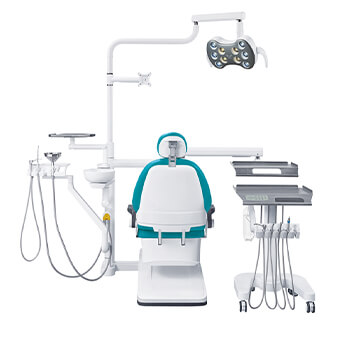
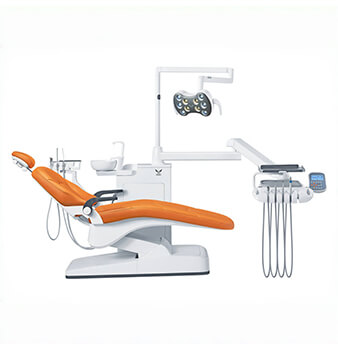
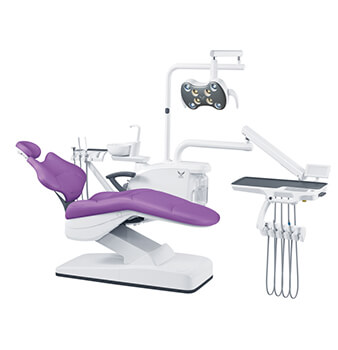
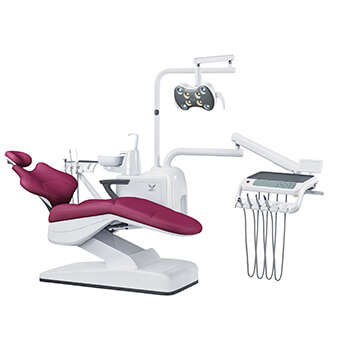
The dental chair has become a clinical workstation rather than a passive patient seat. A modern dental chair combines patient positioning, instrument delivery, illumination, suction, water control, infection-control architecture, and digital compatibility in one operatory platform. Strong chair design supports clinical access, patient comfort, operator posture, and procedural efficiency. The reference article organizes the topic around chair technology, diagnostic support, innovative features, and efficiency, and this blog follows that structure while adding engineering-focused sections.
Current dental chair technology is shaped by integration, precision movement, and hygienic operatory design. Electric and hydraulic lifting systems allow smoother height changes, stable reclining, and accurate working positions. This stability matters because implant placement, endodontic access, restorative preparation, and periodontal treatment all require consistent visibility and controlled hand movement.
Several practical improvements define advanced dental units:
The main technical change is the coordination of multiple subsystems in one treatment platform.
Modern dental equipment improves treatment by placing essential clinical functions closer to the working field. Digital imaging, intraoral cameras, chairside monitors, and integrated delivery systems allow clinicians to evaluate oral conditions, explain findings, and begin treatment with fewer operatory interruptions. The reference article identifies intraoral cameras, digital imaging, and integrated systems as important contributors to clearer visualization and more efficient communication.
The dental chair supports diagnosis when the chair keeps the patient stable and correctly positioned. The headrest controls the occlusal plane, the lamp reveals enamel and gingival detail, and the tray position controls how quickly the operator can move between mirror, handpiece, syringe, curing light, and suction. Patient experience also depends on a stable base, a slim backrest, soft cushioning, and quiet motion.
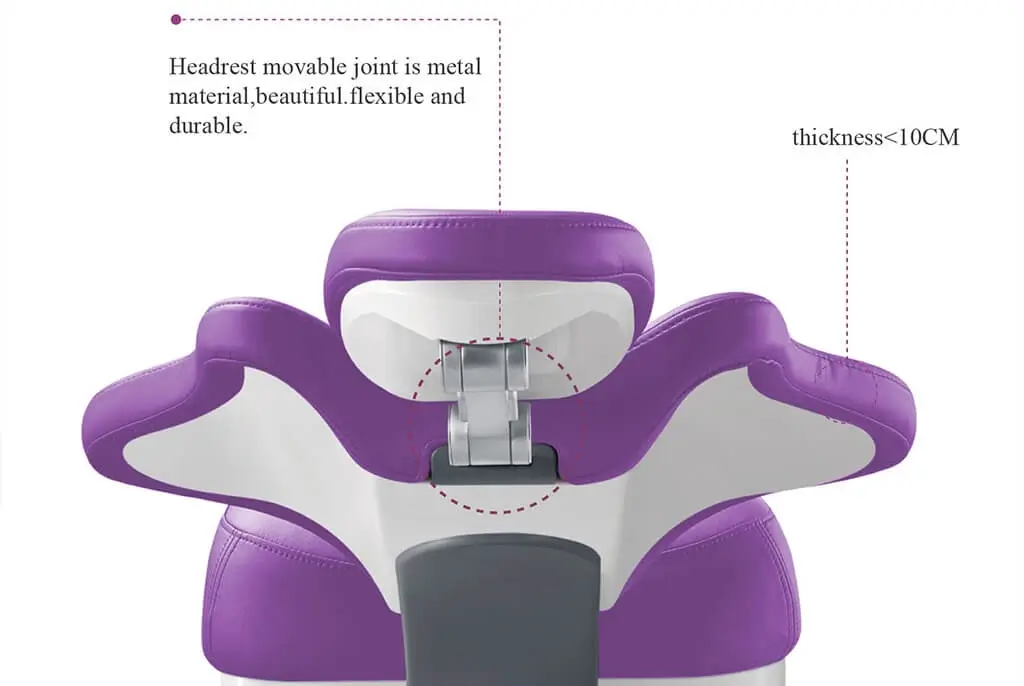
Current dental chairs include refined features in the backrest, lighting, control panel, water system, and assistant area. Visible design improvements include slim metal backrests, adjustable headrests, microfiber upholstery, sensor-based LED lamps, rotatable spittoons, and larger instrument trays.
The most valuable features are practical rather than decorative:
Some current dental chairs also incorporate waterline disinfection, separate clean-water bottles, suction circuit disinfection, and one-touch utility control. The GD-S800 product page describes one-click full waterline disinfection, imported water and air tubes, nine memory positions, and a butterfly-shaped metal backrest. The GD-S600 page describes a hydraulic drive system, full waterline disinfection, imported water and air pipes, and a tri-color oral light.
The engineering quality of a dental chair determines whether a procedure feels controlled or interrupted. A hydraulic drive system can provide smooth lifting and reclining when a patient needs small position changes during treatment. The GD-S600 documentation states that its hydraulic transmission provides dynamic performance for smooth lifting and reclining.
The delivery system affects posture because instrument location determines reach distance. The main tray should keep handpieces and syringes within easy reach, and the assistant tray should support suction exchange, isolation, and material transfer. The oral lamp should illuminate the oral cavity without excessive heat, glare, or shadow.
Infection-control architecture is a critical technical area in modern dental units. Dental unit waterlines can develop microbial biofilm because narrow tubing, intermittent flow, and room-temperature water create favorable conditions for bacterial accumulation. The CDC states that dental unit waterlines should be treated regularly with disinfectants so that water meets EPA drinking-water standards of ≤500 CFU/mL of heterotrophic water bacteria, and the ADA repeats the same threshold for nonsurgical dental procedures.
A well-specified dental unit should support controlled water delivery, clean-water storage, and clear disinfection procedures. The FDA recommends infection-control procedures based on manufacturer instructions, written standard operating procedures, water quality monitoring, separate reservoirs, chemical treatment protocols, filtration systems, sterile water delivery systems, and flushing between patients.
Strong suction supports aerosol reduction at the working field, and weak suction supports fluid evacuation and patient comfort. A dual-bottle or dual-circuit design can simplify waterline and suction-circuit disinfection.
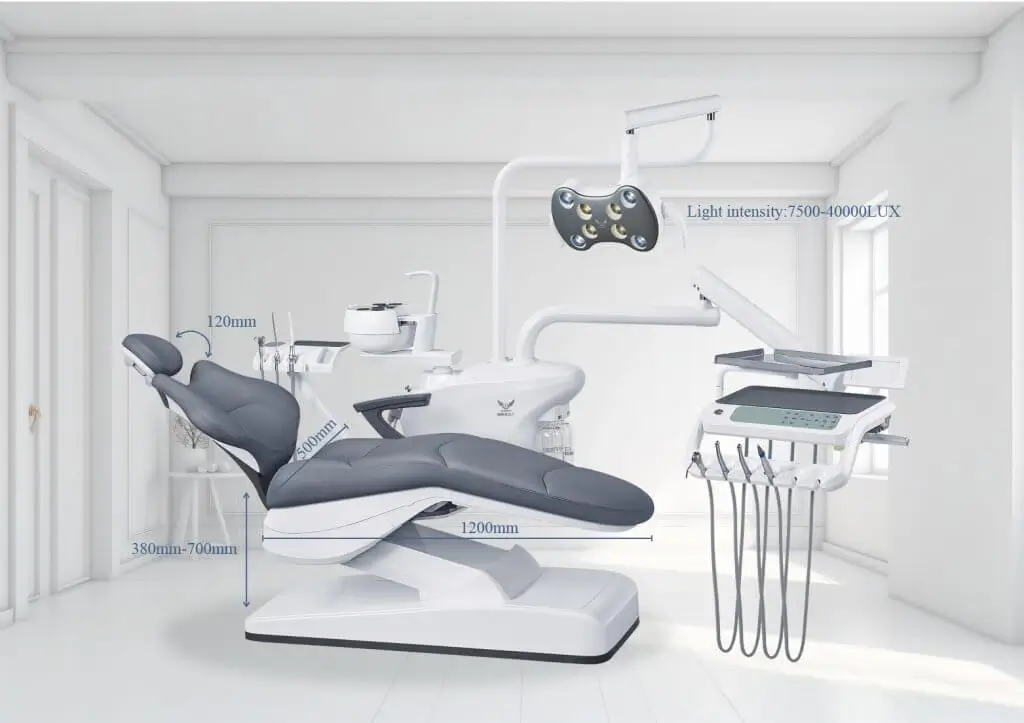
Different dental practices require different chair configurations. An implant-focused dental unit requires stable positioning, strong illumination, reliable suction, and an assistant area that supports surgical workflow. A pediatric dental chair requires visual comfort, smaller-scale support, safety restraints, and a non-threatening design language. A mobile trailer-type unit requires compact movement, and a floor-fixed chair requires structural stability.
The official product center lists implant type, mobile trailer type, hydraulic, integral, kids type, disinfection, and floor-fixed dental units as separate product groups. The kids-type page describes a marine-themed design, soft materials, an adjustable safety belt, and cartoon elements intended to reduce treatment fear. The floor-fixed page describes a sturdy floor-mounted structure, microfiber leather, a convenient instrument tray, a 90-degree rotatable ceramic spittoon, and assistant-side design details.
Advanced dental chairs improve efficiency by reducing unnecessary movement, shortening setup time, and keeping clinical tools within a predictable working zone. Programmable positions, rotatable cabinets, integrated suction, and water controls reduce interruptions during procedures.
Operator health also influences treatment quality. Ergonomic literature states that operator and patient chairs can support better working posture when they are properly designed, and FDI posture guidance emphasizes headrest use and patient head positioning to preserve balanced operator posture.
The most important feature is integrated clinical control. A dental chair should combine precise positioning, dependable delivery systems, effective suction, strong illumination, and waterline control in one coordinated platform.
Waterline disinfection matters because dental unit tubing can support microbial biofilm. Dental procedural water for nonsurgical procedures should meet the CDC and ADA recommended level of ≤500 CFU/mL of heterotrophic bacteria.
An implant dental unit should provide stable positioning, bright oral illumination, efficient suction, organized instrument access, and an assistant-side layout that supports surgical coordination.
Gladent is a dental unit manufacturer, supplier, and factory based in Foshan, China, with dental equipment production experience since 2013, product categories covering dental comprehensive treatment units, handpieces, oil-free air compressors, suction systems, curing lights, and other dental accessories, and exported products reaching more than 50 countries according to its official website; B2B buyers, distributors, dental equipment importers, and clinic project contractors can contact Gladent for dental unit sourcing, OEM/ODM cooperation, factory-direct supply, and long-term procurement support.
 No. 1, No. 2, Fenggang Industrial Zone, Lianhe, Luocun, Shishan Town, Nanhai District, Foshan City, China
 Call us now:+86-757-81267151