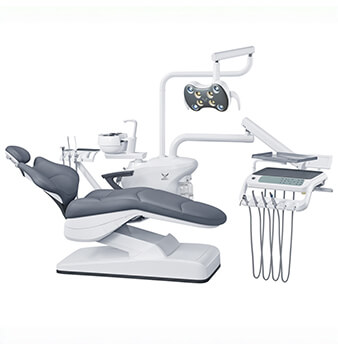
B2B buyers should compare dental chair headrest types as part of a linked headrest and backrest system. The headrest mechanism controls how the patient’s head and neck can be positioned; the backrest shape influences support, operator approach, and service access.
For a bulk order, first define the patient mix and working positions, then specify the adjustment method, backrest form, detachable parts, included cushions, and acceptance checks.
Do not treat an aftermarket headrest pillow as equivalent to the chair’s built-in mechanism. A model-level reference unit is the most reliable way to confirm reach, locking, clearances, removal, and repeatability before the remaining quantity is approved.
Begin with the treatment environment, not a preferred mechanism name. Review the Gladent Dental Chair Unit range only after the procurement team has defined the people, working positions, and room constraints the chair must accommodate. A distributor serving several clinic segments may need more than one approved configuration rather than one universal choice.
Describe patient variability in operational terms. Relevant questions include how often staff reposition the head during a procedure, whether the backrest must permit a close operator approach, who resets the chair between patients, and whether the clinic expects to remove the backrest for service or installation. Avoid unsupported promises that one design is best for every age, body type, disability, or procedure.
Record operator access separately from patient support. A narrow or butterfly-shaped backrest may change the approach area, while the headrest sets the head position. Neither label proves that the combined geometry suits a particular clinic. The reference-unit review must use the intended stool, delivery system, assistant position, and normal treatment posture.
The built-in headrest has three procurement dimensions: the movement available, the method used to set the position, and the way the mechanism holds that position. The backrest adds its own form, thickness, attachment, and removal status. Buyers should evaluate the interaction rather than approving each component from a separate photograph.
Ask for a demonstration that begins in a neutral chair position and moves through the range required by the intended workflow. The operator should be able to identify the adjustment points, set the position without unexpected movement, return to a repeatable starting point, and check clearance around the chair shell and upholstery. Procurement does not need an invented angle specification; it needs evidence that the ordered mechanism performs the agreed movement.
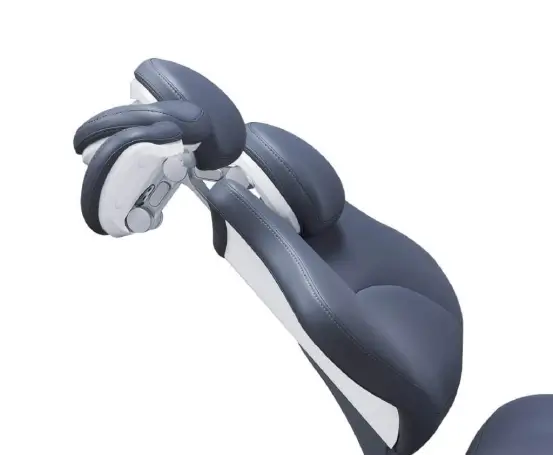
Gladent dental unit pairs specific headrest mechanisms with specific backrests. The GD-S800 disinfection dental unit combines a cast-aluminum multi-joint headrest with one-click positioning and a butterfly-shaped, ultra-slim metal backrest. Demonstrate the positioning control, confirm the set position, and evaluate approach clearance. These facts do not establish an adjustment angle, a weight rating, or suitability for a named procedure.
Search results for dental chair headrests often mix two product classes. The first is the built-in structural mechanism supplied with the chair. The second is a removable cushion or support accessory placed over an existing chair. They may be used together, but they should appear as separate RFQ lines because they have different compatibility, cleaning, replacement, and acceptance questions.
Freeze the factory headrest first. Name its construction, movement description, positioning or locking method, upholstery or pad reference, and relationship to the backrest. If an accessory cushion is also required, identify its supplier, dimensions, attachment method, color, quantity, and approved cleaning instructions separately. Do not assume that a generic cushion will preserve the available movement or fit every ordered model.
This separation also helps with replacement planning. A damaged cushion, a worn pad, and a headrest mechanism issue are different service cases. The spare-parts list should therefore use model-specific part numbers and distinguish soft components from structural assemblies.
A multi-joint dental chair headrest gives the buyer more than one point of movement to evaluate. During the reference-unit review, staff should demonstrate how the joints are adjusted, how the chosen position is retained, and whether the headrest can return to the clinic’s common starting position. More movement may support varied positioning tasks, but it also makes clear instructions and repeatable setup more important.
A push-positioning description indicates a different user interaction, but the name alone does not define travel, force, or locking behavior. Ask for a live demonstration using the exact ordered unit. The buyer should confirm how the position is changed, what indicates that it is set, and whether normal contact during patient positioning causes unwanted movement.
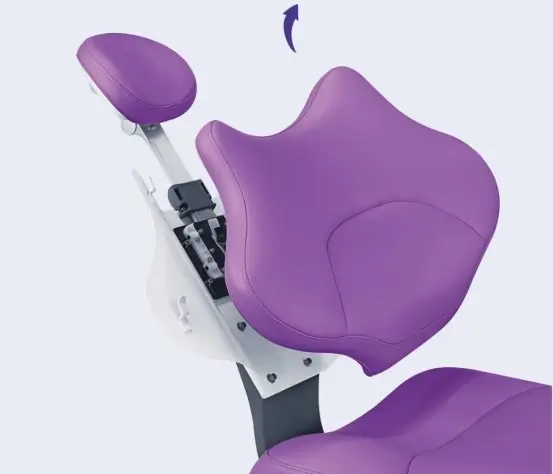
Butterfly and ultra-slim are form descriptions that help buyers shortlist a chair, not substitutes for measured fit. Detachability is another separate field. When a metal backrest is detachable, include removal, secure reattachment, finish protection, fastener or interface inspection, and post-installation movement checks in the approval process.
The GD-S200 Plus integral dental unit uses a cast-aluminum multi-joint movable headrest with a detachable metal backrest. This pairing suits a procurement comparison in which headrest articulation and backrest removal are both required fields. The acceptance demonstration should cover joint movement, position retention, backrest removal, reattachment, and clearance after reassembly. Its single armrest is a separate chair-layout fact and should not be used to infer headrest performance.
The GD-S300 Integral Dental Unit combines a push-positioning cast-aluminum headrest with a butterfly metal backrest that is detachable. It therefore creates a different inspection path from the GD-S800 and GD-S200 Plus: demonstrate the push adjustment, confirm the selected position, inspect the butterfly backrest approach area, and complete a removal and reattachment check.
Across these Gladent models, the buyer should preserve the exact pairing instead of ordering a headrest type independently from the chair model.
The RFQ should make the approved model reproducible. Phrases such as ergonomic headrest, comfortable backrest, or flexible adjustment are too broad for order control. Replace them with fields that the supplier can confirm and the inspector can observe.
Attach a configuration sheet to the purchase order and require written approval for substitutions. If the headrest mechanism, backrest form, upholstery reference, or detachable interface changes, return the unit to the approval step. A shared model name is not sufficient when the configuration revision changes.
Reference-unit approval should be a hands-on sequence, not a photograph review. Use the unit through the intended chair positions. Adjust the headrest, set it repeatedly, apply normal positioning contact, inspect clearances, and remove and reinstall detachable parts. Record the accepted model, configuration, upholstery reference, labels, and demonstration result.
For a push-positioning and detachable-backrest example, use the GD-S300 integral dental unit as the documented reference, then keep its acceptance record separate from records for other models. This prevents a mixed order from being checked against the wrong mechanism or backrest.
Dental chair headrest types should be specified together with the backrest that supports the patient and shapes operator access. Define the built-in mechanism, adjustment method, position-retention check, backrest form, detachable parts, cushions, spare identification, and acceptance sequence. For bulk orders, approve one model-level reference unit and use it to control later inspection.
To review a specific order, send Gladent your bulk-order positioning requirements with the target patient mix, working positions, selected models, quantity, destination, and required headrest and backrest configuration. Ask for the approved pairing and revision to appear in the quotation and purchase documents.
Not necessarily. Search results often use similar words for an accessory cushion and for a chair’s structural headrest mechanism. In an RFQ, identify the factory headrest first, then list any cushion as a separate accessory with its own dimensions, attachment, cleaning instructions, color, quantity, and compatibility confirmation.
No. Evaluate them as a paired positioning system on the exact Dental Chair Unit. The headrest influences head and neck positioning, while the backrest affects support and operator approach. Approving the pair on a reference unit reveals clearances and handling issues that separate component descriptions cannot show.
It means removal and secure reattachment must become acceptance steps. Ask which parts detach, what tools or actions are required, how the interface is inspected, and what movement or fit check follows reassembly. Do not assume detachability alone proves easier service or better clinical performance.
Freeze the model and configuration revision, approve one physical reference unit, and record the adjustment and removal sequence. During pre-shipment inspection, sample model labels, joint movement, position retention, backrest attachment, upholstery fit, included accessories, and packing identification against that reference. Keep separate records for each model in a mixed order.
 No. 1, No. 2, Fenggang Industrial Zone, Lianhe, Luocun, Shishan Town, Nanhai District, Foshan City, China
 Call us now:+86-757-81267151