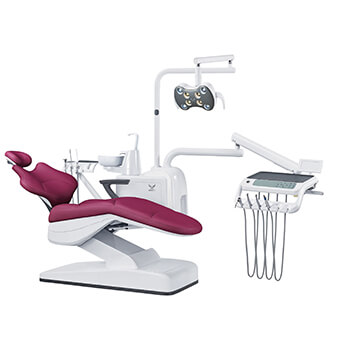
A dental unit handpiece connector is only one line in a procurement specification. For a distributor or clinic group, the usable interface includes the connector format, handpiece count, tubing, holders, doctor-tray layout, controls, and the boundary between standard and optional scope. A four-hole label alone does not confirm dimensions, mating parts, or compatibility with every handpiece used in the destination market.
The practical objective is a controlled configuration that a supplier can quote, a buyer can compare, and an installer can verify. The sections below turn that objective into an RFQ and pre-shipment checklist.
Handpiece connectors sit at the intersection of the delivery unit, the handpiece, the tubing, and the operator’s working position. If a quote names only a connector, the supplier and buyer may still have different assumptions about the number of outlets, hose length, holder position, air and water routing, or whether the tray and controls are included. A clearly documented configuration helps multi-room projects maintain consistent quotations, ordering, installation, and repeat purchasing.
Start by describing the treatment workflow. Identify the handpieces that must be connected, which instruments are supplied by the buyer, whether the assistant and doctor positions differ, and how the operator reaches the tray.
Then define the interface at the unit: connector type as named by the supplier, terminal location, tubing route, holder, and any required mating component. Ask for a drawing or annotated photograph of the exact configuration rather than relying on a gallery image.
A useful RFQ gives each physical element its own line. This prevents a familiar term such as four-hole connector from silently absorbing items that are not actually included.
| RFQ line | What to specify | Evidence to request |
| Handpiece connector | Outlet count, supplier terminology, location, and whether the connector is standard or optional | Model drawing, connector photo, and written compatibility statement |
| Air and water tubing | Included lines, routing, connection points, and replacement identifiers | Tubing route sketch and parts reference |
| Holder and reach | Holder count, orientation, working position, and interference limits | Annotated photo or approved sample |
| Doctor tray | Tray type, dimensions if supplied, instrument layout, controls, and included accessories | Product drawing and line-item quotation |
| Excluded scope | Handpieces, external accessories, site utilities, and buyer-supplied items | Explicit exclusions on the quotation and purchase order |
This structure also clarifies responsibility across international projects. A North American distributor may need a different handpiece mix from a Gulf project or an Australian clinic group, while an importer serving several markets may prefer a common base unit with documented option packages. The commercial word “standard” should therefore be tied to a model and quotation, not treated as a universal industry definition.
Review the Gladent dental unit product range when deciding which documented unit category should carry the configured interface.
Connector selection is easier after the operator’s working position is clear. Tray size should be evaluated together with holder position, operator reach, assistant access, and tubing movement to support an efficient working layout.
Ask the supplier to show the doctor-side and assistant-side positions on one approved drawing. Record left/right orientation, holder angle, hose exit, and the clearance needed to remove a handpiece for cleaning or service.
For project buyers, the tray is also a repeatability tool. A clinic group can use one layout across rooms, while a private-label brand may need a distinct SKU for each market configuration.
Decide whether the same tray supports the intended instruments, whether controls are visible from the normal position, and whether replacement holders or tubes can be identified by a part number. These are procurement and service decisions, not cosmetic preferences.
Gladent’s official product pages support model-level comparison, but they should not be stretched into range-wide claims. The company identifies itself as Foshan Gladent Medical Instrument Co., Ltd., a dental-equipment manufacturer founded in 2013. Its product categories include integral, hydraulic, floor-fixed, implant-type, kids-type, disinfection, and mobile trailer dental units.

For a connector-specific example, the GD-300 integral dental unit lists a stainless-steel four-hole dental handpiece connector, imported air and water pipes, a square injection-molded instrument tray, a multifunctional foot pedal, and nine memory positions. Treat those as fields to verify in the quotation and drawing. Keep the connector evidence tied to the exact quoted model and request a current drawing before standardizing a distributor SKU.
A separate documented configuration is the GD-S300 integral dental unit . Its listed evidence includes a stainless-steel four-hole connector, doctor tray, imported air and water pipes, push-button control panel, multifunctional foot control, and a one-key air, water, and electricity switch. The buyer should still confirm which functions are standard for the exact order and which are selected options.
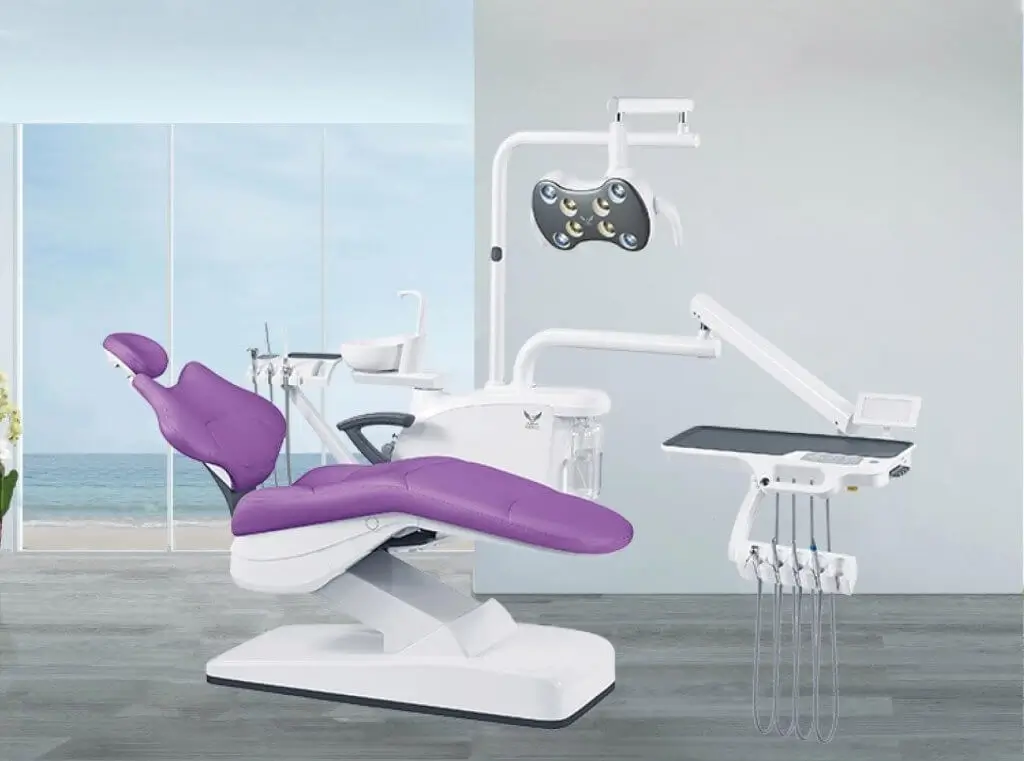
Send the supplier a configuration sheet before comparing prices. Include the destination market, intended clinic workflow, handpiece list, doctor and assistant positions, and any existing instruments that must be retained.
Ask the supplier to answer each row with standard, optional, excluded, or requires confirmation. Require the same model name and revision on the quote, drawing, packing list, and inspection record.
Do not ask a supplier to confirm “fits all handpieces” without naming the handpiece families and the test basis. If a third-party instrument is important to the project, provide its connector information to the responsible technical team and record the confirmation in writing. A supplier’s general catalog language is not a substitute for that model-to-model check.
Approve one reference unit or a complete pre-shipment evidence pack before releasing a batch. Check the connector count and location, hose routing, holder movement, tray layout, labels, and included loose parts against the signed specification. Photograph the exact configuration from the operator and service sides. Log any deviation by model and carton or serial reference where available.
The incoming check should separate visible configuration from clinical performance. Buyers can verify supplied components, assembly, movement, and identifiers before installation. The local installer or qualified service team should handle site utilities, handpiece-specific testing, and any destination-market requirements.
Keeping these responsibilities clearly documented helps purchasing, installation, and service teams resolve configuration questions efficiently during commissioning.
A reliable dental unit handpiece connector specification is a small systems document, not a single component name. Define the connector, tubing, holder, tray, controls, exclusions, and approval evidence as one model-level scope. That gives an importer or distributor comparable quotations and gives the installer a clear basis for checking the delivered unit.
When the scope is ready, send a model-level RFQ to Gladent with the destination market, handpiece list, tray layout, required drawings, and requested option status. Ask for written confirmation of any connector or compatibility point that matters to the order.
No. “Four-hole” describes a connector format, but dimensions, pin or port arrangement, tubing, seals, and mating handpiece requirements still need confirmation for the quoted model and instrument. Treat the term as an RFQ starting point, not a universal compatibility guarantee.
Record the tray type, working position, holder count and orientation, controls, included accessories, hose exits, cleaning or service access, and any buyer-supplied instruments. An annotated drawing or reference-unit photo is more useful than a generic statement that the unit has a doctor tray.
That depends on the project scope. If handpieces are supplied separately, list them as separate lines and confirm the connector and tubing interface with the responsible technical parties. Do not assume a dental-unit quotation includes instruments unless the quotation states that scope.
Use a controlled base configuration and document market-specific option packages. Keep the model, drawing revision, connector terminology, and acceptance checks consistent, while recording any local instrument, utility, installation, or regulatory differences that require a separate SKU or confirmation.
 No. 1, No. 2, Fenggang Industrial Zone, Lianhe, Luocun, Shishan Town, Nanhai District, Foshan City, China
 Call us now:+86-757-81267151