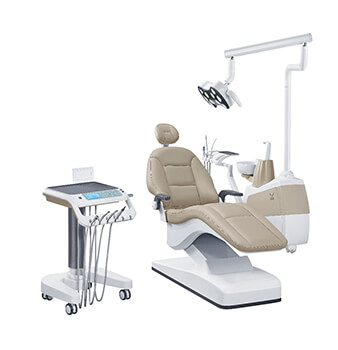
A dental unit suction configuration should define the chairside evacuation hardware and its connection boundary before a buyer compares prices. It should not use the word suction as if it automatically covered the clinic’s central vacuum pump, separators, building pipework, portable equipment, or extraoral devices. Those are different scopes.
For a bulk order, the RFQ must state what is mounted on the dental unit, what the clinic or project contractor supplies, what connects the two, and how the agreed configuration will be verified before shipment.
This prevents a common purchasing problem: the unit arrives with chairside heads and hoses, but the installer expected a different connection or central-vacuum responsibility. An interface schedule gives the manufacturer, importer, dealer, and installer the same basis for acceptance.
Start with two layers. The chairside layer can include suction heads or valves, hoses, holders, controls, collection or trap components, and an outlet or connection point within the dental unit. The clinic layer can include a central wet, dry, or other vacuum source; separators or amalgam-management equipment where applicable; fixed piping; electrical and drainage services; exhaust provisions; and commissioning.
A portable suction unit is another system type, while extraoral suction captures outside the patient’s mouth and should not be treated as an interchangeable name for intraoral chairside evacuation.
Do not infer performance from labels such as strong suction, weak suction, high-volume evacuation, or saliva ejector. Ask the supplier to define the terminology used for the quoted model.
Then ask the project engineer or installer whether the upstream vacuum source and site services can support the intended treatment rooms under local requirements. A chairside component description alone cannot prove whole-system airflow, aerosol control, or compatibility.
Create a responsibility matrix before comparing quotes. This makes exclusions visible even when suppliers use familiar feature names.
| Scope item | RFQ decision | Evidence or owner |
| Chairside suction heads and holders | Identify type, count, location, material if material matters, and ordered options | Manufacturer quotation, annotated photo, approved sample |
| Hoses and internal routing | Define included length or routing, detachable points, and replacement identification | Model drawing and parts reference |
| Collection or trap arrangement | Describe included cup, filter, trap, or other collection component without assuming equivalence | Supplier description and cleaning-access photo |
| Dental-unit connection boundary | Mark the terminal point and identify the required mating connection | Dimensioned connection drawing |
| Central vacuum and building services | State included or excluded; define the project party responsible for sizing and installation | Clinic engineer, dealer, or local contractor |
| Commissioning and acceptance | Assign functional checks and exception handling | Importer QC plan and local installer |
The mounting and delivery arrangement can change where hoses, holders, and services are located. Compare that broader choice separately through the guide to chair-mounted, cart, and self-contained delivery architectures. The suction section of the RFQ can then describe the interface inside the selected architecture.
A component list is only the beginning. Ask how the assistant reaches each holder from the intended operating position, whether hoses can move without sharp bends or interference, and whether valves or heads can be removed for the approved cleaning process. Review access to collection components and the steps required to identify a replacement hose, holder, valve, cup, or seal.
Use photographs or video of the exact quoted configuration, not a mixed gallery of several options. Mark every chairside suction component on one annotated image. If left/right orientation or assistant-side placement matters, record it on the approved drawing. For distributor stock, decide whether one standardized arrangement will serve the target market or whether configurations need separate SKUs.
Shortlist models within the Gladent dental unit range only after the project team has defined the responsibility boundary. The buyer can then compare relevant chairside arrangements instead of treating every dental unit as if it connects to every clinic system in the same way.
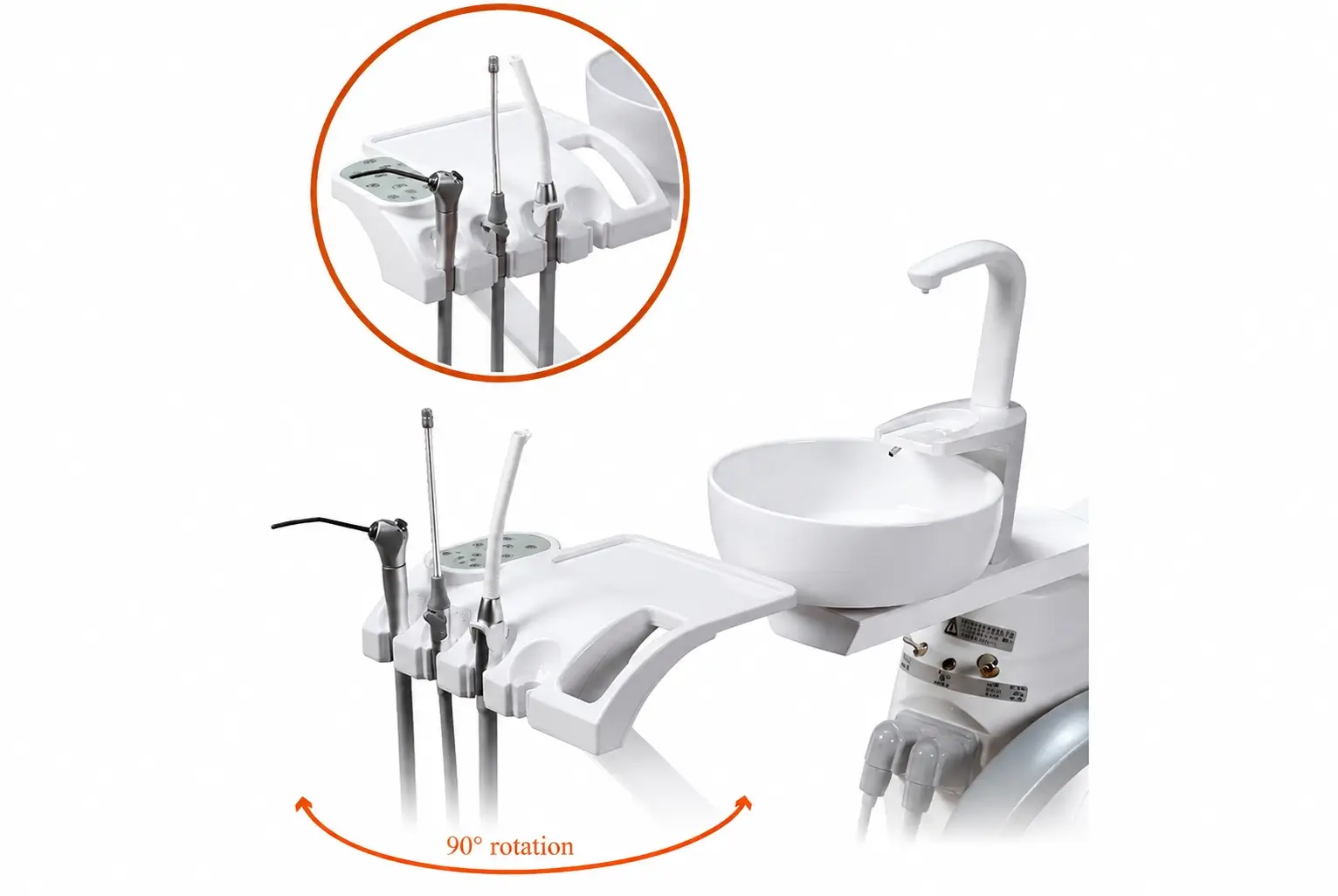
Send the intended country, clinic type, room layout, delivery architecture, and known utilities with the RFQ. Ask for a dimensioned connection drawing and a written list of assumptions. If the manufacturer uses the terms strong and weak suction, request a functional description of each chairside line and the corresponding connector.
If performance values are important to the project, require test conditions and acceptance criteria to be agreed by the responsible engineering parties rather than accepting an isolated number.
Ask whether the quoted suction components are standard, optional, or market-specific. Confirm which pieces are installed on the unit, which are packed separately for assembly, and which are not supplied.
Request service-part identifiers for routine replacement items. Have the local installer review the drawing before the purchase order, especially when the project uses existing pipework or a central vacuum selected by another vendor.
Use one RFQ row per requirement. Add columns for the buyer requirement, supplier response, standard or optional status, evidence, exception, and acceptance method. This prevents yes from hiding different assumptions.
Avoid copying a clinic vacuum specification into the dental-unit purchase order unless the same supplier is contractually responsible for both systems. Conversely, do not omit the upstream assumptions simply because the central equipment is sourced elsewhere. The interface must be visible to both parties.
Gladent manufactures dental units in Foshan for international B2B buyers. The GD-S350 mobile trailer-type dental unit identifies American-style strong and weak suction heads made from aviation-grade aluminum.
An importer can use that statement to open the RFQ discussion: confirm the exact heads in the quotation, their quantity and placement, the associated hoses and holders, the dental-unit connection boundary, and the approved sample. It should not be expanded into an unverified claim about flow rate, central-pump supply, or universal compatibility.
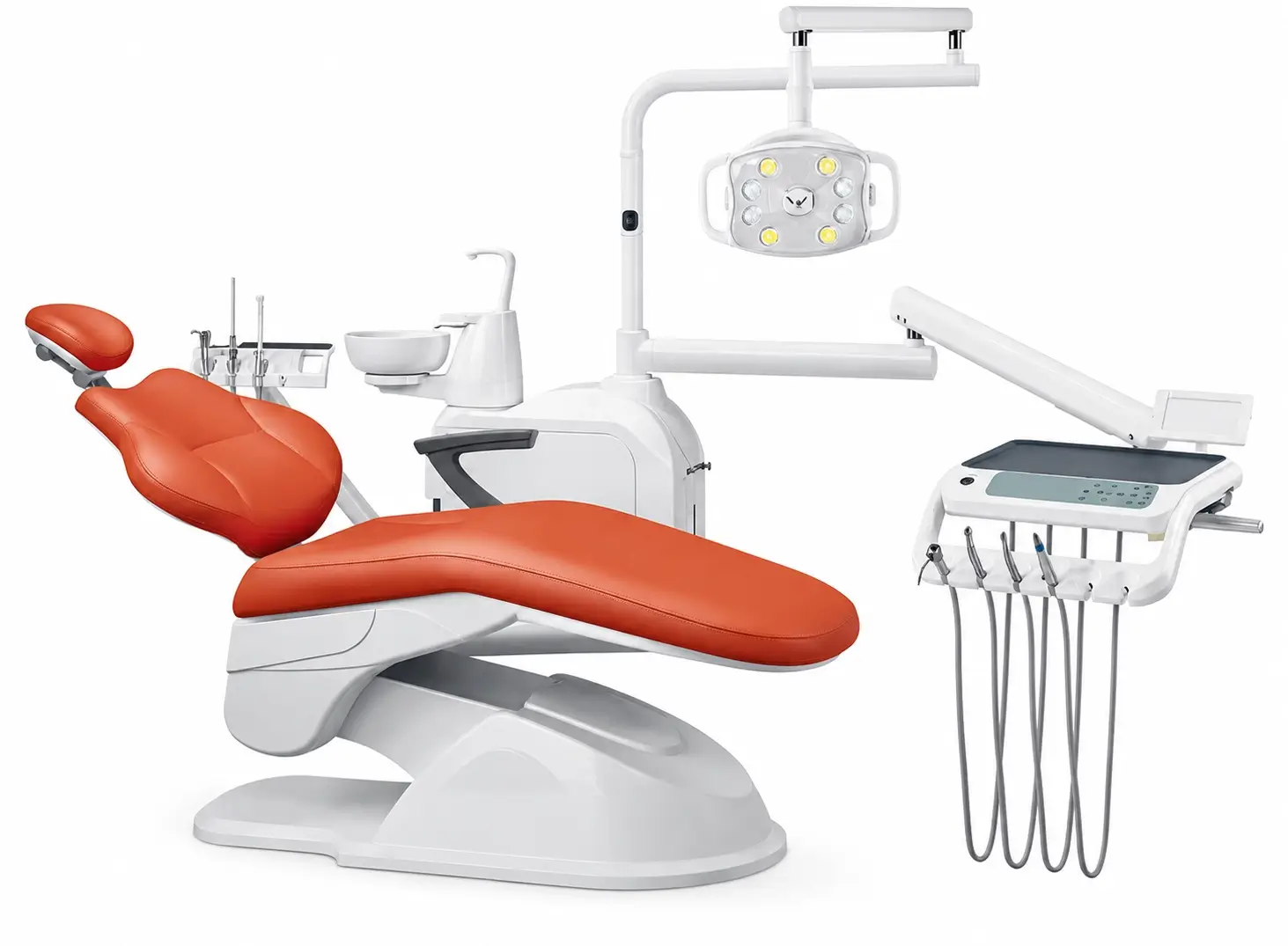
The GD-S200 Plus integral dental unit identifies an external detachable saliva ejector with a collection cup. For this model, the buyer can focus on the detachable interface, included cup, cleaning access, replacement identification, packing, and incoming check. These two examples should remain model-specific and reflect the approved quotation.
Approve one reference unit or complete pre-shipment record before mass acceptance. Photograph the chairside heads, holders, hose routing, collection components, and connection point. Record the model and relevant part identifiers. Check the approved orientation and included loose-packed pieces against the order specification.
For the batch, use a documented sampling plan appropriate to the order and risk. Count visible components, compare identifiers, inspect for routing or assembly deviations, and log exceptions by serial or carton reference where available. Functional commissioning of the complete clinic system belongs with the qualified installer and the agreed site procedure.
After installation, establish the cleaning and inspection routine separately. Gladent’s suction-system maintenance guide can support that later lifecycle discussion without replacing the manufacturer’s instructions, local infection-control policy, or equipment-specific service guidance.
A bulk buyer should specify suction as an interface, not a single feature. Define the chairside hardware, separate it from the clinic vacuum source, assign every connection and installation responsibility, and convert the supplier’s response into a reference-unit and batch record.
To obtain a model-specific quotation, submit the project RFQ to Gladent with the destination market, room layout, planned vacuum source, required chairside components, and requested connection drawings. Keep final utility sizing and commissioning with the qualified project professionals responsible for the complete system.
Do not assume that it does. A dental unit may have chairside heads, hoses, holders, and controls while the central vacuum and building services come from other suppliers. The quotation and responsibility matrix should state the boundary explicitly.
No. They are commonly used functional labels, but the hardware, connections, and performance conditions can vary. Ask the supplier to define each term for the quoted model and have the project team confirm the intended system-level requirements.
Request an annotated photo, component list, dimensioned connection drawing, standard-versus-optional statement, utility assumptions, service-part identifiers, packing details, and an approved reference-unit record. Add agreed exceptions to the purchase order.
The buyer can verify supplied components, assembly, routing, movement, identifiers, and connection details before shipment. Whole-system performance and commissioning require the intended vacuum source, site services, and a qualified installer using agreed test conditions.
 No. 1, No. 2, Fenggang Industrial Zone, Lianhe, Luocun, Shishan Town, Nanhai District, Foshan City, China
 Call us now:+86-757-81267151