A hydraulic dental chair is at the core of modern dental treatment in a dental surgery. A good dental chair not only goes up and down, it can provide clinical access, patient comfort, efficient suction, effective control of the waterlines as well as ensuring the smooth running of daily dental treatment.
Hydraulic dental chairs are popular as they provide smooth movement, particularly in lifting, and good chair holding. Hydraulic dental chairs are moved by hydraulic movement. Hydraulic systems work by using pressurized fluid in a system. The fluid is moved by a pump and passes through hoses to various cylinders. These are then activated to move the dental chair to various positions as desired.
A hydraulic dental chair is a dental patient chair that uses a hydraulic drive system to control lifting, reclining, and positioning. The system usually includes an electric motor, hydraulic pump, fluid reservoir, valves, cylinders, control board, foot pedal, and treatment unit.
The base of the chair carries all the loads of the chair and patients and any accessories that are attached to the chair. The lifting mechanism of the chair controls the vertical travel of the chair. The back rest of the chair supports the upper part of the patient’s body when they are receiving treatment. The seat cushion supports the patient’s weight and helps to distribute the weight. The head rest supports the head and neck and enables better oral access.
A hydraulic dental chair is normally used as part of a complete dental unit. A complete dental unit may include a number of items. These could be handpiece tubing, an air-water syringe, strong suction, weak suction, a spittoon, an operating light and a number of assistant controls. In addition there are a number of water supply systems that allow the chair to become a complete clinical workstation.
The hydraulic dental chair converts electrical energy into hydraulic pressure. As the motor of the dental chair drives the pump, the pump pushes the hydraulic fluid through the system. The fluid under pressure then moves in the hydraulic cylinder. There, the fluid acts on a piston which in turn moves the chair.
An electric motor powers the hydraulic pump, hydraulic fluid is moved from the reservoir to the hydraulic circuit by the pump. The pressure in the lines must be sufficient to lift the chair with the patient’s weight.
The hydraulic cylinder is a component which converts the pressure in a fluid into mechanical movement. The cylinder is a piston which, when pressurized fluid is introduced, can extend or retract. This is used to lift, lower, recline or return a chair to the position that was set.
The control valves guide the hydraulic fluid to the correct position in the hydraulic system. The valves steer the hydraulic fluid and determine the direction of the movement of the chair. With a precise control valve system the stop position of the chair is reached smoothly without any jerking movements.
The foot control or touch panel allows the dental team members to set up the dental chair for patients without interrupting the dental treatment. Many of the dental chairs have different memory positions to perform the following functions: entry, treatment, rinse and emergency reset. By having all of these different functions the dental chair can run much more efficiently in a busy dental clinic.
A high-quality hydraulic dental chair should offer a good combination of mechanical features, ergonomic design, a hygienic construction and clinical connection. It should be able to function properly on a daily basis.
The hydraulic system should move the chair up and back smoothly, quietly and steadily. Such smooth movement of the chair enables the patients to be as comfortable as possible. Also, it does not cause any disturbance to the patients during the clinical procedures. Stably moving chair also enables the dentist to work in precise working position.
The chair frame, base and hydraulic actuator need to be able to support various different patient body types, whilst providing a robust load bearing structure to ensure safe movement of patients between seated positions as well as between seated and reclined positions. The base of the chair also needs to minimize vibration when being used for drilling, scaling or indeed for surgical procedures.
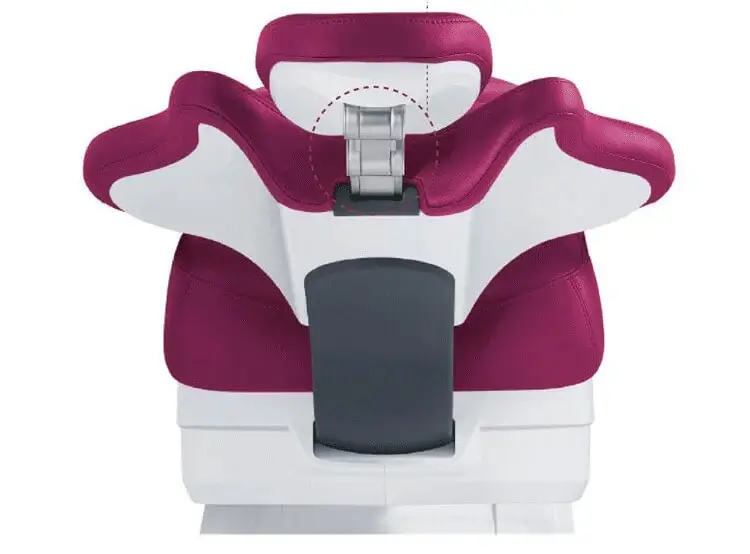
The backrest of the chair has to support the patient on one hand, and enable the dentist to work close to the oral cavity on the other hand. A narrow or even thin backrest is favorable for the operator. The metal construction of the backrest is more durable in high frequented clinics than a fabric covered version.
The headrest is to be designed and placed so as to hold the head and neck in suitable treatment positions. The head support must be so placed as to uncover sufficiently the maxillary and mandibular dental arches. For this purpose the headrest is required for all dental treatment, i.e. for inspection, for filling, for extraction, for endodontic treatment and for implantation.
The hydraulic system on a chair influences several factors including chair positioning, treatment efficiency and patient transfer. Some dental treatments involve frequent repositioning of the patient on the chair prior to and during treatment.
Precise chair positioning allows the dentist to align the oral cavity with the handpiece angle, operating light, and assistant access. Proper positioning reduces unnecessary body movement and supports more efficient clinical operation.
The chair must also remain stable after it has stopped moving. This is particularly important for holding a stable position during fine detail work such as cavity preparation, root canal access, impression taking, implant dentistry and periodontal treatment.
Treatment becomes even calmer with low-noise operation. The quiet hydraulic system enables an even better patient treatment. In addition to this, better communication with the dental team is guaranteed.
The dental chair can be connected to water, air and suction systems. The aim of these systems is to enable safe dental treatment and good hygiene.
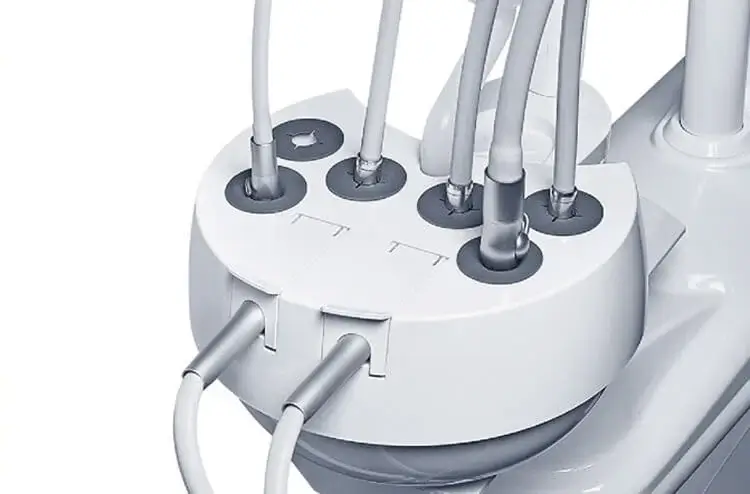
Dental unit waterlines can develop biofilm when water quality is not being controlled. Professional dental units can include waterline disinfection functions to help infection control on a daily basis. The waterlines can be subjected to automatic or pulse disinfection in order to minimize the risk of contamination within the pipeline system.
Having an independent water bottle system to supply treatment water allows the clinic to be in control of the input of water for treatment. This allows for clinical protocols to be followed that call for specific water sources or disinfectant procedures to be added to the water. As with any waterline, it is critical that the bottle system be managed properly.
Strong and weak suction systems are used to pick up saliva, blood, aerosol, debris and irrigation fluid. Suction of reliable quality enhances visibility during treatment and keeps the oral cavity clear. For surgery, scaling and for implant treatments a stable suction circuit is important.
A hydraulic dental chair is lifted by a patient with pressurized fluid in a hydraulic cylinder. The hydraulic cylinder contains a piston which is moved by the fluid pressure and which lifts the chair structure.
Our hydraulic dental chairs are used in many dental clinics all over the world. The reasons for this are the smooth movement, the high load bearing capacity, the low noise emission and the stable treatment position.
Gladent is the leading dental unit manufacturer, supplier and factory based in Foshan, China. Gladent supplies Hydraulic dental units, Implant dental units, Disinfection dental units, Kids dental units, Mobile dental units, Integral dental units, Handpieces, Oil-free air compressors, Dental suction equipment, Curing lights and other dental supplies and accessories. Gladent dental units support clinics, dental dealers and institutions from all over the world by offering factory direct prices, ODM/OEM services, CE approved dental units, more than 50 countries dental export experiences and professional dental unit customization services for long term clinic dental supplies purchasing business. Interested businesses are warmly invited to contact us to explore product options, request quotations, or discuss customization needs. Gladent’s expert team stands ready to provide professional support for bulk procurement and tailored solutions that meet specific clinical requirements.
 No. 1, No. 2, Fenggang Industrial Zone, Lianhe, Luocun, Shishan Town, Nanhai District, Foshan City, China
 Call us now:+86-757-81267151