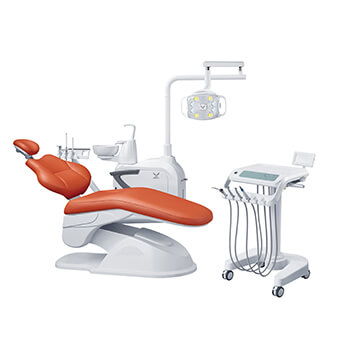
A dental unit foot control should be specified as a set of clinical actions, not as a vague “multifunctional pedal.” The buyer needs to know which handpiece or instrument it controls, what air and water actions are available, whether chair or light functions are included, and how the pedal relates to the doctor control panel. The same question applies to memory positions, rinse controls, and one-key utility switches.
For an importer, distributor, or clinic group, this control map protects both workflow and repeatability. It gives the supplier a clear RFQ, gives the buyer a comparable answer across models, and creates a reference-unit test before a batch ships.
Begin with the treatment sequence rather than the pedal shape. List the actions an operator must perform while both hands are occupied: handpiece activation, spray or water selection, chip air, chair movement, oral-light adjustment, rinse, or return-to-position.
Then identify which actions belong on the foot control, which belong on the doctor panel, and which require a separate control or site component.
This matters in global B2B projects because terminology changes faster than hardware. One supplier may call a pedal multifunctional, while another lists separate air, water, electric, or chair controls.
Ask for a function matrix tied to the exact model and drawing revision. Ask for a model-specific function list that clearly identifies what each pedal, switch, or panel control operates.
A foot control is normally evaluated for hands-free operation and safe reach. The doctor panel is evaluated for visibility, labeling, memory access, and the ability to adjust settings without leaving the working position. The two interfaces may share a function, but the buyer should still state the preferred primary control and the expected response.
| Control area | Questions for the RFQ | Acceptance evidence |
| Foot control | Which pedal or switch activates each named instrument? Are air, water, spray, chair, or light actions included? | Function matrix, model drawing, and reference-unit demonstration |
| Doctor panel | Which buttons or switches control instruments, rinse, spittoon, light, and utilities? | Labeled panel photo and written response |
| Memory positions | How many positions are documented for this model and what does each store? | Model-specific statement and repeatable test |
| Air/water/electric | Is there a one-key switch or separate control? What is included versus site-supplied? | Quotation scope and commissioning responsibility |
| Labels and training | Are symbols or language labels fixed, replaceable, or market-specific? | Approved artwork or sample panel |
Compare the controls within the Gladent dental unit categories rather than assuming that integral, hydraulic, floor-fixed, or other categories share one interface.
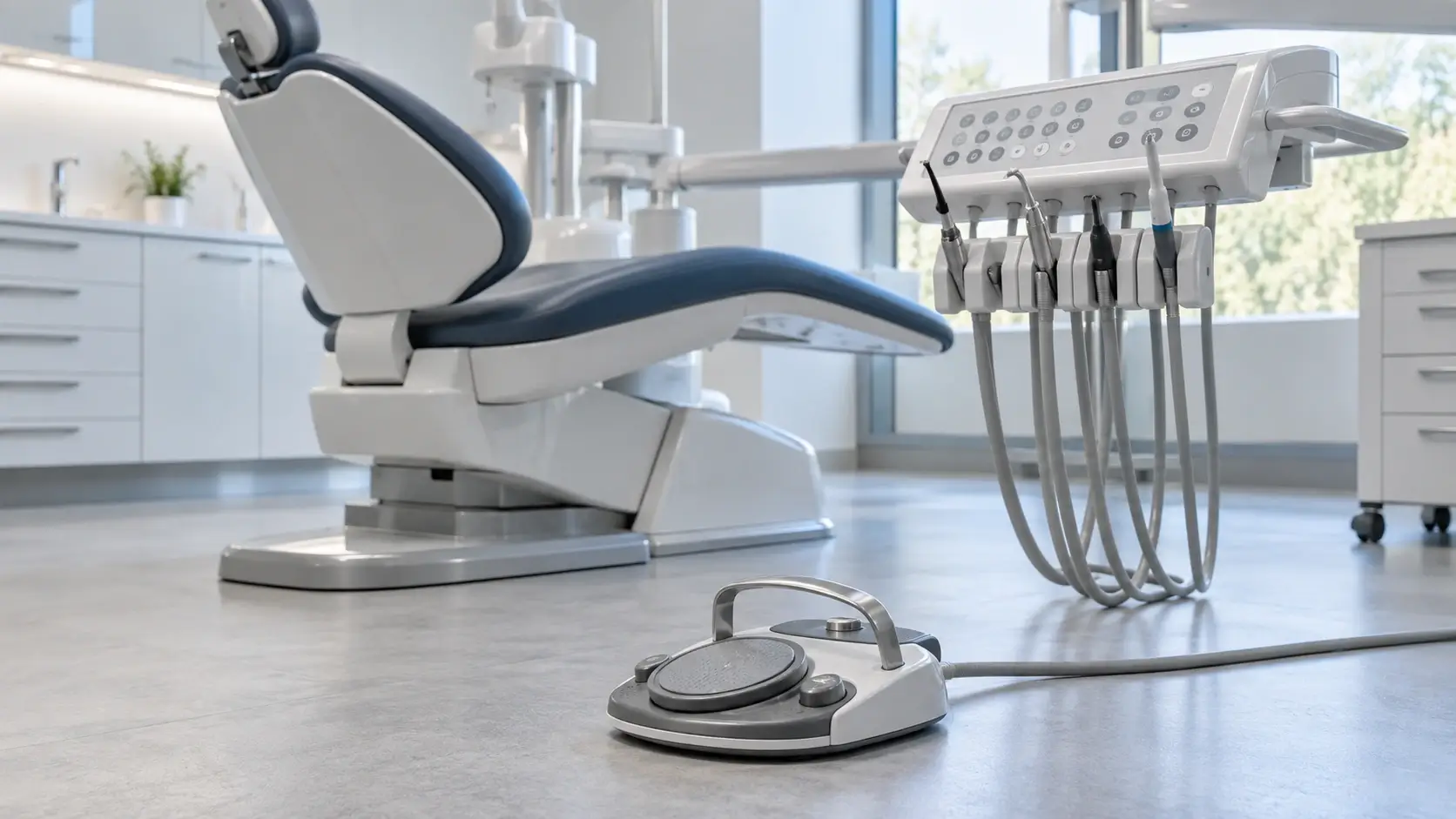
Memory functions deserve their own line because they affect training and commissioning. Record the documented number of positions, the actions stored, the operator who can change them, and the check used to confirm repeatability. Do not infer memory behavior from the presence of a button or from another model in the same product category.
Oral-light, spittoon, rinse, and air/water/electric controls also need a clear boundary. A buyer can ask whether the function is on the foot control, the doctor panel, a light assembly, or a separate module.
If the project uses an existing chair or building utility, state who supplies and commissions that part. The RFQ should make exclusions visible instead of treating a single “one-key” phrase as a complete system description.
The GD-S200 Plus integral dental unit is a useful example of evidence-led wording. Its listed features include a multifunctional doctor tray, push-button control panel, one-key air, water, and electricity switch, and air, water, and electricity control language.
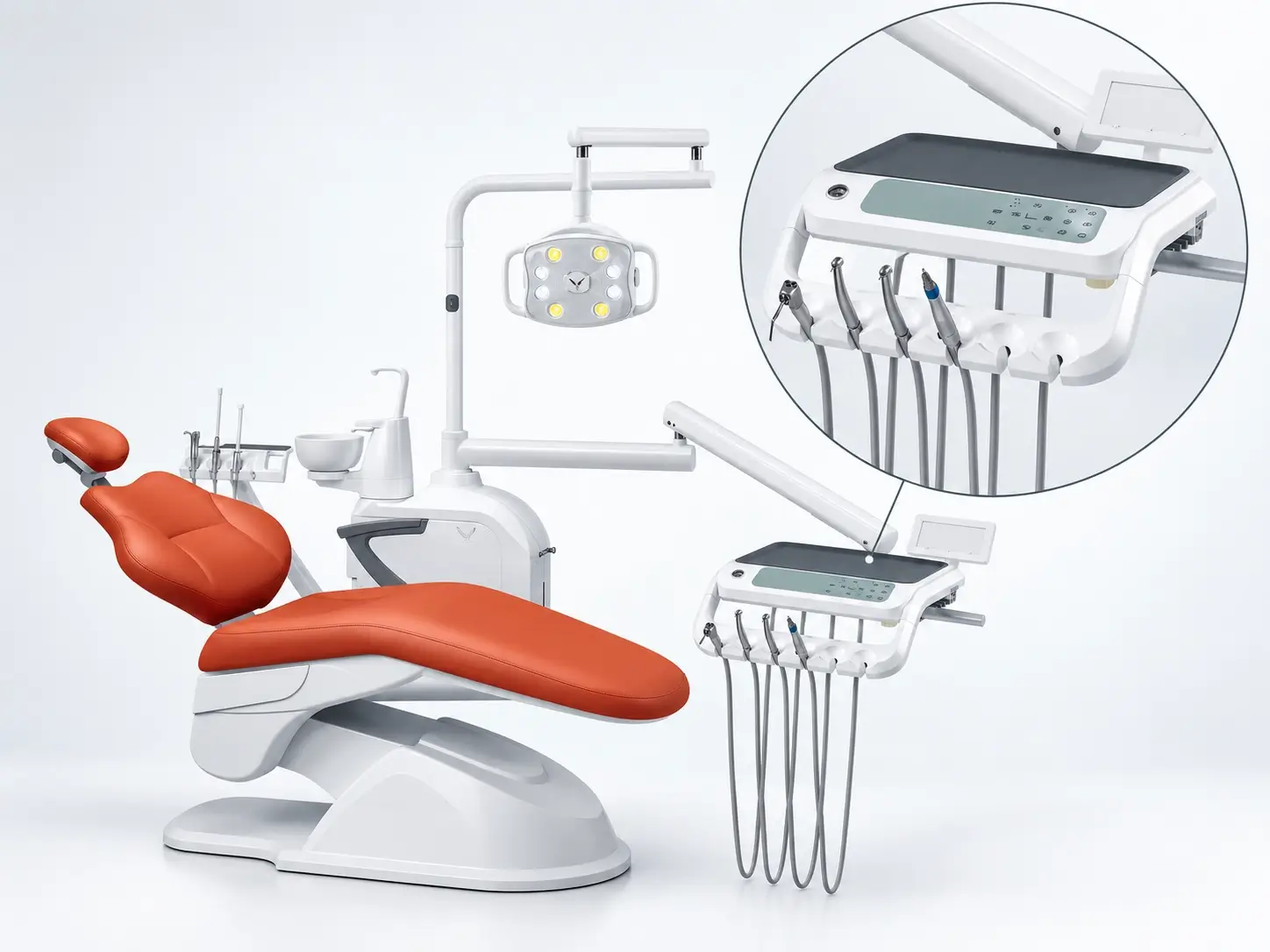
A buyer can convert those statements into RFQ fields: identify the panel layout, define the one-key switch action, and ask the supplier to confirm which controls are standard for the exact order.
Gladent identifies itself as a Foshan dental-equipment manufacturer founded in 2013; that supplier identity supports a direct documentation request, not an assumption that every model uses the same control architecture.
For supplier context, review the Gladent manufacturer background and keep the product-specific control evidence tied to the quoted model.
A practical control matrix should be readable by purchasing, installation, training, and service teams. Use one row for each action and add columns for the interface, expected response, model evidence, standard or optional status, and acceptance method. When a supplier uses a broad label such as multifunctional, the matrix helps clarify each control action before commercial offers are compared.
For a multi-room order, retain the approved matrix with the purchase order and inspection record. A distributor can then compare cartons against the same control vocabulary, train dealers with the same labels, and identify a replacement part by the quoted model instead of by a generic pedal description. This record is especially useful when a later option change affects a panel, cable, valve, or memory function.
Before a bulk order, approve one reference configuration or a complete video and photo record of the exact model. Use the function matrix during the check. Press each pedal, switch, and panel button; record the expected response; and note whether a second action is required. Check labels, symbols, panel revision, cable routing, and any loose-packed control accessory against the purchase order.
A distributor should also decide how training material will identify the controls. A pedal that is easy for one market to understand may be less obvious when labels, symbols, or operator habits differ.
If a private-label program requires custom labels, record the artwork approval and replacement method. Never treat a translated label as proof that the underlying function has changed.
Global buyers should keep the article’s control map separate from local compliance decisions. North American, European, Australian/New Zealand, Gulf, Southeast Asian, Latin American, and African projects can have different electrical, installation, language, and service expectations.
The supplier can document the quoted interface; the importer, local installer, and responsible regulatory professionals must confirm what the destination market requires.
Ask who will install, commission, and service the controls, and which replacement parts are available by model. Record the power and utility assumptions supplied with the quotation, but do not infer voltage, certification, or approval status unless the exact documentation supports it. This boundary keeps an RFQ commercially useful without turning a product page into a compliance conclusion.
The best dental unit foot control specification is a function map linked to a model, drawing, and acceptance test. Separate pedal actions from doctor-panel actions, name memory and utility controls, and mark every option or exclusion. That gives B2B buyers a repeatable basis for comparison, training, and batch inspection.
For a model-specific quotation, send Gladent a control-matrix RFQ with the destination market, requested functions, operator workflow, panel language, and preferred reference-unit check. Request written confirmation before treating “multifunctional” as an accepted specification.
Do not assume they are. A pedal may depend on the unit’s control electronics, valves, handpiece arrangement, connector, and model revision. Confirm the exact pedal and response for the quoted unit, especially when sourcing a replacement or standardizing several rooms.
List each button or switch, the action it triggers, memory behavior, light and rinse controls, air/water/electric functions, labels, and standard-versus-optional status. Use a labeled panel photo or drawing and test it on the approved reference unit.
Not necessarily. “Multifunctional” is not a complete function list. Ask the supplier to name each action and identify whether it is on the pedal, panel, light assembly, chair base, or another module. Record unlisted functions as unconfirmed rather than assuming they are included.
Treat it as a configuration change. Update the quotation, drawing, labels, training material, and inspection matrix, then obtain approval before production or shipment. A new pedal or panel can change service parts and operator workflow even when the dental-unit model name stays the same.
 No. 1, No. 2, Fenggang Industrial Zone, Lianhe, Luocun, Shishan Town, Nanhai District, Foshan City, China
 Call us now:+86-757-81267151