The best dental chair upholstery material is the one that survives your cleaning routine, supports the patient’s posture, and can be specified consistently across replacement orders. PU is often practical for clinics that prioritize a smooth wipe-clean surface and controlled cost. Microfiber can be attractive when comfort, a softer touch, or a more premium feel matters, but its performance still depends on coating, seams, chemicals, and care instructions.
This guide is for clinic owners, distributors, and project buyers comparing dental chair materials before a quotation. It gives you a testable decision process instead of a simple material ranking.
Material selection should begin with what touches the chair every day. Map the areas exposed to gloves, disinfectant, water, saliva, impression material, polishing paste, and patient clothing. Then record how often staff wipe the headrest, backrest, seat, arm supports, and seams.
If cleaning is the deciding factor, evaluate the upholstery separately from the unit’s waterline or disinfection system. The same disinfectant routine must be checked against the cover material, seams, and manufacturer care limits; a unit-level hygiene feature does not automatically validate every upholstery surface.
High-volume rooms usually benefit from a surface that can be wiped within the clinic’s actual between-patient window without trapping fluid. That does not mean every smooth surface is automatically safer: a glossy finish may show marks, while a textured finish may hide soil but require more attention.
Include both between-patient and end-of-day routines in the review. If performance under those routines is unclear, request a sample and written confirmation before approval.
| Decision variable | PU upholstery | Microfiber upholstery |
| Cleaning workflow | Usually smooth and quick to wipe; confirm chemical compatibility. | Can feel soft and dense; confirm whether the surface coating tolerates the clinic’s agents. |
| Patient contact | Firm, uniform feel suits predictable positioning. | Soft hand-feel may improve perceived comfort; test support and compression. |
| Repair planning | Commonly specified for straightforward replacement; verify exact grade. | Ask about matching color, backing, and repair method for the quoted material. |
| Best fit | High-throughput rooms needing repeatable cleaning and cost control. | Patient-facing rooms where comfort and premium touch are part of the experience. |
| Risk to check | Cracking, staining, or tackiness after incompatible chemicals or heat. | Seam wear, color transfer, or difficult spot cleaning if care rules are unclear. |
Treat the table as a starting comparison rather than a laboratory result. PU and microfiber are broad categories, not single performance grades. Two materials with the same label can differ in thickness, backing, pigment, coating, foam support, and seam construction.
Ask the supplier to identify the exact material used on the quoted model and to keep the specification on the purchase order. A named material without a grade, color code, or care document is difficult to reproduce when a clinic expands or needs a replacement cover.
Comfort is a clinical variable, not only a marketing adjective. A chair cushion that is too soft may change the working height, while one that is too firm may increase pressure during a long procedure.
Evaluate the complete chair with the operator light, headrest, and backrest in treatment position, using participants within the manufacturer’s rated load and following the supplier’s demonstration procedure.
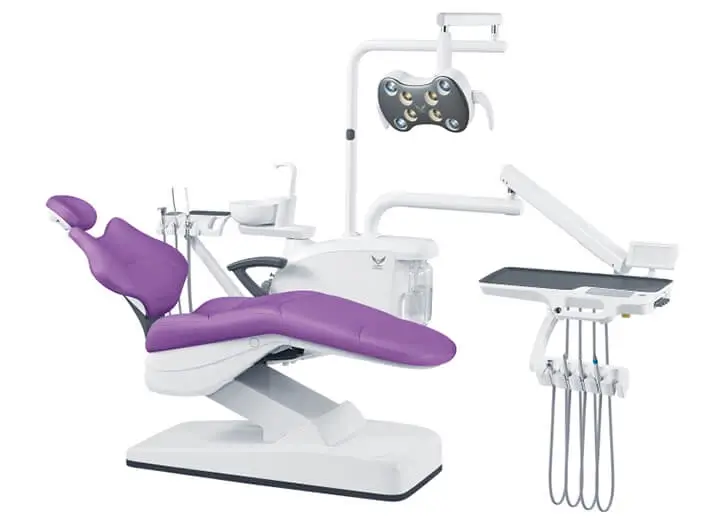
Record whether the surface stays stable as the backrest reclines and whether the seat edge creates pressure during transfer. On an integral unit, run this test with the headrest and backrest in their working positions; Gladent’s GD-S300 integral dental unitprovides that combined setup, with a microfiber cushion, adjustable chair position, headrest, and backrest. The point is not the model name but whether the upholstery remains comfortable when the complete chair is positioned for treatment.
For children, anxious patients, and longer implant or restorative appointments, touch and temperature can influence acceptance. A softer microfiber surface may support a calmer first impression, but it must still permit reliable cleaning and inspection. For high-turnover general dentistry, a consistent PU surface may make room turnover easier.
The correct choice depends on the patient mix and the time available between appointments; do not substitute upholstery softness for an ergonomic chair design or suitable head support.
Most upholstery failures begin at transitions rather than in the middle of a panel. Inspect the front seat edge, headrest opening, backrest hinge area, armrest joins, and any seam that contacts clothing or a clinician’s knee. Look for a smooth radius, consistent tension, and a finish that does not create a pocket for fluid.
Ask how the cover is attached and whether a local technician can remove a panel without disassembling the chair. A replaceable cover can reduce downtime, but only when the replacement part number and fitting method are documented.
Color affects inspection and repeat orders. Review a larger sample under clinic lighting after the intended disinfectant has dried, then record the selected code with the configuration file.
After the material tests are defined, map the result to the chair configuration. Gladent offers hydraulic, integral, floor-fixed, implant, mobile, children’s, and disinfection-oriented dental units, so the same upholstery preference may need different checks depending on movement, access, and patient profile.
Start with the dental unit range to identify the relevant mechanism and access pattern, then request the exact upholstery, color, and care document for the quoted unit.
The same distinction matters when comparing chair mechanisms. A hydraulic configuration changes how the patient is lifted and reclined, so the upholstery review should include movement, compression, and seam stability throughout that cycle.
In Gladent’s GD-S600 hydraulic dental unit, the listed baby-skin-like microfiber cushion is paired with hydraulic drive; treat that pairing as a test scenario, then confirm the exact material code, cleaning limits, and replacement route for the quotation. This keeps a mechanism choice from being mistaken for a material-performance guarantee.
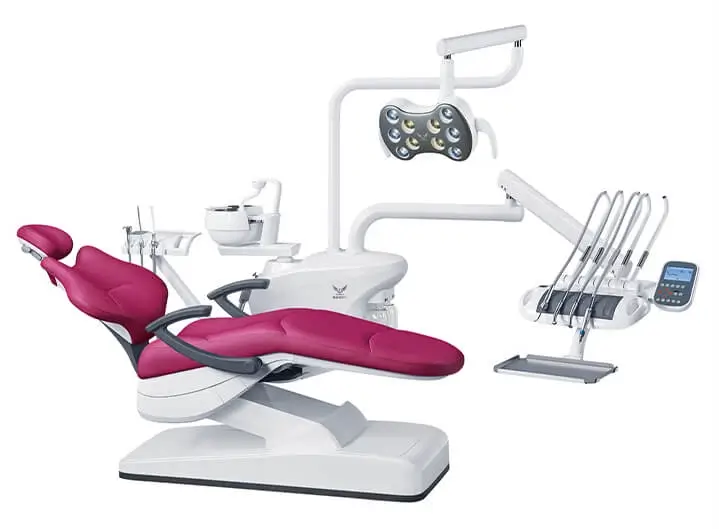
For the quoted model, record whether the available upholstery is microfiber, PU, or another specified construction, then attach the final color swatch or code to the quotation. Color samples can vary from the finished order, and a retained code makes repeat orders and future cover replacement easier to match.
Compare more than the initial upholstery price. Record the replacement-cover cost, expected sourcing time, technician requirements, color-match risk, and room downtime if a panel is damaged. Do not assign a service life unless the supplier supports it for the exact material and cleaning routine. Unknown values should remain open quotation items rather than being converted into optimistic cost assumptions.
Send one structured request to every shortlisted supplier. Include the model, treatment type, expected daily turnover, cleaning agents, preferred surface feel, color, and destination market.
Ask for the exact material name and grade, sample availability, cleaning instructions, seam and attachment details, replacement-cover part numbers, warranty exclusions, and the process for approving a color change.
A supplier that answers these questions clearly gives the clinic a stronger basis for a repeatable purchase than one that only supplies a showroom image.
When requesting a Gladent quotation, include the target configuration, upholstery preference, color code, patient profile, procedures, room quantity, and destination country. Use the Gladent contact page for a model-specific discussion, and ask for the current user manual, upholstery care instructions, approved cleaning-agent guidance, and replacement-cover information before final approval.
There is no universal winner between PU and microfiber dental chair upholstery. Choose PU when a smooth, repeatable wipe routine, predictable positioning, and controlled replacement planning are the priority. Choose microfiber when its comfort and finish solve a real patient or brand need and the supplier can document cleaning limits and replacement support.
In both cases, approve the exact grade, sample, color, seams, care procedure, and spare-parts route. That evidence turns a material preference into a defensible dental chair upholstery material specification.
A: Neither is automatically better. Match the material to cleaning chemicals, patient contact, comfort expectations, seam design, and replacement support. Confirm the exact grade rather than relying on the category name.
A: Use a sample or installed panel, apply the real cleaning routine for repeated cycles, and inspect finish, color, tackiness, seams, and compression. Record the result with the approved configuration.
A: No. Resistance depends on the specific construction and approved chemical list. Request written compatibility guidance for the quoted cover and follow the stated contact time and dilution.
A: Keep the material grade, color code, sample, care document, and cover part number.
 No. 1, No. 2, Fenggang Industrial Zone, Lianhe, Luocun, Shishan Town, Nanhai District, Foshan City, China
 Call us now:+86-757-81267151