Modern dental units, commonly referred to as dental chair units, act as combined setups. They mix patient seating, tool supply, lighting, suction, and control tasks. These units help with smooth work in filling, root canal, and basic dental jobs. They keep patient ease and clinic accuracy. Dental chair units have grown via better design that stresses steadiness and task flow improvement.
A usual dental chair unit has a powered patient chair. It includes a supply setup for handpieces and syringes. It also has an operating light, spittoon block with suction, and main controls. Key parts cover a peristaltic pump for set water flow. There is a micromotor with contra-angle for turning jobs. Plus, good suction setups handle liquids and sprays. Manufacturers build these units with strong frames. This ensures lasting under daily clinic weights. They often hold up to 135 kg. Set specs include power voltage of 110/220V at 50/60Hz. Motor voltage stands at 24V DC. Water pressure runs at 0.2–0.4 MPa. Air pressure sits at 0.5–0.8 MPa. These settings give steady run in many practice spots.
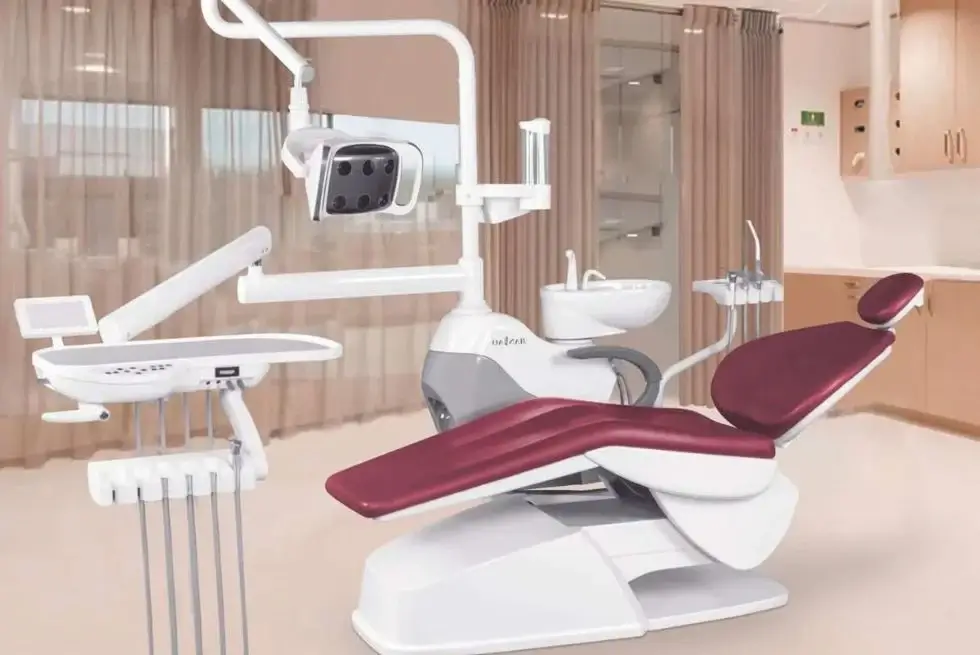
A dental unit works as the main work spot in a dental room. The system sets the patient. It supplies tools and services right to the dentist. Modern dental chair units join mechanical, electric, or hydraulic powers with liquid handling and electronic controls. This makes jobs easier.
The spittoon block forms a vital part. It holds a ceramic or glass bowl. It has an automatic cup filler. High-volume suction lines join in. A peristaltic pump gives water to handpieces and syringes. This stops germ spread. The micromotor and contra-angle allow exact low-speed tasks. These fit hole making, shining, and root canal work.
Dental chair units link electrical, air, and liquid systems. Motors change chair height, backrest, and leg spot easily. Supply arms place handpieces, syringes, and scalers close by. Foot pedals or touch screens start chair moves, handpiece speeds, spray tasks, and light strength. Suction setups clear waste all the time. Filters keep clean. Lights with sensors turn on by themselves when tools get picked. This backs smooth task flows.
Current dental units offer many top skills. These cover easy chairs with saved spots, strong LED lights, and simple control boards. Clean parts include smooth tops for wipe down, germ-fight seat covers, and auto pipe rinse in set models.
The table below sums key traits:
| Characteristic | Description | Benefits |
|---|---|---|
| Ergonomics | Adjustable chair with lumbar support and armrests | Reduced operator fatigue and stable patient positioning |
| Advanced Technology | Touch screens and sensor controls | Improved precision and reduced setup time |
| Safety and Hygiene | Seamless materials and disinfection systems | Lower cross-contamination risk |
| Energy Efficiency | LED components and efficient motors | Decreased operating costs |
| Flexibility | Modular configurations | Adaptation to different procedures and layouts |
Dental offices put money in dental chair units. These setups touch care quality, patient feel, and work speed. Steady units cut breaks. They back even output. Picking means checking weight hold, sound under 50 dB, and fit with extra tools like cameras or light cures.
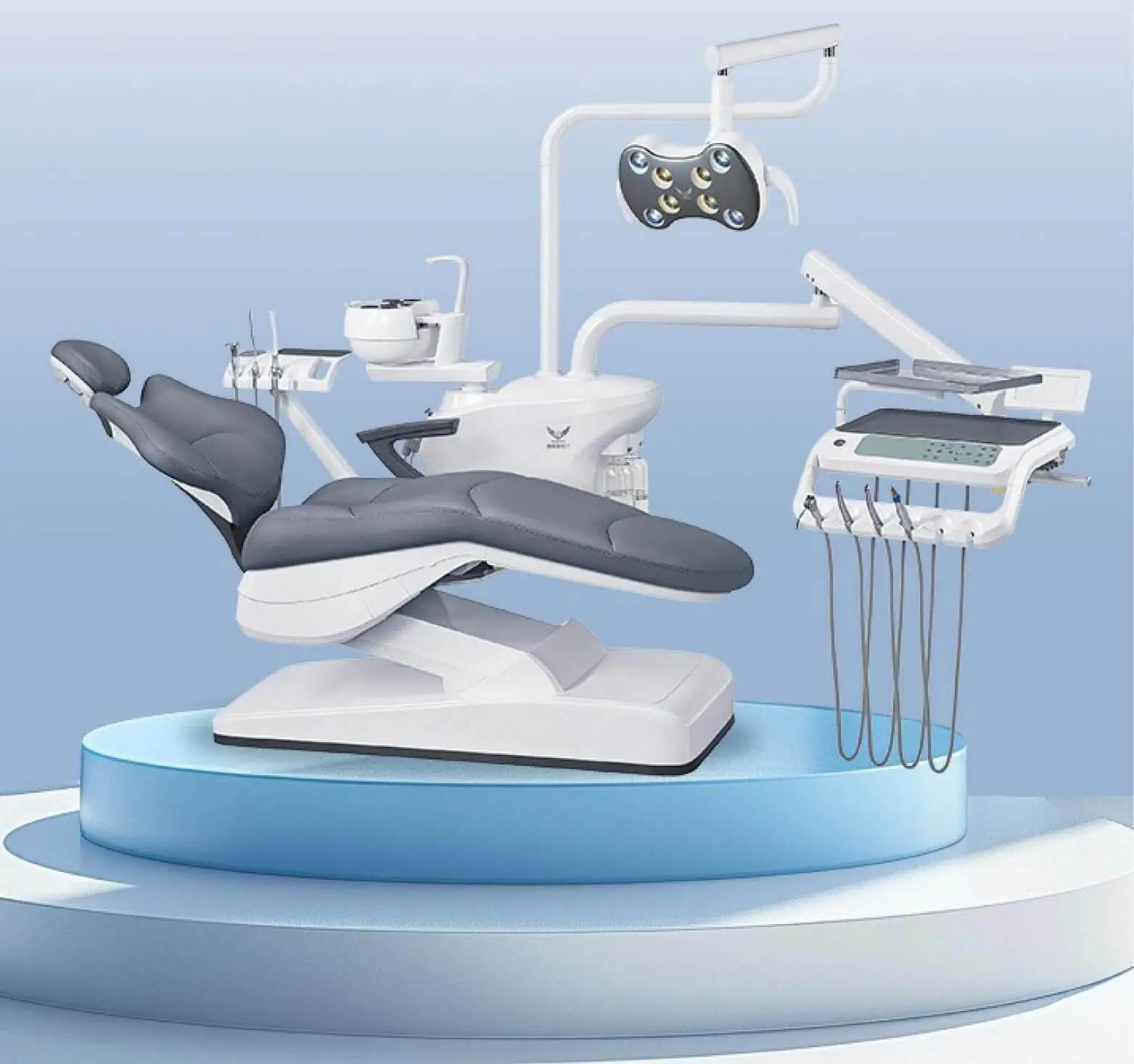 What Makes It Suitable?
A fit dental unit joins clinic tools. It keeps germ check. Parts like turn supply arms, top or hanging trays, and fiber-optic handpiece tubes boost reach and sight. Setups with floor-fixed, mobile cart, or hydraulic types fit varied room spaces and job needs.
Offices check tech specs, room needs, and help access. Warranty rules, extra parts reach, and rule marks (such as CE marking) shape long own costs. Main points cover motor type, pressure spans, and fit with special tasks.
Key parts include a solid patient chair with matched moves, a good operating light, and a working supply setup. The control face must allow fast reach without losing clean. Spot systems let changes for talk, work, and leave steps.
Modern dental chair units give gains over old gear. Better easy design cuts pull. Joined controls limit moves. Steady suction setups keep work. These parts add to job exact and easy patient handle.
Dental units with built-in endodontic micromotors help exact root canal care. The micromotor gives set turn or back-and-forth to files. It aids pulp clear and canal form. It cuts tool break risk.
The micromotor links via a contra-angle handpiece. Dentists set speed and turn limits via the unit board. The system keeps work under load. Advanced setups often fit apex locator for live info.
Built-in cuts extra gear. It makes setup simple. Exact check shortens care time. It lowers tired. It backs clean canals with less after care problems.
Touch faces boost dental chair unit run. Main tablets or LCD screens with save program let store and call of chair spots, light sets, and handpiece setups.
The tablet fits on the supply arm for easy reach. Screens answer to glove touch. They show lists for spray, speed, and spot controls. Sight signs help fast task spot.
Touch controls cut touch with switches. This backs clean. Saved spots speed change between patients. On-screen info boosts even across jobs.
Modern units add boosts like turn unit boxes, sensor LED lights, and pick built-in scalers or cameras. These group gear needs. They ease clean.
Easy parts meet needs for patients and workers.
Chairs have shaped pads with back and neck hold. Set headrests and armrests fit body sizes. Quiet spot and even weight share cut unease in long sits.
Best arm reach, set tray heights, and even pose hold cut pull. Angled spots lower wrist stress. Saved sets limit repeat changes.
LED operating lights give high light output. They have set strength and color heat for no-shadow light in the mouth area.
LED setups offer long life, low warm, and high color show. They miss UV and infrared send. This guards body parts. It lets clear see of stuff and builds.
Even light cuts eye tired. It boosts check exact. Set levels stop shine. Good run lowers power use vs. halogen picks.
Electric or liquid motors let exact chair changes. Saved sets back fast shifts for job steps. They keep steady.
Units let color and add-on picks to match office looks. Joined designs back add of special ports or gear. Height and lean spans fit varied patient needs. Clean-focus models add auto rinse.
Operating field spot joins chair and arm changes. It places the care spot at best height and angle. This skill backs lasting exact. It cuts worker pull.
Picking needs match of clinic wants with specs like chair hold, move ease, and clean parts. Check of marks and help nets makes sure rule keep and trust.
Dental equipment manufacturers, suppliers, and factories benefit from reliable partnerships for high-quality dental chair units. Gladent operates as a professional dental unit manufacturer, supplier, and factory in Foshan, China. The company, established in 2013, produces CE-certified models including hydraulic, disinfection, implant, and pediatric variants with features such as LED lighting and ergonomic designs. Distributors and importers can contact Gladent for wholesale, OEM/ODM services, and customized solutions via email at gladent08@dental-chair.cn or telephone +86-757-81267151 to discuss procurement and technical requirements.
Most units operate on 110/220V at 50/60Hz with 24V DC motors for safe chair movement.
The micromotor connects through handpiece tubing and receives console-controlled speed and torque signals.
Seamless upholstery, automated waterline flushing, and effective suction with separators support infection control.
Yes, modular options and specialized models accommodate implant, pediatric, or general needs.
LED lights with sensor activation and adjustable intensity deliver high-lux, shadow-free illumination.
 No. 1, No. 2, Fenggang Industrial Zone, Lianhe, Luocun, Shishan Town, Nanhai District, Foshan City, China
 Call us now:+86-757-81267151