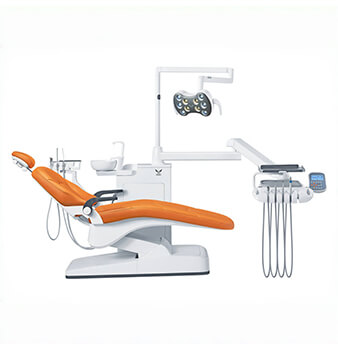
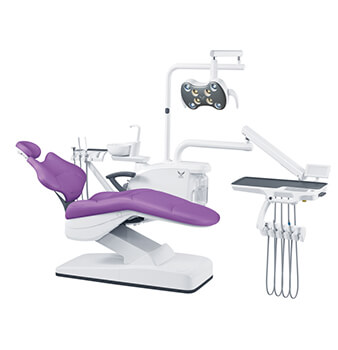
Pediatric dental chairs serve as special medical tools made just for children from 3 to 12 years old. Companies build these units with unique size, comfort, emotional, and safety features that set them apart from adult dental chairs. This guide brings together key specs, rules to follow, benefits in the clinic, buying tips, and cost details. It helps dental office owners, pediatric dentists, and buying teams choose wisely based on facts.
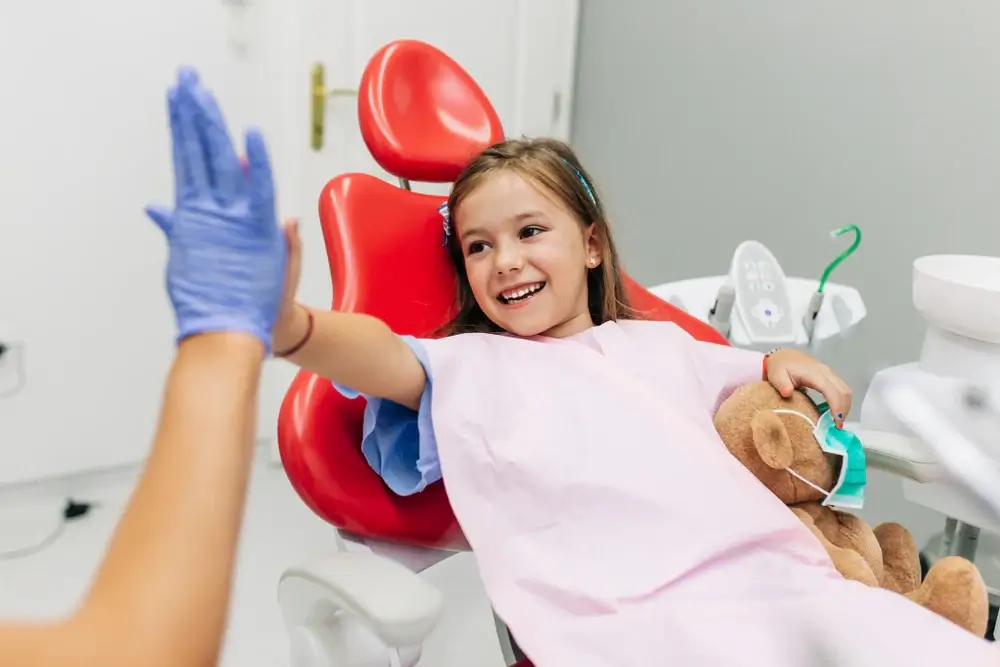
Pediatric dental chairs include basic design changes that fit the real needs of young patients. They do not just shrink adult equipment.
Seat height on pediatric dental chairs goes from 350 mm to 470 mm. Adult chairs usually range from 420 mm to 800 mm. The lower starting height lets children as young as 3 climb up on their own. This cuts down on separation fear and gives kids more control in treatment.
Most models hold a maximum patient weight from 25 kg to 40 kg. This limit lets designers use less heavy structure. As a result, the chair moves faster between positions and takes up less space.
Pediatric backrests come shorter in length and lower in height than adult ones. The shape matches the usual torso size for children 90–135 cm tall. It offers good lower back support. At the same time, it stops kids from slouching forward or blocks the dentist’s view.
The smaller backrest also makes the knee-to-knee position easy for very young patients. This setup works well only when the backrest fits small bodies properly.
Most pediatric chairs have a footprint around 150 cm × 90 cm. Standard adult chairs measure about 180 cm × 120 cm. The smaller size helps young patients reach the spit bowl better. It also shortens the space between the dentist and the assistant’s tools.
Studies on workflow show that compact pediatric designs reduce extra leaning by dentists. They also cut down on how often assistants move during four-handed work.
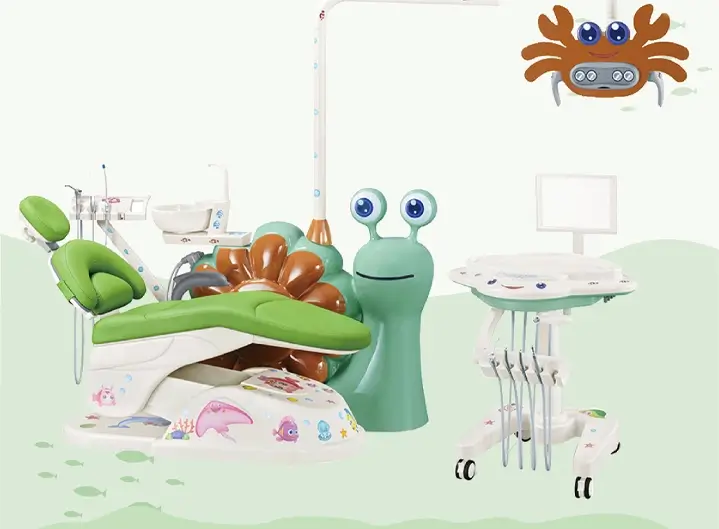
Many modern pediatric dental chairs add fun themes to the upholstery and side parts. Popular designs show cartoons, animals, or adventure scenes. Examples include underwater worlds, safari animals, space trips, and friendly sea creatures. These bright elements change the treatment area into something less scary and more familiar for children aged 3–7 years.
Key technical details affect treatment quality, dentist comfort, and how long the equipment lasts.
Chairs need to handle fast growth over almost ten years. Seat height settings often split into two main groups: 350–420 mm for toddlers (3–5 years) and 400–470 mm for school-age kids (6–12 years). Top models save several programmable memory spots. Dentists can call them back quickly.
Adjustment motors focus on fast but quiet moves. Pediatric offices often change positions 2–3 times more each day than general offices.
Children cause much more wear on surfaces because they wiggle and act less predictably with cleanliness. Makers pick strong, seamless vinyl or PU leather with built-in germ-fighting additives. These fabrics stand up to daily use of 10% bleach, quaternary ammonium cleaners, and alcohol disinfectants. They resist cracking or fading for 10–15 years.
Padding thickness spreads pressure well during longer visits. It also stays firm enough for fillings and tooth removals.
Multi-axis headrests give both big (5–10 cm) and small (1–2 cm) adjustment steps. Memory foam centers often have germ protection. Removable cushion covers allow autoclaving or strong disinfection between patients. Strong headrest parts handle forces from pulling primary molars and placing stainless-steel crowns.
Advanced pediatric chairs offer 8–12 programmable memory positions. Operators access them through foot controls or touchscreens. Each preset matches common age groups or treatment types (for example, check-up, cleaning, filling work). Some models have an auto return-to-zero feature. It brings the chair back to the starting spot after treatment ends.
Patient safety remains the top priority in picking pediatric equipment.
CE certification proves the chair meets Medical Device Regulation (MDR) and basic electrical safety rules (IEC 60601-1). Papers should show it as Class I or IIa medical device based on added features.
Chairs pass stability tests with off-center loads up to 150% of rated capacity. Wide base plates and low center-of-gravity designs lower tipping risk. This holds true even when lively children move suddenly.
Standard safety items include:
These backup systems protect young patients. They avoid making the setup feel too tight or scary.
All surfaces that touch patients meet ISO 10993 biological evaluation rules. Makers remove latex, DEHP/phthalates, and heavy metals. This lowers allergy risks for children.
Chairs built for kids bring clear gains in treatment work and dentist health over time.
Proper seat height and small size help dentists keep neutral wrist, shoulder, and neck positions. Long-term surveys report much fewer muscle and joint problems for those who use dedicated pediatric chairs regularly.
Exact headrest placement cuts shadows from large adult backrests. Steady lighting speeds up cavity spotting and edge checks during composite fillings.
Shorter reach distances keep assistants in good ergonomic spots. Time-motion studies show faster tool hand-offs and fewer extra moves.
Right sizing for age lowers random head and body shifts. Children show better cooperation and less anxiety when they sit in equipment scaled to their size.
The combined comfort and emotional benefits usually shorten average appointment time by 12–20%. These savings add up a lot in busy pediatric offices.
Careful checks stop expensive wrong choices between equipment and practice needs.
Ask for full details on frame material (usually stainless steel or high-grade aluminum), welding type, and surface treatments. These prevent rust in damp operatory settings.
Request third-party test reports for seatbelt strength, sensor timing, and anti-tip stability. Do not depend only on what the manufacturer says.
Choose suppliers with current ISO 13485:2016 certification that covers dental unit making. Full control from frame building to final assembly often means better spare-parts supply.
Proper setup and regular care affect how long the equipment lasts and stays safe.
The minimum chair footprint is 150 cm × 90 cm. But good operatory space needs at least 200 cm × 180 cm. This allows four-handed work and emergency access.
Dedicated 220 V / 110 V circuits with GFCI protection, compressed air at 0.55–0.8 MPa, and water pressure of 2.0–4.0 bar form the usual needs.
Quarterly checks of looks and functions plus yearly pro service on motors, hydraulics, and safety sensors greatly lengthen service life.
Purpose-built pediatric dental chairs provide better ergonomics, patient cooperation, treatment speed, and long-term dentist health than adult chairs or quick fixes. Careful spec checks, credential confirmation, and full cost review lead to the best choice.
Practices looking for CE-certified pediatric dental solutions can contact Gladent, a professional manufacturer, supplier, and factory specializing in kids-type dental units. The company offers models such as the GD-KID series engineered for safety, themed comfort, and durable performance. Inquiries regarding specifications, factory-direct pricing, and global shipping can be directed to gladent08@dental-chair.cn or +86-757-81267151.
What is the typical seat height range for pediatric dental chairs?
Most models provide 350–470 mm to allow independent mounting by children aged 3–12 years.
How long can a well-maintained pediatric dental chair be expected to last?
Service life commonly reaches 10–15 years when operators follow recommended preventive maintenance protocols.
Are standalone pediatric chairs compatible with existing delivery systems?
Yes, standalone models integrate readily with most standard delivery arms and assistant instrumentation.
Dental practices and distributors interested in high-quality, CE-certified pediatric dental equipment are invited to collaborate with Gladent — an experienced manufacturer, supplier, and factory dedicated to kids-type dental units. Contact the Gladent team directly at gladent08@dental-chair.cn, telephone +86-757-81267151, or WhatsApp +86 13543616157 to discuss model specifications, obtain factory quotations, request customization options, and arrange global delivery scheduling.
 No. 1, No. 2, Fenggang Industrial Zone, Lianhe, Luocun, Shishan Town, Nanhai District, Foshan City, China
 Call us now:+86-757-81267151