Dental practices pick delivery units based on exact matches with clinical workflows, assistant access habits, and current operatory setup. The three main types, chair-mounted, cart-mounted, and self-contained, supply instruments, handpieces, syringes, and suction systems in different manners. These differences affect procedure speed and team teamwork. This review looks at the types from a workflow view. It includes technical mounting details, instrument connection facts, and ergonomic placement elements. The information comes from standard dental equipment design rules.
Dental delivery units divide into three basic groups based on mounting, movement, and power supply. The table below shows key differences. These help with choices in dental settings.
| Type | Mounting Mechanism | Utility Source | Primary Workflow Fit | Technical Considerations |
|---|---|---|---|---|
| Chair-Mounted | Direct attachment to dental chair base or frame | Central plumbing and air lines | Fixed operatories with consistent four-handed setups | Arm synchronization with chair movements; clearance for over-patient positioning |
| Cart-Mounted | Freestanding wheeled console with umbilical tether | Wall or cabinet connections | Shared or multi-provider rooms requiring repositioning | Hose management and locking caster stability |
| Self-Contained | Independent frame or trailer with onboard systems | Integrated compressor, reservoirs, and vacuum | Locations with limited fixed infrastructure | Onboard component capacity and power requirements |
Chair-mounted systems keep fixed instrument spots next to the patient. Cart-mounted units provide wheeled movement via connected umbilicals. Self-contained models work with built-in power and fluid systems for full freedom.
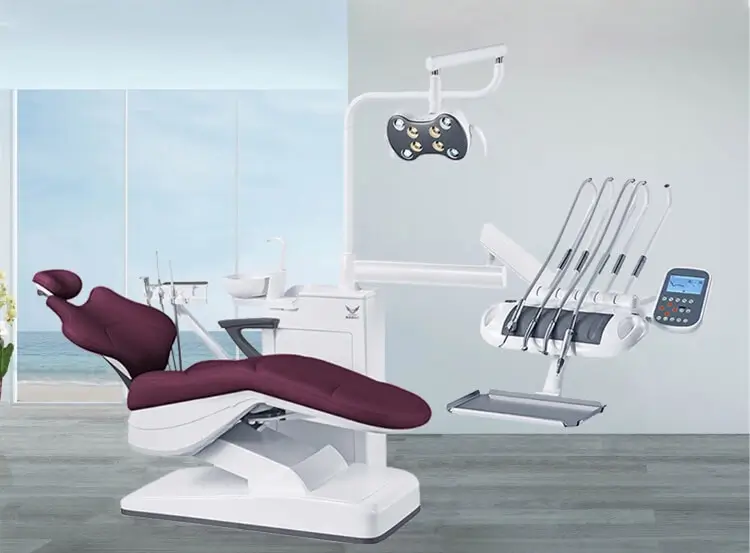
Chair-mounted delivery units connect straight to the dental chair base or frame. They create matched instrument spots during procedures. These setups aid steady workflows in usual operatories. There, reliable instrument access stays key.
These suit general practice operatories, single-provider rooms, and clinics that focus on repeated positioning well.
Keep in mind that over-the-patient arm setup needs enough height space. This keeps patient ease and clear access.
Chair-mounted delivery units use turning radius arms or set side consoles. Engineers design them for many-directional motion. Radius arms stretch from the chair base. They turn up to 180 degrees. They hold firm structure. Fixed console types fix instrument trays right to the chair frame. This stops loose movement when patients shift. Both types match hydraulic or electric chair motions. Thus, they keep instrument lineup.
Instrument trays in chair-mounted units have standard C-shaped holders. These fit up to five handpieces plus a three-way syringe. Fiber-optic tubing and quick-connect fittings supply controlled air, water, and electric signals. Assistant-side consoles add high-volume evacuators on different swing arms. These keep sterile area apart. The whole setup stays matched via base connections. They avoid wrong lineup during chair tilt or height changes.
Chair-mounted delivery units fit busy general practice areas. There, four-handed dentistry needs set instrument spots. Dentists get neutral body stance. Handpieces stay at steady clock spots near the patient. Assistants reach via special swing arms. These allow smooth tool swaps without area breaks.
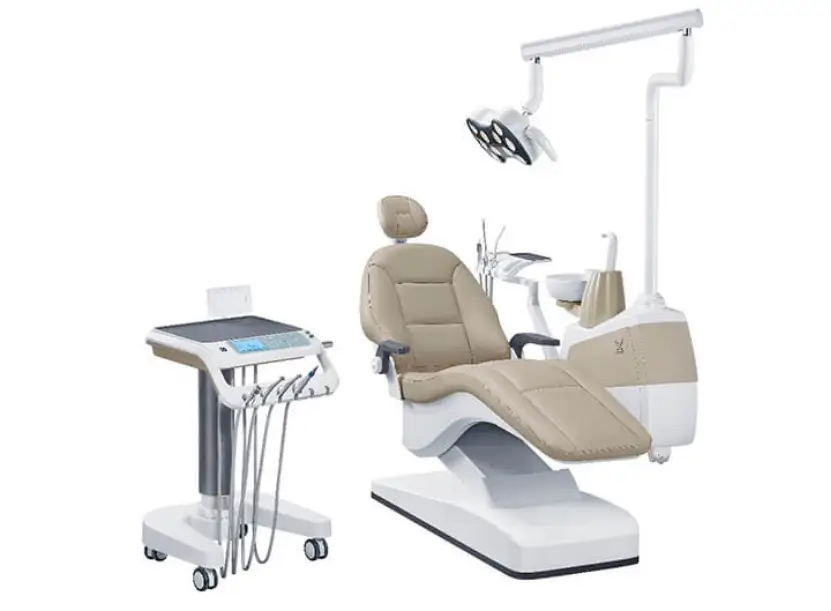 Cart-mounted delivery units include wheeled consoles. They link via long umbilicals to wall or cabinet power sources. These setups allow moving within the operatory. At the same time, they keep full instrument use.
These suit multi-provider rooms, bigger operatories, and places with shifting layout needs.
Remember that umbilical hose handling needs set paths. These aid quick moving.
Cart-mounted delivery units use turning casters with locks. They have adjustable console heights via gas struts or electric lifts. Umbilical tethers reach 10 to 15 feet. They carry compressed air, water lines, vacuum, and low-voltage controls. Top models use cast aluminum frames. These boost steadiness during moves, like in mobile trolley designs from special manufacturers.
Cart-mounted consoles copy tray setups. They have the same handpiece holders and syringe ports as fixed types. Foot controllers fix to the cart base. Or they connect via coiled cables. Extra surfaces hold monitors or tool organizers. The wheeled base lets placement on either chair side or between spots. No setup changes needed.
Cart-mounted delivery units handle changing providers. They need adjustable spots for varied procedure likes. The console moves to best 7 o’clock or 11 o’clock reach. It keeps assistant access from both sides. These systems aid mixed setups. Standalone chairs work free of fixed cabinetry.
Self-contained delivery units build in water reservoirs, air compressors, and vacuum pumps. They sit in portable frames or trailer setups. These systems run alone after power hookup.
These suit short-term operatories, setup stages, and moving clinical flows.
Note that onboard system size sets procedure length before refill.
Self-contained delivery units use distilled water bottles for treatment lines. They have separate waste reservoirs for fluid gathering. Built-in oil-free compressors make set air pressure. Inboard vacuum motors give suction. Control panels handle pressure and reservoir levels. They use analog or digital screens. Moving trailer types grow this freedom via wheeled frames. These carry full function between spots.
Self-contained units have modular or folding instrument trays. They include standard handpiece links and syringe ports. High-volume evacuators attach to the console frame. Some types add built-in LED operating lights and extra ports for scalers or cameras. The setup folds into small cases or trailer forms. It stays ready to work on power link.
Self-contained delivery units allow full procedure ability in spots without central plumbing or air lines. Moving dental services use these across many places. They keep instrument work levels. Floor-set or built-in types in the group give steady bases when some setup exists.
Workflow match picks the best delivery unit type. Quick general practice changes with set setups like chair-mounted systems. Shared operatories needing flexible spots choose cart-mounted units. Places with partial setup depend on self-contained freedom. Each type improves instrument reach and team work. It does so without big room changes.
The assistant reach test checks body fit alignment before choice. The steps spot possible rub points in four-handed dentistry flows.
Pick the main three assistant tools: high-volume evacuator, saliva ejector, and air/water syringe. Hold usual work stance like in daily tasks. Use the one-move rule: each tool stays in reach without body turn. Do hose pull checks to ensure lines skip floor touch or sterile area cross. Run a 30-second tool swap test to find flow stops.
This planned check shows spot or arm setup problems. These affect daily speed in all delivery unit types.
Delivery unit design affects steady operatory reset steps. When instrument spots stay known and hoses rest in set places, reset times drop. Streamlined moves help.
Barrier covers go on top-touch spots like switches and handles. Wipe steps follow a set dirty-to-clean path. Disinfectant hold times stick to known rules. Hose resting goes back to same start spots after each task. Line rinse joins the usual reset steps. Last setup returns the room to a steady ready form.
Each delivery unit type aids this flow via its basic steadiness or movement traits.
Phase 1 sets basic operatory work via key parts. The picked delivery unit links with simple suction, air, and water hooks plus an operatory light and start infection control items. This base allows quick procedure start no matter the type.
Phase 2 grows work ability via extra ports, built-in scaler fit, and added tray spots. Monitor arms and camera links match certain workflow needs. Cabinet setup makes clear zones for instrument flow. The step-by-step way fits gear growth to clinical load rise.
Dental practices make short lists by noting key groups that pair with the chosen delivery unit. Fitting areas include dental chairs, operatory lights, operatory cabinets, and infection control supplies. More factors cover handpiece systems and surgical instruments. These connect right with the picked delivery type.
Still Have Questions? We’ve Got Answers
The best delivery unit type appears after workflow, assistant reach factors, and operatory limits get steady review. Records of room details and task load clear the short list. The reach test and spot review above help.
Smaller operatories gain from chair-mounted types. They give known positioning. They keep controlled hose paths and quick reset steps.
Cart-mounted delivery units give worth in multi-provider spots or places needing often layout shifts. Wheeled movement and long umbilical reach help.
Self-contained delivery units run via built-in onboard reservoirs, compressors, and vacuum systems. They skip need for set plumbing in short or far spots.
The assistant reach test checks that main tools stay open without body turn or hose block. It lets exact changes to arm spots or console place.
Known makers build chair-mounted, cart-mounted, and self-contained types. They match handpiece links, pressure control, and electric specs over world rules.
Dental equipment sellers and group buyers reach full OEM answers via set production groups. These focus on chair-mounted, cart-mounted, and self-contained delivery systems. Bulk supply deals, custom link specs, and world cert match ease buying for big projects. Gladent works as a focused manufacturer, supplier, and factory. It has set skill in hydraulic dental units, mobile trolley setups, and mobile trailer systems. These meet world technical needs. Contact Gladent today.
 No. 1, No. 2, Fenggang Industrial Zone, Lianhe, Luocun, Shishan Town, Nanhai District, Foshan City, China
 Call us now:+86-757-81267151