Importing dental chairs from China involves several technical and logistical points that importers must handle in a clear way. Reputable Chinese manufacturers deliver good-quality dental equipment that meets international standards. They also provide competitive pricing. The process needs careful supplier checks, confirmation of certifications, focus on regulatory rules, and solid management of quality control and shipping. This guide shares ten key tips that experienced importers use when sourcing dental chairs from established producers in China. The clear approach helps reduce risks and makes sure the final products work well in clinical settings.
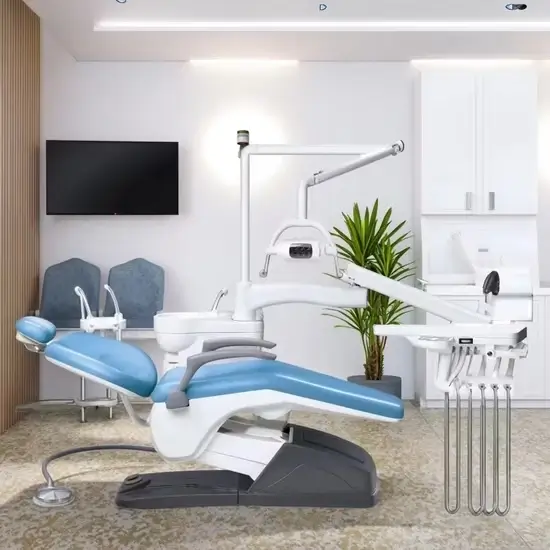
Importers do thorough research to find legal and reputable manufacturers before they place orders. Checking the manufacturer’s qualifications protects buyers and supports compliance with safety guidelines.
Importers look at the registered capital shown on the official business license. Companies with low registered capital often run as small trading firms instead of real manufacturers. Professional importers prefer entities with registered capital of at least one million RMB. This amount shows stronger operational resources and a real commitment to ongoing production.
Importers read the business objective and scope listed in official records. A clear focus on design and manufacturing of dental equipment points to genuine production capability. Businesses that list “wholesale” or trading activities as main parts may act mostly as intermediaries rather than direct producers.
Importers confirm whether the manufacturer keeps a formal Quality Management System. Standards such as ISO 9001 or ISO 13485 show structured processes. These processes cut defects and help consistent product safety. Manufacturers without such systems carry higher risks of quality changes.
Importers also attend major Chinese dental trade shows and international exhibitions. They evaluate potential suppliers in person and compare technical capabilities directly.
Established manufacturers provide extensive OEM and ODM services. These services let importers set exact product specifications. Customization goes beyond catalog models. It covers design elements, materials, dimensions, and functional features.
OEM production gives importers control over comfort levels, ergonomic features, and operational functionality. They tailor these to specific clinical preferences. Buyers supply detailed requirement sheets. These sheets include seating dimensions, control panel layouts, and accessory integrations. Collaboration with design professionals ensures that custom specifications reach optimal performance.
Importers prepare comprehensive spec sheets or drawings. They avoid relying only on standard catalogs. Professional manufacturers review these documents and give technical feedback to improve the design. This process supports adaptations for specialized applications, such as pediatric or implant-focused configurations.
Gladent supports full customization across its dental unit range. This enables modifications that align with diverse practice requirements while keeping core structural integrity.
Dental chairs must meet fire retardancy and material safety standards. These standards differ by destination market. Importers share country-specific regulations with the manufacturer at the earliest stage of discussion.
In the United States, upholstery must meet California Technical Bulletin 117 (TB117) for flammability performance. Additional federal and state regulations may apply. They depend on the final point of sale.
European markets require compliance with multiple standards. These include EN-597-1 and EN-597-2 for ignitability of upholstered composites. They also cover EN-1021-1 and EN-1021-2 for cigarette and match ignition tests on material combinations. Plus, EN-14533 for burning behavior of textiles. Importers verify that all components satisfy these combined criteria.
Reputable manufacturers with international experience keep documentation systems. These systems make compliance easier across jurisdictions.
Professional quality control inspections serve as a key safeguard for high-value equipment shipments. Importers work with experienced third-party inspection companies based in China. They perform detailed pre-shipment checks.
Inspectors carry out controlled fire retardancy tests on upholstery samples. They use standardized methods to confirm compliance with destination regulations.
Inspectors examine the overall appearance for material quality, finish consistency, and absence of defects. They also test internal mechanisms. These include lifting systems, delivery units, and suction components. The tests verify smooth operation and proper assembly.
Gladent integrates strict in-house quality controls. These align with ISO 13485 standards throughout the manufacturing process.
Laboratory testing on material samples offers objective verification of safety and durability. Accredited laboratories in China or Hong Kong perform analyses. They follow the standards of the target market.
Laboratories evaluate flammability, chemical composition, and durability of outer coverings and internal fillings. They do not test the fully assembled chair. Importers request full test reports. These reports support regulatory submissions.
Importers consult official lists of approved testing bodies in their country. This ensures that results receive full acceptance during customs and market approval processes.
Dental chairs form heavy and bulky items. They need specialized packaging to prevent damage during long-distance transport. Importers specify detailed packaging protocols in the purchase agreement.
Manufacturers load dental chairs onto sturdy pallets. These pallets enable safe forklift handling at every stage of the supply chain.
Units receive multiple layers of plastic wrapping inside robust outer cartons. This method protects against moisture, mold, and climate fluctuations that often occur in sea freight.
Container shipping delivers better cost efficiency and security for multiple dental chair units. Importers calculate exact loading volumes to optimize container utilization.
Importers usually select 20-foot or 40-foot high-cube containers (FCL) based on order quantity. Container shipping reduces handling points compared to less-than-container-load shipments. It also provides better physical protection.
Manufacturers supply accurate per-unit volume data. Importers then determine the exact number of chairs that fit securely in each container.
 8. Understanding Shipping Cost When Importing from China
Shipping expenses include several distinct components. Importers must budget these costs with care. Professional forwarders help combine these costs and spot potential savings.
Primary expenses consist of factory-to-port transportation, customs clearance fees at the destination, and final delivery from the arrival port to the warehouse or clinic address.
Orders of ten or more units often qualify for significant reductions. Sometimes these reach up to 80 percent on certain handling and clearance fees.
Typical charges for shipments to major ports, such as Los Angeles, include ISF filing, customs bonds, FDA-related filings where applicable, warehouse fees, and duties. Importers engage experienced shipping agents early. They secure competitive rates and complete necessary documentation.
Secure payment methods protect both parties in international transactions that involve substantial values. Importers evaluate each option according to order size, risk profile, and relationship with the supplier.
Letters of credit provide strong safeguards for transactions exceeding 30,000 USD. They involve additional bank fees and documentation requirements.
International wire transfers commonly follow a milestone structure. One example is 50 percent deposit upon order confirmation and the balance upon completion of production or successful pre-shipment inspection.
Escrow services, third-party sourcing agents, and PayPal for smaller test orders offer further layers of protection. Reputable manufacturers maintain transparent communication no matter the chosen method.
Total lead time from order placement to arrival usually spans two to three months. This includes production and ocean transit. Importers plan orders well in advance to match clinic development schedules.
Customization complexity, inspection schedules, and seasonal port congestion can affect exact timelines. Air freight serves urgent needs for limited quantities. It comes at a significantly higher cost.
Gladent emphasizes on-time delivery. This comes through efficient manufacturing processes and established logistics networks.
The complete timeline generally ranges from two to three months. It depends on the level of customization, inspection requirements, and chosen shipping method.
Yes, established manufacturers offer comprehensive OEM and ODM services. These accommodate detailed buyer specifications for design, materials, dimensions, and functional features.
Dental equipment importers that require stable quality, extensive customization capabilities, and full regulatory support benefit from direct collaboration with experienced producers. Gladent operates as a dedicated manufacturer, supplier, and factory specializing in a wide range of dental units since 2013. Importers contact Gladent directly to discuss project requirements, request detailed quotations, or schedule factory visits. Reach the professional team via email at gladent08@dental-chair.cn, telephone at +86-757-81267151, or WhatsApp at +86 13543616157. Gladent as manufacturer and supplier delivers competitive pricing, consistent product quality, and reliable on-time delivery to support successful long-term partnerships with dental equipment distributors and clinics worldwide.
 No. 1, No. 2, Fenggang Industrial Zone, Lianhe, Luocun, Shishan Town, Nanhai District, Foshan City, China
 Call us now:+86-757-81267151