A dental unit acts as the main workstation in every dental office. It brings together various parts to help with smooth treatments, patient ease, and good working positions for dentists. People often call it a dental chair unit. It joins the patient chair with key tools such as suction systems, delivery units, lighting, and extra features. The build and quality of these parts differ between models and makers. This affects daily work flow, cleanliness rules, and lasting strength. Knowing each part helps show how a well-built dental unit improves treatment results and office speed.
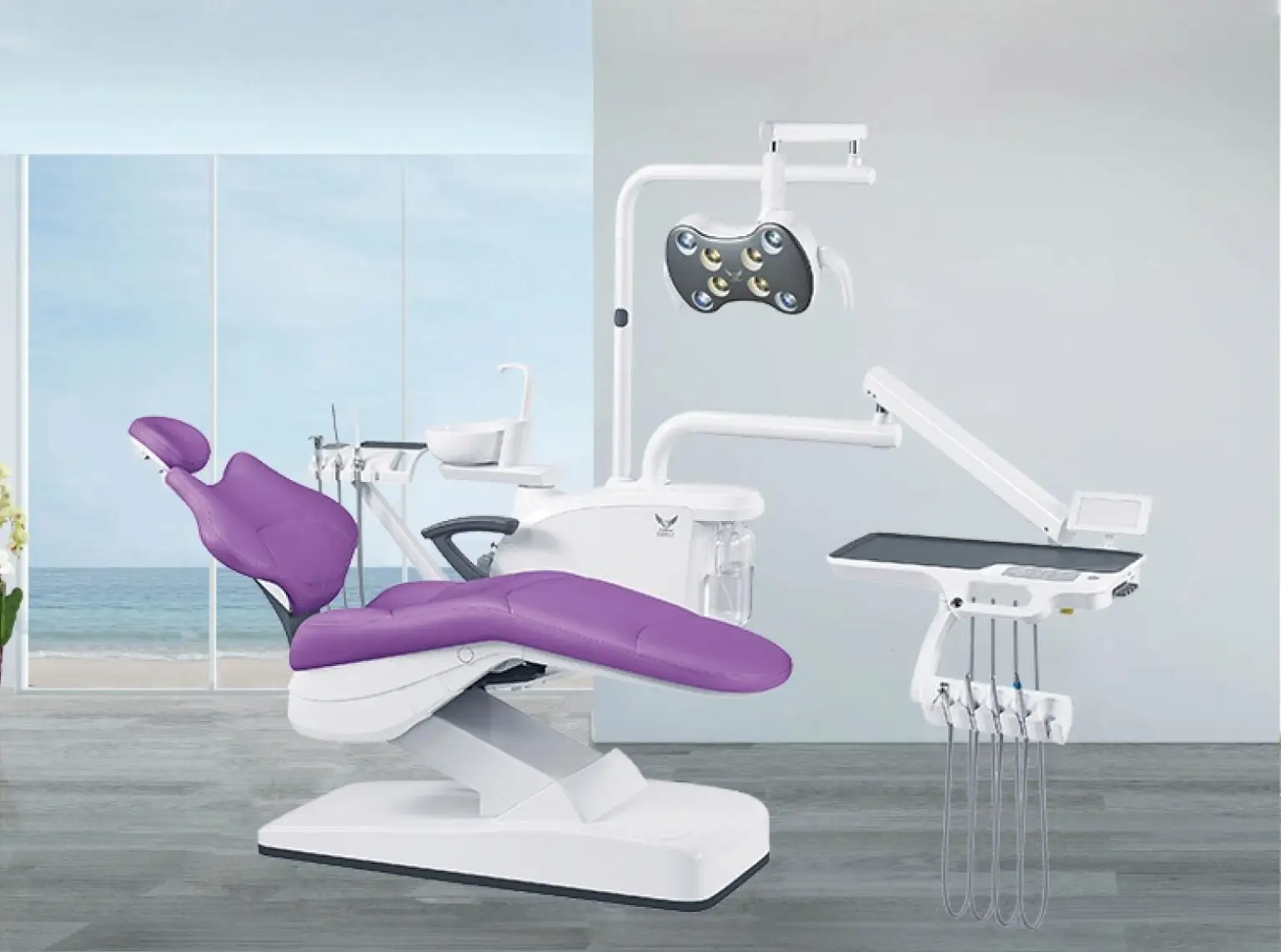
Modern dental units include many linked parts. Each one handles certain jobs during dental work.
The dental chair serves as the base of the unit. It offers a steady spot for patients during checks and treatments. It usually has a seat, backrest, headrest, and armrests. Good chairs allow easy adjustments. They often have a low starting height (around 400 mm). This helps different patients get in and out without trouble. Comfortable shapes ease stress on patients, especially in long visits. They also let dentists control positions exactly. Flexible headrests that move in many ways and quiet motions—run by foot pedals or touch screens—bring more comfort and options. Strong covering that handles cleaning fluids keeps things clean.
The cuspidor, or spittoon bowl, lets patients rinse and spit out easily. It is normally made from porcelain or ceramic materials. People can take it out for deep cleaning. Many are safe for autoclave use to stop germs from spreading. Built-in water taps with changeable flow and removable ends make care simple. This part helps keep infections away. It allows full cleaning after every patient.
The suction system clears saliva, water, and bits from the mouth. It keeps the work area visible. It has strong evacuators and gentle saliva ejectors. These sit in handy spots for right- or left-handed users. Better systems include filters and separators. They manage sprays well. Strong suction stops breaks in work. It aids clear sight, which leads to exact steps and safer care for patients.
The foot pedal handles chair moves, tool starts, and water sprays. It keeps hands free for work. Step-by-step pedals give changing speeds for motors and turbines. Some types are wireless. They allow more movement and less cord mess. This improves cleanliness and quick wiping. Tough build promises steady use over many years.
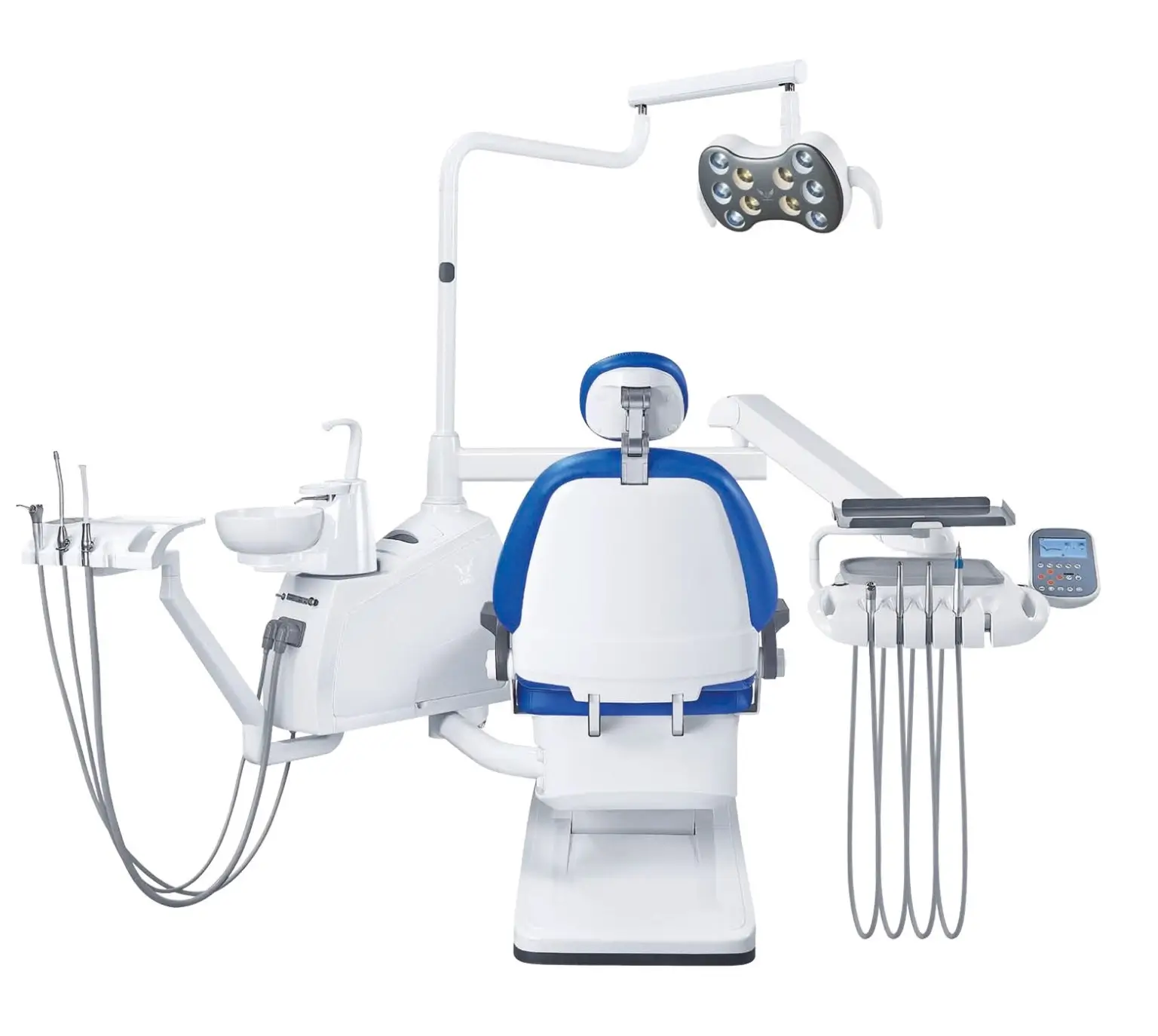
The delivery system stores handpieces, syringes, and other tools. It supplies air, water, and power when needed. Styles include hanging hoses, continental whips, or cart systems. These fit various work habits. Solid trays with neat setups boost speed. They keep tools close, cutting extra moves and tiredness in hard treatments.
The operating light gives clear, no-shadow brightness in the mouth area. Strong LED lights with changeable warmth and strength copy natural daylight. This cuts eye tiredness for dentists. Cool running stops heat discomfort for patients. Good lighting is vital for exact checks and work, especially in filling or surgery tasks.
Additional components often include assistant instrumentation, air-water syringes, and monitoring systems. Together, they form a full treatment center.
Every part of a dental unit adds to total working, safety, and lasting time.
Comfortable chairs lower patient worry and body strain. They also allow best reach for upper mouth work or kids’ cases. Low heights and matched moves help dentists keep good posture. This may cut back pain over years.
Clean-focused items like removable cuspidors and strong suction match tough germ control rules. They reduce risks of spread. Pipeline cleaning features add more safety in busy offices.
Trusty controls, such as easy pedals and delivery systems, make work flow smooth. Dentists can focus on care instead of fixing tools. Strong materials and careful build mean less stop time and steady results.
Quality lighting helps with true color picks for fillings. It also gives clear views in root or implant work.
Choosing joined, high-level parts leads to easier running, longer equipment life, and better patient visits. Features like hydraulic bases bring steady and quiet action over others. Cast aluminum parts offer strength without too much weight.
The chair itself is often seen as the key one. It directly touches patient comfort and dentist reach. However, all parts team up for best results.
Daily cleaning of removable parts and yearly pro checks keep things long-lasting and clean.
Many new units have designs that work both ways. Or they allow changes in suction and delivery spots for flexibility.
Porcelain or ceramic for lasting strength, simple cleaning, and resistance to chemicals.
LED lights offer better color show, less heat, and longer life than halogen types.
Yes, better models have automatic pipeline disinfection for stronger germ control.
Dental clinics and distributors seeking premium equipment benefit from direct partnerships with experienced manufacturers. Gladent, a leading factory-based manufacturer and supplier of dental units since 2013, offers CE-certified models exported to over 50 countries. With a focus on innovative designs like hydraulic systems, integral units, implant-specific chairs, and disinfection features, Gladent provides stable quality, competitive pricing, and customized ODM/OEM services. As a dedicated dental unit factory in Foshan, China, Gladent supports long-term collaborations for suppliers and wholesalers worldwide.
Contact Gladent today to explore high-quality dental chair solutions tailored for professional needs.
 No. 1, No. 2, Fenggang Industrial Zone, Lianhe, Luocun, Shishan Town, Nanhai District, Foshan City, China
 Call us now:+86-757-81267151