Keeping dental tools clean is a must. Every tool that goes into a patient’s mouth needs to be free of germs. Without an autoclave, this can be tough. But there are safe ways to do it. This guide shares simple methods to clean dental tools without an autoclave. It also shows how Gladent dental units with Automatic Pulse Sterilization offer a smart fix for modern clinics.
Dental work exposes patients and staff to blood, spit, and tiny air particles. If tools aren’t clean, they can spread germs, viruses, or fungi. Proper cleaning lowers the chance of infections. It keeps dental teams safe and helps patients feel confident. A tidy, up to date clinic calms nervous patients. It also meets health rules for clinics around the world.
Dry heat sterilization uses hot air at 160–180 °C for up to two hours.
Here’s how it works: Tools go into a dry heat oven. The high heat kills germs and spores slowly.
It’s great for: Metal tools like forceps, scalers, and mirrors.
Why it’s good: No water, so no rust. No chemical leftovers either.
Downsides: It takes a long time. It’s not good for plastics, rubber, or tools with fiber optics.
Helpful hint: Always clean tools well before heating to stop dirt from sticking.
Chemical soaking can clean tools well when heat isn’t an option.
Tools sit in liquids like 2% glutaraldehyde, hydrogen peroxide (6–30%), or peracetic acid.
Heat sensitive items like plastic mirrors, rubber dams, or some orthodontic tools.
It protects delicate materials while killing most germs and spores.
It takes 6–10 hours to fully clean. Shorter times only disinfect. The chemicals can have strong fumes or irritate skin, so staff need gloves and good airflow.
Rinse tools with sterile water after soaking to avoid chemical burns on patients.
Boiling is an old method but not perfect for cleaning.
Tools boil at 100 °C for 20–30 minutes.
Basic tools in emergencies or field settings.
It’s cheap, easy, and anyone can do it.
It doesn’t kill bacterial spores or prions. Tools can also rust from repeated boiling.
Use boiling only as a quick fix. Follow up with chemical cleaners when you can.
Glass bead sterilizers are common in root canal work.
Small tools go into glass beads heated to about 230 °C. The heat kills germs in 5–15 seconds.
Endodontic files, burs, and other small metal tools.
It’s super fast, easy to use, and doesn’t take much space.
It can’t clean large or hollow tools. The beads need constant checks to stay at the right heat.
Use glass bead sterilizers for quick cleaning during root canal work, but don’t rely on them for everything.
UV and ozone systems are growing in use as extra cleaning tools.
UV-C lamps or ozone machines use special energy to harm germ DNA, stopping them from growing.
Cleaning surfaces, waterlines, and air in dental rooms.
No touching, no chemicals, and safe to use around people.
It can’t clean deep inside tools or reach hidden spots. It’s not a full cleaning method on its own.
Pair UV or ozone with another cleaning method for stronger infection control.
Even with these methods, hollow tools like dental handpieces and the tiny tubes in dental chairs are hard to clean. Germs can form a sticky layer called biofilm inside these areas. Boiling or soaking often doesn’t reach these spots well. That’s why modern tools like Automatic Pulse Sterilization are changing how dental clinics fight germs.
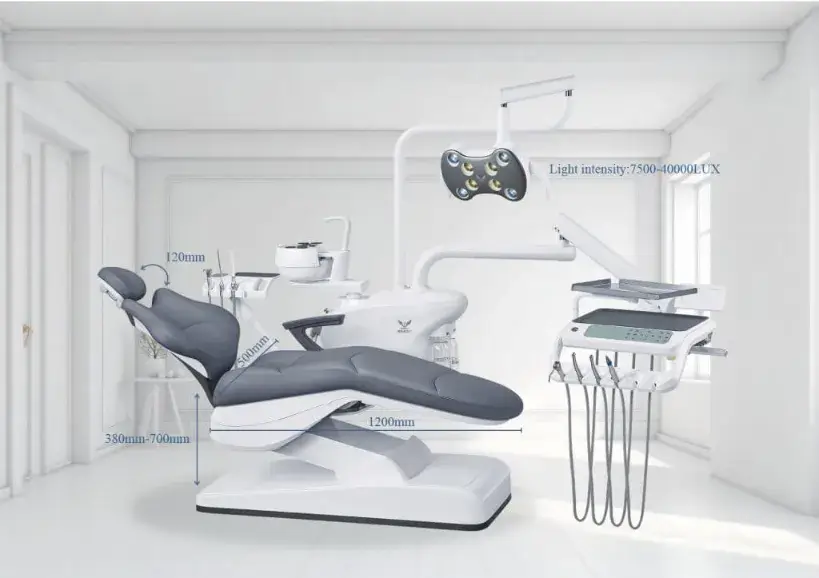
Automatic Pulse Sterilization (APS) is a high tech feature in premium Gladent dental units. Unlike regular steam cleaning, APS uses bursts of vacuum and pressure to push cleaner through hollow spaces and tricky tubes.
Gladent blends comfort, style, and germ control into one system.
To stay safe without an autoclave, clinics should follow a clear plan:
Autoclaves are the best for cleaning, but clinics without them have choices. Dry heat, chemical soaks, boiling, glass bead sterilizers, and UV or ozone systems can help keep things safe. Still, these methods often miss hollow tools and dental waterlines. That’s where Gladent dental units with Automatic Pulse Sterilization shine. They combine automatic cleaning with comfort and style, offering a practical, forward thinking solution for clinics worldwide.
Q1: Can dental instruments be sterilized with boiling water?
A1: Boiling kills some germs but not spores. It’s only a short term fix for emergencies.
Q2: What is cold sterilization in dentistry?
A2: Cold sterilization uses liquids like glutaraldehyde or hydrogen peroxide. It needs several hours to fully clean.
Q3: How does Automatic Pulse Sterilization work in dental units?
A3: APS uses bursts of vacuum and cleaner to reach hollow tools and waterlines, giving deep, reliable cleaning.
Q4: Why choose Gladent dental units for sterilization?
A4: Gladent has Automatic Pulse Sterilization and anti retraction valves, ensuring top notch germ control with little effort.
 No. 1, No. 2, Fenggang Industrial Zone, Lianhe, Luocun, Shishan Town, Nanhai District, Foshan City, China
 Call us now:+86-757-81267151