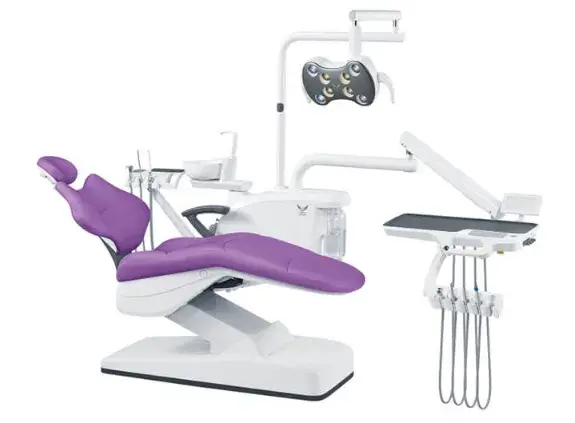
The dental chair is the heart of every clinic. It really affects how comfy patients feel and how smoothly the day runs. Dentists hover around it for hours, so a bad pick can leave you tired or even hurt after a while.
Many clinics assume a good ergonomic dental chair has to cost a fortune. Nope, that’s not always the case. With some clever shopping, you can keep the dental chair cost totally reasonable and still get something solid.
Dental chair prices jump all over the place. You’ll see basic ones for just a couple thousand bucks, while fancy models easily top ten grand. A few big pieces push the price up: the tough frame that keeps everything steady, the actuators that lift and tilt, the comfy upholstery, the simple controls, and any extra goodies like lights or trays.
Steel or aluminum frames cost more, but they never wobble. Actuators come in hydraulic or electric flavors, electric ones usually cost extra yet move way smoother. Upholstery runs from cheap vinyl to high-end stuff, and that changes both the feel and how long it lasts.
Controls can be foot pedals or hand buttons. Extra accessories quickly bump the dental chair cost, so stick to what you actually need.
Besides the sticker price, there’re sneaky ongoing bills. Maintenance adds up fast if stuff breaks a lot. Swapping out dental chair parts like pumps or circuit boards might hit you for hundreds each time.
Upholstery wears out quietly. Flimsy materials rip or get nasty stains super quick, so you’re buying new covers way too often. Older electric systems sometimes act up, which means downtime plus repair guys. Oh, and don’t forget power bills, crappy chairs guzzle electricity and raise your utilities for years.
Ergonomic stuff actually saves cash later. It cuts down on backaches and wrist pain for dentists, so you take fewer sick days and get more done. Well-built chairs hardly ever need fixing because the parts just keep going strong.
They last longer, which is awesome. A decent ergonomic dental chair can easily serve you 10-15 years if you treat it right, while cheap copies fizzle out in 5-7. That spreads the dental chair cost nicely over time. Plus, comfy patients keep coming back, and that quietly boosts your income.
A backrest that tilts nice and easy supports your spine just right. Headrests that slide every which way keep patients steady while you work. This setup saves your neck from aching when you lean in close.
Patients squirm less, which everyone loves. Go for models with locks that click solidly, nothing’s worse than a wobbly adjustment halfway through a filling.
Chairs that move up, down, forward, or backward with total precision make life easier. Smooth hydraulics stop sudden jerks, keep noise low, and kill vibrations. Loud, clunky chairs annoy everybody in the room.
Electric actuators usually beat old-school hydraulics for speed and dependability. Still, test the noise, some hum like a fridge and wreck the calm vibe.
Easy access means armrests swing away without a fight, and trays sit right where you need them. Foot controls should feel natural, no weird stretching. This speeds up your work and leaves you less wiped out after a full day.
Patients stay safer too, thanks to rock-solid bases that never tip. Ergonomic models from Gladent come with synchronized movement systems and medical-grade actuators for quiet, buttery-smooth operation.
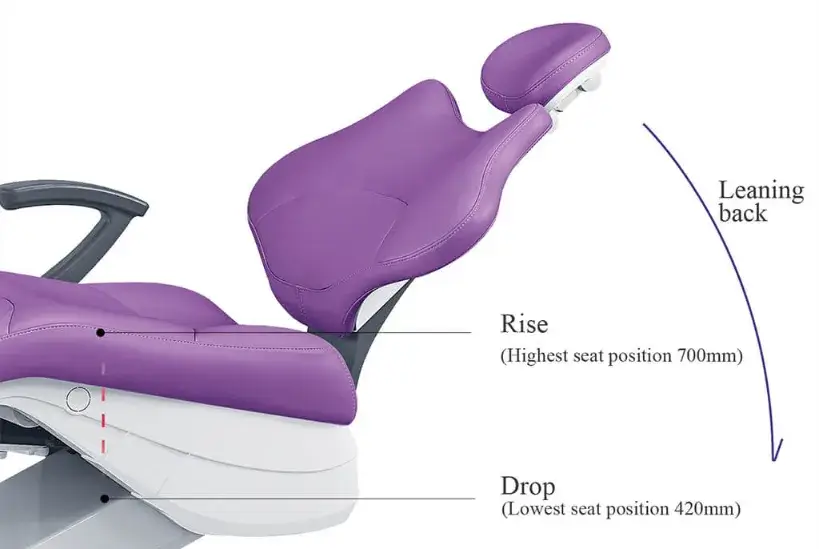
Dental chair upholstery comes in a few flavors. PU leather feels soft and looks sharp, but it cracks after a few years. Microfiber fights stains better and lets skin breathe, perfect for hot clinics.
Medical-grade PVC wins on cleanliness, it wipes down in seconds and keeps germs away. Each type tweaks the dental chair cost, with PVC usually pricier yet totally worth it for toughness.
Plush foams feel amazing and hug the body during long appointments. But they squash down fast and need swapping sooner. Firmer foams keep their shape way longer, so you save cash. Find the sweet spot: too hard and patients complain; too squishy and you’re fixing it constantly.
Clean it regularly with gentle soap, harsh stuff ruins the surface quick.
Colors and textures set the whole mood. Gray or soft blue feels trustworthy and hides little spills. Textured surfaces give extra grip so nobody slides.
Hygiene matters big time, seamless designs stop gunk from hiding. Patients totally judge how spotless everything looks, so pick stuff that shines after one swipe. Sometimes a fun color starts a chat and makes the place feel friendlier.
Hydraulic pumps run the lifts, cheap ones leak or quit early. Actuators handle tilting; sealed ones stay safe from dust and grime.
Armrests and control panels get poked every day. Sturdy armrests help folks climb in and out. Buttons that make sense speed things up, but water-resistant panels survive splashes way better.
Modular designs rock. You can swap cushions or switches in minutes, no huge overhaul. Downtime drops to almost nothing.
Standard parts keep repair bills low, some brands trap you with crazy expensive custom bits. Double-check compatibility before you buy.
Check everything every six months. Spot tiny problems early, like loose screws or tired hoses. Wipe upholstery weekly so nothing builds up.
Lube moving bits exactly how the manual says, skip it and things wear out fast. Stay on top of safety rules too; regular checks keep inspectors happy.
Decide your limit first. Basic chairs under $5,000 work for tiny clinics but skimp on fancy ergonomics. Mid-range ones, $5,000-$8,000, give you solid goodies without going overboard.
High-end models over $10,000 throw in every bell and whistle. Match it to what you really do, don’t waste money on stuff you’ll never touch.
Put core comfort first: height tweaks, silky movements. Skip built-in screens or massage functions if cash is tight.
Sit in them if you can. Wiggle the controls, lounge a bit. Real dentist reviews spill the truth on daily use.
Warranties differ, shoot for at least two years on big parts. Good support means fixes happen fast, not weeks of waiting.
Great backup often beats a slightly cheaper dental chair price. For clinics hunting affordable yet comfy options, Gladent offers customizable dental chairs with reliable parts and solid long-term help.
Choosing an ergonomic dental chair boils down to mixing comfort, speed, and price. Zero in on stuff that lasts and actually saves you money later. Ergonomics lower injury risks and help you work faster.
Never grab the absolute cheapest dental chair cost, quality wins every time.
Pick tough materials and clever designs. They outlive junk by miles. Think years ahead: a solid chair backs you up daily without endless headaches.
Check out Gladent’s ergonomic dental chair collections for smart, wallet-friendly picks that keep both dentists and patients smiling.
Medical-grade PVC or seamless microfiber resists wear best.
Yes, fewer repairs, less dentist fatigue, 10-15 year lifespan.
Yes, smooth actuators, modular parts, reliable warranty support.
Every six months to avoid costly breakdowns.
 No. 1, No. 2, Fenggang Industrial Zone, Lianhe, Luocun, Shishan Town, Nanhai District, Foshan City, China
 Call us now:+86-757-81267151