Dental chair positions play important roles in delivering dental care efficiently and effectively. When dental chairs are positioned correctly, both dentists and their patients are able to deliver and receive quality dental care in utmost comfort. Being familiar with the many dental chair positions is important for dental professionals, as it can contribute to better dental care, greater patient comfort, and fewer cases of musculoskeletal disorders among dental professionals.
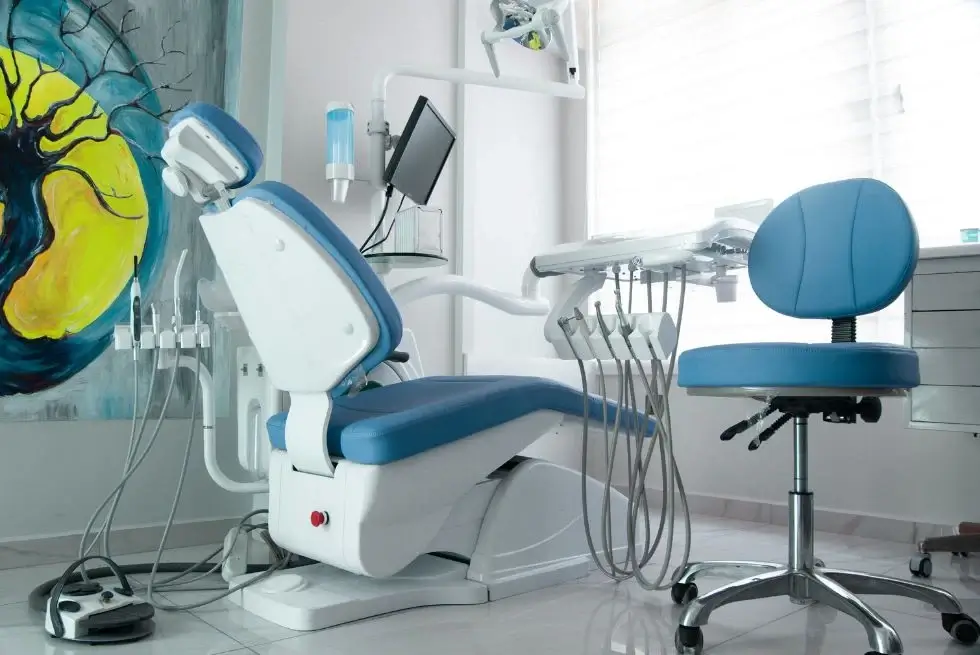
Many dental professionals suffer from musculoskeletal disorders mainly caused by having to hold unusual body postures for long periods of time. The chair should be positioned in such a way that the dentist is able to keep a straight spine, with his or her elbows at right angles and his or her forearms parallel to the floor. In this way, the dentist can be prevented from having to hold forward head postures and reach in order to perform tasks, both of which can cause chronic pain.
In appointments patients need to be in a position that is appropriate to their medical condition and reduces their anxiety. This could be to have armrests, a lumbar cushion and smooth recline mechanism. By being in an appropriate position it will minimize risk of things such as aspiration, circulatory problems and respiratory problems throughout the long appointment.
The upright position is set up with the backrest at 90 degrees to the seat. Patients are positioned upright, fully supported by the chair with their feet on the footrest and neck on the headrest.
Initial consultations with patients as well as detailed discussion of treatment with patients are carried out by dental teams in the upright position. In many instances dental impressions are taken and a variety of radiographs are taken in the upright position as it allows the best quality of images to be taken. The upright position is also ideal for patient education, enabling staff to communicate with patients effectively and maintain eye contact.
The upright position promotes natural communication of body language between dentist and patient. It facilitates face-to-face contact and fosters patient’s trust and better understanding. Elderly patients and patients with mobility problems appreciate sitting in a comfortable dental chair which is very easy to enter and exit.
Placing the patient in subsupine position will tilt the chair so that the patient’s head is lower than their heart and feet. This position is slightly below the horizontal plane.
Subsupine orientation of the patient is ideal for access to the maxillary posterior region. This orientation is often preferred by Oral Surgeons and Restorative Dentists for implant placements and complex extractions as it facilitates visibility and aids in fluid management by gravity.
Subsupine position can increase venous return and decrease blood supply to surgical site in some cases. It can also improve dentist’s working position for better ergonomics as it brings the working area closer to dentist’s eye level without leaning. Subsupine position is more beneficial for patients with neck problems as it is easier for them to stay in this position compared to supine position.
Semi-supine position involves the chair backrest being elevated to approximately 30-45 degrees from the horizontal. The patient is partially reclined and leans against the backrest of the chair while the torso is elevated from the waist. The patient keeps their knees bent to obtain support.
The semi-supine position is typically used for general dental examinations, scaling and root planing as well as for many restorative procedures. This is particularly well suited for children and persons who are not able to lie completely back in a fully reclined position due to discomfort.
Positioning the patient in a semi-supine position can balance accessibility with patient comfort. It enables the patient to swallow naturally, which can counteract the patients’ feeling of vulnerability that can be associated with the fully supine position. In addition, semi-supine does not compromise the respiratory function much, which is especially important for patients with relatively mild respiratory problems.
Patient is placed in a fully horizontal position with back of table at floor level. Headrest is used to support the back of the neck and the occiput. The leg sections are flexed at a slight angle at the knees.
The majority of operative dentistry procedures are carried out with the patient in the supine position. This position allows access to all 4 quadrants and is ideal for the four handed technique used in operative dentistry. Procedures such as fillings, crowns and endodontic treatments can be carried out with the patient in this position.
Supine positioning of patients allows for the dental operator to be in an optimal neutral posture with the patient’s mouth at elbow height. This position minimizes shadows and is enhanced by overhead lights in the operatory. The patient is fully supported by the dental chair and has no pressure points during long appointments.
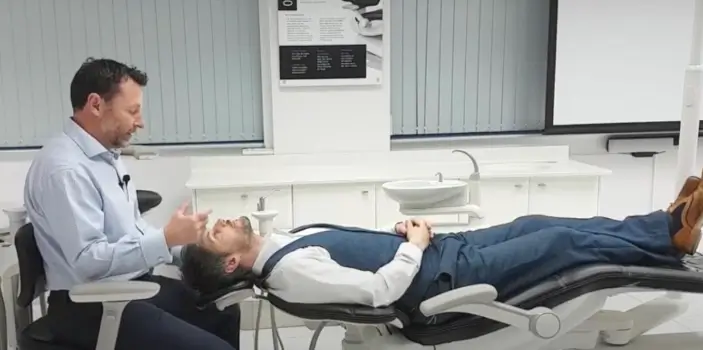 Trendelenburg Position in Dental Chair
To position a patient in Trendelenburg, the head end of the bed is lowered and the foot end is raised. The amount of tilt to place on a patient can vary from 15 degrees to 30 degrees depending on a case.
Use of head down position is most useful in an emergency situation of syncope or hypotension and certain surgical procedures that take advantage of the effect of gravity on blood flow and organ displacement.
Using the Trendelenburg position to increase venous return to the heart can help stabilize a patient having a vasovagal episode. With proper training in dental emergencies, all dental teams can be prepared to immediately place a patient in this position as needed.
Modifications to the semi-supine or supine positions for antenatal ultrasonography are made by tilting the woman to the left to avoid compression of the inferior vena cava by the pregnant uterus. Additional support under the woman’s lumbar region and elevation of her legs also takes into consideration the woman’s altered body mechanics in pregnancy.
The special setup for routine prenatal dental care, for cleaning and for minor fillings, ensures safety for mother and for the fetus. This setup is used throughout the second and third trimester of pregnancy.
Left lateral tilt helps to prevent supine hypotensive syndrome by ensuring an adequate blood supply to mother and baby. Her back is supported, which helps to prevent discomfort and alleviate strain in the future. Elevated torso will improve respiratory function for many patients.
Fowler’s position elevates the backrest of a chair to between 45-60 degrees with patient’s knees being somewhat flexed. High Fowler’s position has various modifications that elevate the backrest up to 90 degrees for special situations.
There are a few scenarios where a patient in post-procedure recovery, with a respiratory disease, or a geriatric patient would be placed in Fowler’s position. Fowler’s position is used when a patient needs to be transitioned from a very reclined position to a more upright position.
Fowler’s position is recovery-friendly. It aids breathing by being down against gravity to enable the diaphragm and chest to take their greatest capacity. The semi-sitting position reduces the chance of gastroesophageal reflux and recovery patients benefit from it as it enables them to feel more comfortable while still enabling monitoring access.
The semi-supine and supine positions are how most General Practitioners practice for the majority of their day. These positions allow for efficient practice of quadrant dentistry as well as easy transfer of instruments to and from assistants.
Subsupine and modified Trendelenburg positions have their merits in the specialized environment of a surgical suite. They enhance visibility and allow for better blood flow management – both of great importance to achieving the best results in particular surgical disciplines.
Upright and semi-supine positions are generally most effective for younger patients and individuals with special healthcare needs. These positions can be gradually changed to help reduce anxiety and manage sensory sensitivities.
Our Semi-supine configurations are very conducive to thorough scaling and maintenance visits, while still allowing for very comfortable long appointments.
Gladent is a professional dental unit manufacturer and supplier with its own dedicated factory in China. Gladent provides hydraulic dental units, integral dental units, dental units with disinfection function, implant dental units, dental units for kids, and mobile dental units on trailer. All dental equipment supplied by Gladent has best ergonomic design, high quality and competitive price.
Dental professionals and dental distributors who are looking for high quality dental equipment and the best dental unit solution are welcome to contact Gladent through the official channels of Gladent. Dental professionals can discuss with Gladent on issues of bulk purchasing, OEM/ODM service and other custom made dental equipment solutions for special clinical requirements. Gladent is eager to establish business relationship with you to provide you with the best dental unit solution for your patients and to improve your working efficiency.
 No. 1, No. 2, Fenggang Industrial Zone, Lianhe, Luocun, Shishan Town, Nanhai District, Foshan City, China
 Call us now:+86-757-81267151